Beyond the Medals: Young Filipino Athletes Gain Valuable Lessons at Dakar Youth Olympics
Gymnast Tchelzy Mei Maayo and cyclist Maritanya Krog may have missed the podium, but their performances highlight the challenges, determination, and development of the Philippines' next generation of athletes.
The Olympic dream is often measured in gold, silver, and bronze. But for young athletes competing on the international stage for the first time, success can also be found in the experience gained, the challenges overcome, and the determination to keep improving.
For Filipino gymnast Tchelzy Mei Maayo and cyclist Maritanya Krog, the 4th Youth Olympic Games in Dakar, Senegal, offered a valuable glimpse into the demanding world of elite international competition.
Both athletes faced formidable opponents in their respective events on Sunday, with Maayo finishing 36th in the women's artistic gymnastics individual all-around and Krog placing 30th in the women's individual road race.
Although neither reached the podium, their participation represented an important step in their development as young Filipino athletes. Maayo shows composure against world-class competition.
At just 14 years old, Maayo stepped onto the Olympic gymnastics floor carrying the Philippine colors against talented competitors from established international gymnastics programs.
Competing at the Dakar Exhibition Center in Diamniadio, the young Filipina recorded a combined score of 44.399 points across four apparatus.
Her strongest performance came in the vault, where she earned 12.633 points, followed by 11.466 in floor exercise, 10.800 on balance beam, and 9.500 on uneven bars.
The scores placed her 36th overall in a field of 57 entered gymnasts, four of whom did not complete the competition.
China's Xie Guying led the qualifiers with 53.099 points, followed by compatriot Zhong Qi with 52.932, while Polina Dmitrieva of the Russian Federation registered 52.733.
Japan's Yume and Nanami Togo also delivered strong performances to reach the 18-athlete final.
For Maayo, the competition clearly showed the level of precision, consistency, and technical execution required to compete with the world's leading young gymnasts.
Although she finished outside the final qualification places, she was satisfied with completing her routines without a fall.
"I competed without any falls, although I wobbled [on the balance beam] a bit; I really enjoyed the games, and I'm just happy to have performed and competed," Maayo said.
Her remarks reflected a young athlete beginning to understand that international competition is as much a test of mental strength as physical ability.
Perhaps the most meaningful part of Maayo's Olympic experience was not reflected on the scoreboard.
It was the lesson she learned about responding to setbacks.
"I learned to stay strong even if your score is not really good," she said.
"It's about focusing on your next event after you missed one."
For a gymnast still in the early stages of her competitive career, that mindset could prove valuable.
Artistic gymnastics demands exceptional concentration. A slight hesitation, imperfect landing, or momentary loss of balance can affect an athlete's score.
Learning to recover mentally from those mistakes is an essential part of becoming a more consistent competitor.
Maayo's ability to complete her routines and recognize areas for improvement suggests that she is approaching her development with a willingness to learn.
The experience in Dakar may not have produced a medal, but it offered lessons that can help shape her future performances.
Krog faces a demanding international cycling field.
Meanwhile, Filipina cyclist Maritanya Krog encountered her own challenges in the women's individual road race.
Krog finished 30th against a competitive international field, gaining experience in an event that demands endurance, race awareness, tactical decision-making, and physical resilience.
Road cycling presents a different kind of challenge from gymnastics. Riders must manage their energy while responding to changes in pace, positioning, and race conditions.
For young cyclists, competing against athletes from countries with established cycling development programs provides valuable exposure to international racing standards.
Although Krog finished outside the medal positions, her participation allowed her to experience the intensity of Olympic-level competition.
That exposure can become an important foundation as she continues developing her skills and preparing for future races.
Maayo will not have to wait long for another opportunity to compete.
The young gymnast is expected to participate in the Batang Pinoy National Championships in Bacolod City this December, where she remains eligible to compete.
The tournament, a flagship grassroots sports development program of the Philippine Sports Commission, provides young athletes with opportunities to test their abilities in national competition. For Maayo, the event presents a chance to apply what she learned in Dakar.
After competing against international opponents, she returns to the domestic stage with greater awareness of the standards required at higher levels.
Her immediate objective is straightforward: continue training, improve her routines, and deliver stronger performances.
"I'll do my best and work harder in the next competitions," she said.
That determination may ultimately prove more important to her long-term development than her final ranking in Senegal.
The performances of Maayo and Krog also highlight a broader issue in Philippine sports: the importance of providing young athletes with consistent opportunities to compete internationally.
The Youth Olympic Games bring together promising athletes from different sporting systems, many of whom have access to specialized coaching, structured training programs, and regular high-level competition.
For developing athletes, competing in such an environment provides a realistic assessment of their current abilities.
It allows them to identify technical weaknesses, understand international competition standards, and experience the pressure of performing against talented opponents.
These lessons cannot always be replicated through domestic training alone.
However, international exposure becomes most valuable when it is followed by sustained development.
Young athletes need appropriate coaching, access to facilities, competition opportunities, recovery support, and long-term planning.
Without that continuity, valuable international experience may not translate into meaningful competitive improvement.
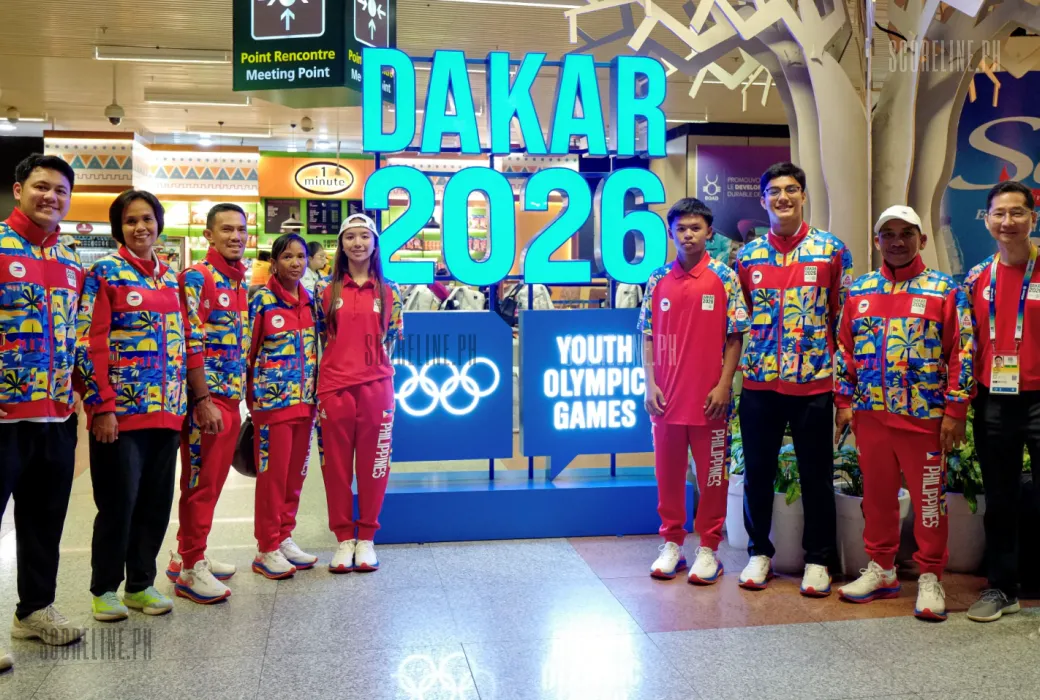
Maayo and Krog are among the nine Filipino athletes representing the country at the Dakar Youth Olympic Games, with the delegation endorsed by the Philippine Olympic Committee and supported by the Philippine Sports Commission.
Their participation reflects the continuing effort to develop Filipino talent across different sporting disciplines.
But producing future international medal contenders requires patience.
Athletes at the youth level are still developing physically, technically, and mentally.
Their performances should be evaluated not only through medals and rankings but also through their progress over time.
A disappointing result at 14 years old does not determine the limits of an athlete's potential.
Likewise, international exposure alone does not guarantee future success. The challenge for Philippine sports development is to ensure that young competitors receive the guidance and opportunities needed to build on these experiences.
For Maayo and Krog, Dakar should be viewed as one stage in a much longer journey.
The absence of a medal does not mean the absence of achievement.
Maayo completed her gymnastics routines against a demanding international field and emerged with a stronger understanding of the mental discipline required to compete.
Krog tested herself in an international road race and gained experience against talented young cyclists.
Both athletes represented the Philippines on a stage that many aspiring competitors dream of reaching.
Their results also serve as a reminder that international sporting success is rarely achieved overnight. It is built through years of preparation, difficult competitions, personal sacrifices, and lessons learned from defeat.
As Team Philippines continues its campaign in Dakar, the search for a breakthrough medal remains an important goal. But the country's long-term sporting future also depends on what happens after these young athletes return home.
Will they receive the training, competition opportunities, and institutional support necessary to keep progressing? That question matters beyond any single Youth Olympic Games.
For Tchelzy Mei Maayo and Maritanya Krog, the journey continues.
They may have left their respective events without medals, but they return with something that can help shape their futures: international experience, a clearer understanding of the competition, and the motivation to become better athletes.