All news tagged Basketball

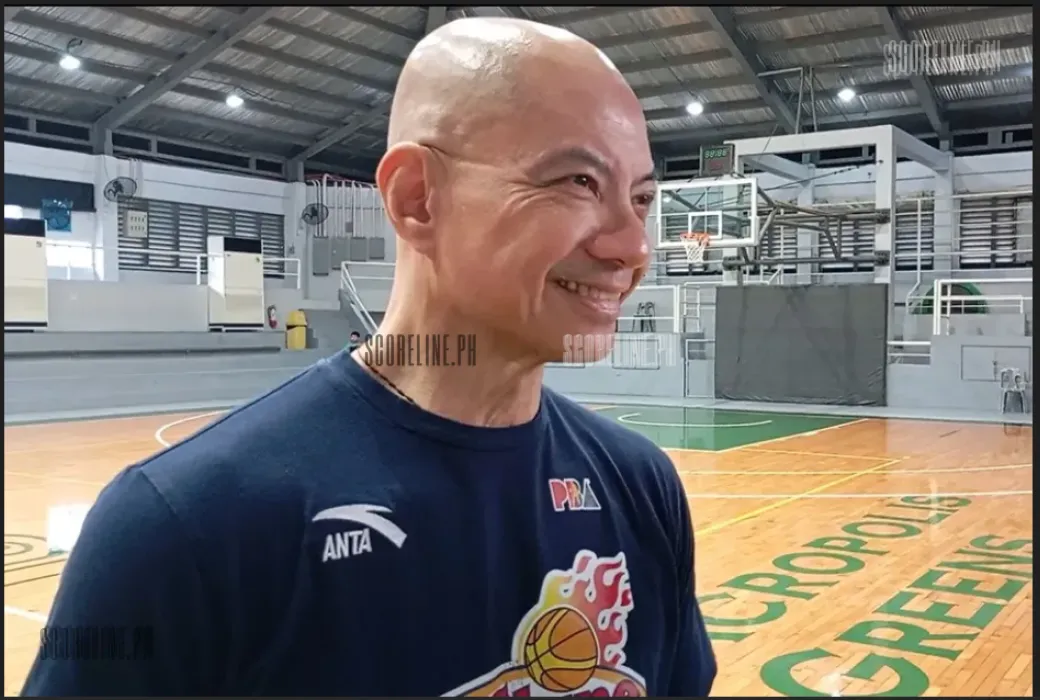
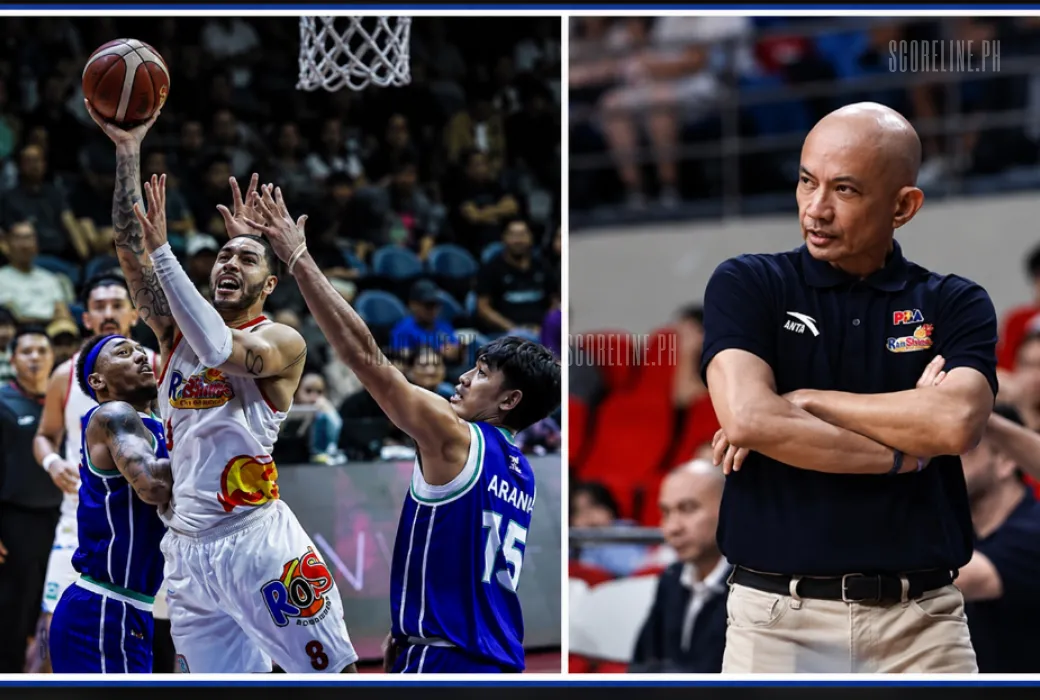
Aaron Fuller & Yeng Guiao

Guiao calls out Fuller as Rain or Shine's playoff collapse exposes bigger offensive flaws


Aaron Fuller's inconsistency drew criticism from Yeng Guiao, but the Elasto Painters' quarterfinal exit against Converge revealed a more troubling reality: hustle and speed can win games, but without reliable half-court execution, championship dreams can quickly fall apart.
 

Rain or Shine head coach Yeng Guiao did not mince words after the Elasto Painters' disappointing exit from the PBA Season 50 Governors' Cup quarterfinals. His frustration centered on import Aaron Fuller, whose inconsistent production and costly turnovers became glaring problems in a playoff series where every possession mattered.


But beyond Fuller's struggles lies a much bigger question. Has Rain or Shine reached the limit of what its high-energy, fast-paced basketball system can accomplish without a dependable half-court scoring weapon?


The Elasto Painters entered the playoffs hoping to build on their previous Commissioner's Cup semifinal appearance. Instead, they suffered three consecutive defeats against the Converge FiberXers, ending their latest championship pursuit in Game 4. And for Guiao, the performance of his veteran import left plenty to be desired.

"We're kind of disappointed with Aaron kasi sa tingin namin, he could have been a little bit more impactful dun sa series. We expected a lot more consistency around the basket," Guiao told reporters following the elimination.


"Pero ayun nga, turnover prone siya around the basket eh."


Those remarks reflected more than disappointment over one player's statistics. Rain or Shine needed Fuller to provide stability when its offense struggled, particularly during possessions when transition opportunities disappeared, and the team was forced to execute against Converge's organized defense. Instead, Fuller's production fluctuated dramatically.


He opened the series with 33 points in Game 1 and followed it with 26 in Game 2. Then came a disastrous Game 3. Fuller managed just four points on 2-of-11 shooting, a stunning offensive collapse for a player expected to anchor Rain or Shine's interior attack. He recovered statistically in Game 4 with 23 points and 10 rebounds. But the numbers concealed a damaging reality. Fuller failed to score a single point in the fourth quarter and committed five turnovers. For an import expected to deliver when the stakes were highest, that was a painful finish.


The Elasto Painters' problems extended well beyond their import. Throughout the series, Converge repeatedly capitalized on Rain or Shine's careless ball handling and inability to sustain offensive execution. In Game 1, the FiberXers dominated points off turnovers by a staggering 40-13 margin. That statistic alone illustrated how costly Rain or Shine's mistakes had become.


The struggles continued in Game 2, when Adrian Nocum committed three of his four turnovers during the final three minutes, overshadowing an otherwise outstanding performance of 22 points and 18 assists. In Game 3, Nocum delivered a triple-double but also committed seven turnovers. By Game 4, Fuller and Nocum each finished with five turnovers. These were not isolated mistakes. They were symptoms of a recurring problem that Converge exploited throughout the series.


Rain or Shine could create excitement with its pace, but it struggled to protect possessions when the game demanded patience and precision. And in playoff basketball, careless possessions can destroy even the most promising championship campaign.

Guiao has built an identity around aggressive defense, relentless energy, quick ball movement, and transition scoring. When the Elasto Painters are running, they can overwhelm opponents. Their guards attack unsettled defenses, their wings fill passing lanes, and their big men capitalize on opportunities near the basket.


But playoff basketball presents a different challenge. Opponents have more time to study tendencies, disrupt offensive patterns, and force teams into uncomfortable situations. Converge understood that. Instead of allowing Rain or Shine to dictate the tempo, the FiberXers repeatedly forced the Elasto Painters into half-court possessions. That exposed the limitations of their offense.
The most telling statistic came in the final periods of Games 3 and 4, when Converge outscored Rain or Shine by a combined 54-36. An 18-point fourth-quarter scoring disadvantage across two crucial games told the story of a team that could compete for three quarters but struggled to finish. The FiberXers had the personnel and offensive options to execute when the pace slowed. Rain or Shine lacked the same consistency. And that difference helped decide the series.


One encouraging development for Rain or Shine was the continued emergence of Adrian Nocum. The talented guard averaged 17.3 points and 12 assists across the four-game series, demonstrating his growing importance as one of the team's primary offensive creators. His ability to penetrate defenses, generate scoring opportunities, and distribute the basketball gave Rain or Shine a legitimate playmaking weapon.


But his production also exposed another weakness. Who takes responsibility when opponents shut down Nocum's first option? Who creates a quality shot when the offense stalls? Who can consistently attack a set defense with the shot clock winding down? Those questions became increasingly difficult to answer against Converge.


Nocum's development deserves recognition, but expecting him to manufacture nearly every important offensive opportunity is not a sustainable championship formula. Rain or Shine needs additional players capable of creating offense independently. Otherwise, opposing teams will continue loading their defenses against its primary playmaker.

Criticizing Fuller's inconsistency is understandable. But expecting him to solve every half-court offensive problem may also have been unrealistic. At 36, Fuller remains a productive interior player who can finish around the basket, rebound, run the floor, and provide physicality. Those strengths can be valuable in Guiao's system. However, being an effective interior finisher is different from being a dependable isolation scorer.


Fuller is not necessarily the type of import who can repeatedly break down defenders, manufacture difficult shots, or rescue possessions when an offensive play collapses. Against Converge's imposing frontcourt of Justin Arana, Justine Baltazar, and import Cam Clark, even his preferred scoring opportunities became more difficult. The FiberXers had the size, defensive presence, and discipline to challenge him around the basket. That forced Rain or Shine to search for other offensive solutions. Too often, those solutions never materialized.


Fuller deserves accountability for his mistakes, but Rain or Shine's offensive limitations cannot be blamed on one player alone. The team's roster construction and tactical flexibility must also be examined.


There is no denying the progress Rain or Shine has made under Guiao. The Elasto Painters have developed a competitive identity, nurtured emerging talent, and established themselves as a difficult opponent for the league's stronger teams. Their energy and defensive intensity make them dangerous. Their willingness to compete has never been the issue.


But there is a difference between being difficult to beat and knowing how to win when the pressure reaches its highest level. The next stage of Rain or Shine's development requires more than additional hustle. It requires a more versatile offensive roster. A dependable late-game scorer. Better ball security. More disciplined half-court execution. And an import whose offensive strengths complement the team's biggest weaknesses.


That does not automatically mean Fuller should be replaced. But it does mean Rain or Shine must seriously evaluate whether its current personnel can provide the offensive versatility needed to survive against elite playoff defenses. Because a team cannot keep relying on transition baskets when championship opponents know exactly how to take those opportunities away.

While much of the discussion has focused on Rain or Shine's shortcomings, Converge deserves recognition for its performance. The FiberXers did more than capitalize on mistakes. They dictated the terms of the series. Their defensive discipline, frontcourt strength, and ability to execute in crucial moments repeatedly disrupted the Elasto Painters' preferred style. Arana, Baltazar, and Clark provided the interior resistance needed to limit Fuller's effectiveness. Meanwhile, Converge's ability to punish turnovers and control late-game possessions gave it a decisive advantage. The result was a playoff victory that reflected both Converge's strengths and Rain or Shine's vulnerabilities. And that is what makes the elimination particularly revealing. Rain or Shine did not simply lose because its import had an inconsistent series. It lost to an opponent that understood how to exploit its weaknesses.

For several conferences, Rain or Shine has shown flashes of becoming a legitimate championship contender. Its young players have developed. Its system has produced competitive performances. Its coaching staff has established a recognizable identity. But potential cannot remain the team's defining achievement forever. At some point, promising teams must become championship teams. And that transformation requires difficult decisions.


Guiao and the Rain or Shine management must determine whether their current roster has enough offensive versatility to compete consistently in high-pressure playoff situations. They must also address the turnovers that repeatedly handed opponents easy scoring opportunities. Most importantly, they must find a way to generate quality shots when transition basketball is no longer available. The answer may involve personnel changes, tactical adjustments, or further development of the team's existing core. But standing still cannot be the solution.


The Elasto Painters have already proven they can compete. They have demonstrated energy, resilience, and the ability to challenge stronger opponents. What they have not consistently demonstrated is the ability to execute when the game slows down and every possession becomes a battle. That is the challenge separating them from the next level.


Guiao's criticism of Fuller may have captured the headlines, but the real lesson from the Converge series is much broader. Rain or Shine needs more than an import who can score. It needs an offense that can survive when scoring becomes difficult. The Elasto Painters cannot depend on Nocum to create everything. They cannot afford repeated turnovers in crucial possessions. And they cannot expect their transition game to rescue them against every playoff opponent.


Until those problems are addressed, their championship ambitions will remain vulnerable.


HUSTLE MAKES YOU COMPETITIVE. EXECUTION MAKES YOU A CHAMPION. 

For Yeng Guiao and Rain or Shine, that is the difference they must finally overcome.
07.11.2026
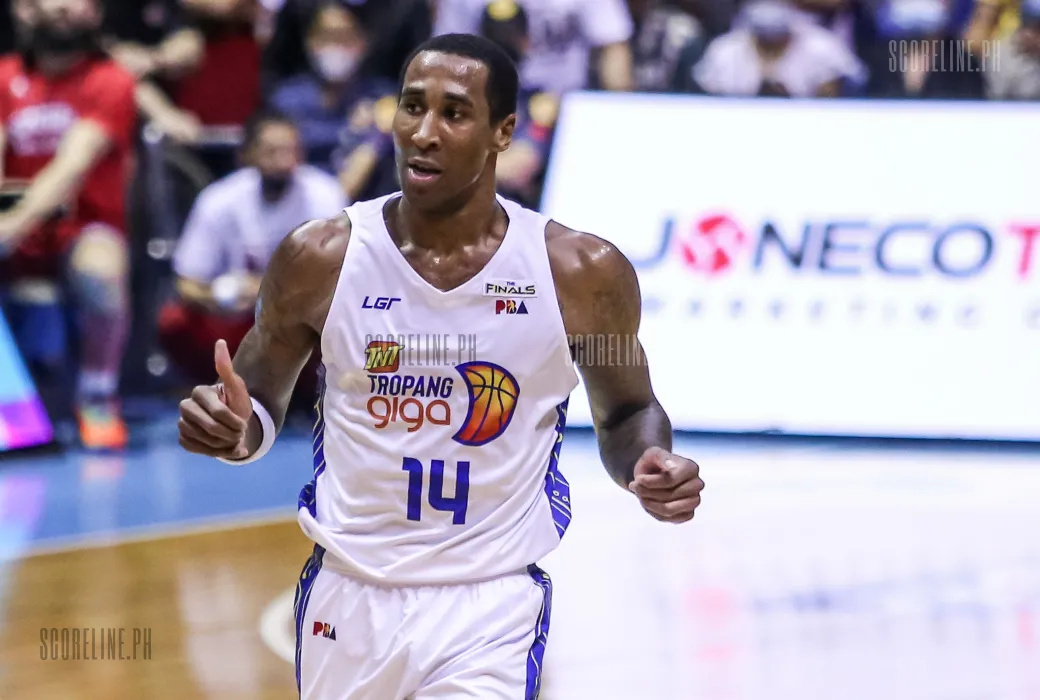
RHJ

“Pinoy ako!” — Rondae Hollis-Jefferson sparks Gilas Pilipinas speculation


 Could TNT Tropang Giga import Rondae Hollis-Jefferson become the next naturalized player for Gilas Pilipinas?
The possibility has stirred excitement among Filipino basketball fans after the former NBA player declared “Pinoy ako!” during a postgame interview following Game 3 of the PBA Season 50 Governors' Cup quarterfinals.


The statement immediately raised questions about whether the American forward would consider representing the Philippines in international basketball competitions.
However, when members of the media directly asked Hollis-Jefferson about his interest in joining Gilas Pilipinas, the TNT reinforcement avoided giving a definite answer.


“We appreciate you guys, thank you,” Hollis-Jefferson replied during the postgame press conference, playfully sidestepping the question.


While his response neither confirmed nor denied any interest in playing for the national team, his declaration of affection for the Philippines has fueled discussions about his potential future with Gilas.
A potential weapon for Gilas Pilipinas


Known for his defensive intensity, versatility, athleticism, and ability to attack the basket, Hollis-Jefferson has established himself as one of the PBA's most formidable imports.
His ability to defend multiple positions, create scoring opportunities, and contribute on both ends of the floor could make him an intriguing option for the Philippine national team.


With Gilas Pilipinas continuously looking to strengthen its roster for major international tournaments, a player with Hollis-Jefferson's experience and skill set could provide additional flexibility.


However, representing the Philippines would require him to meet the applicable citizenship and FIBA eligibility requirements.
The national team already has naturalized players Justin Brownlee and Ange Kouame, while former San Miguel import Bennie Boatwright has also completed his naturalization process.


Just a playful remark or something more?
For now, Hollis-Jefferson's comments remain nothing more than an interesting moment that has sparked speculation.
There has been no official announcement from the Samahang Basketbol ng Pilipinas (SBP) regarding any move to recruit the TNT import for the national team.


Still, his familiarity with Philippine basketball, competitive mentality, and connection with Filipino fans make the possibility an appealing topic of discussion.


Whether his “Pinoy ako!” declaration was simply an expression of appreciation or a hint of something more remains to be seen.
One thing is certain: Hollis-Jefferson has captured the attention of Filipino basketball fans, and the possibility of seeing him wear the Gilas Pilipinas jersey is already generating conversation.


Could Rondae Hollis-Jefferson eventually trade his TNT uniform for the Philippine national colors?
For now, the answer remains unanswered — but the speculation is very much alive.

02.11.2026
Jamie Lim

Beyond the Skywalker's shadow: How Jamie Lim built her own legacy of greatness

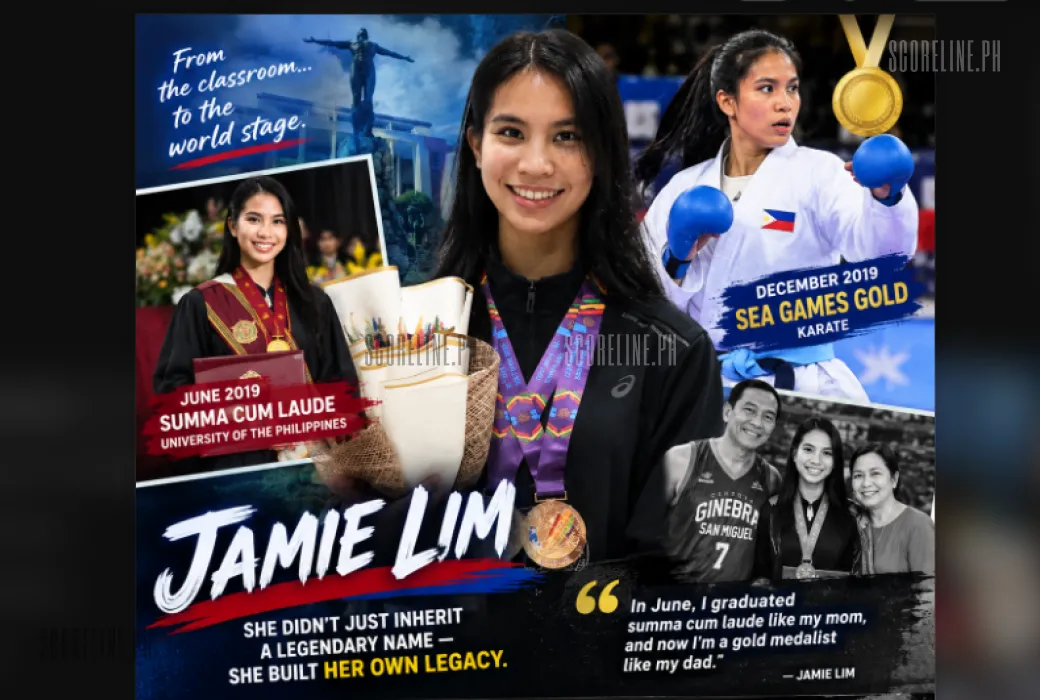
From graduating summa cum laude to winning SEA Games gold in the same year, the daughter of Philippine basketball legend Samboy Lim proved that greatness is not simply inherited — it is earned.


Some athletes are born into greatness. Others spend their lives chasing it. But for Filipino karate champion Jamie Lim, carrying one of the most iconic surnames in Philippine sports was never just about continuing a family tradition. It was about creating a legacy she could proudly call her own.


As the daughter of the late PBA legend Avelino “Samboy” Lim, famously known as “The Skywalker,” Jamie grew up connected to a name synonymous with basketball brilliance, spectacular athleticism, and Filipino sporting excellence.


But rather than follow her father's footsteps onto the basketball court, she chose a different battlefield — the karate mat.
And in 2019, she delivered two extraordinary achievements that would define her journey as both a scholar and an athlete.
In June 2019, Jamie graduated summa cum laude from the University of the Philippines, earning one of the highest academic distinctions and demonstrating that excellence in the classroom could go hand in hand with athletic ambition.


Just six months later, she traded academic recognition for international sporting glory.
Competing before a home crowd at the 2019 Southeast Asian Games, Jamie captured the gold medal in karate, delivering a memorable victory for the Philippines.


From academic honors in June to a gold medal in December, she accomplished in one year what many spend a lifetime pursuing.
Yet what made those achievements even more meaningful was how she connected them to her parents.
“In June, I graduated summa cum laude like my mom, and now I'm a gold medalist like my dad,” Jamie proudly declared.


Those words captured a remarkable family story — a daughter honoring both her parents while establishing an identity beyond their accomplishments.


Samboy Lim was more than a basketball superstar. His breathtaking aerial moves, fearless playing style, and relentless competitiveness made him one of the most admired figures in Philippine basketball history.


His nickname, “The Skywalker,” reflected a style of basketball that inspired generations of Filipino fans.
For Jamie, however, greatness was never about becoming another Samboy Lim.


It was about carrying the same determination, discipline, and competitive spirit into a sport where she could establish her own name.


While her father soared above basketball defenders, Jamie found her own path to victory through karate — a demanding martial art requiring precision, patience, mental toughness, and years of disciplined preparation.


Different sports. Different journeys. But the same pursuit of excellence. Jamie Lim's story carries a powerful message for young Filipino athletes.


Being born into a celebrated sporting family may bring recognition, but it does not guarantee success.
A famous surname cannot earn academic honors, survive exhausting training sessions, or win a gold medal.
Those achievements demand personal sacrifice, commitment, and determination.


Jamie demonstrated that an athlete does not have to choose between intellectual achievement and sporting excellence. Her success showed that both can be pursued with equal dedication.


And perhaps that is what makes her journey so inspiring.


She did not simply become known as the daughter of a basketball legend.


She became Jamie Lim — a summa cum laude graduate, a SEA Games gold medalist, and a Filipino champion in her own right.
The greatest tribute to a legendary parent is not necessarily to follow the same path, but to carry forward the values that made that parent extraordinary.


Jamie Lim accomplished exactly that. Her father's legacy was written on the basketball court. Her own achievements were forged through academic excellence and karate.


Together, they represent different chapters of a remarkable Filipino sporting family.


Samboy Lim became a legend by reaching for the sky. Jamie Lim honored that legacy by reaching for greatness in her own way.
And in doing so, she proved that while a legendary name may be inherited, a champion's legacy must be earned.

02.11.2026
Bennie Boatwright

Bennie Boatwright Takes Oath of Allegiance as Race Against FIBA Deadline Begins

The 6-foot-10 scoring powerhouse moves closer to becoming Gilas Pilipinas' newest naturalized reinforcement, but legal documentation and international eligibility requirements remain crucial before his anticipated national team debut.

Gilas Pilipinas may soon have another powerful weapon in its international basketball arsenal.

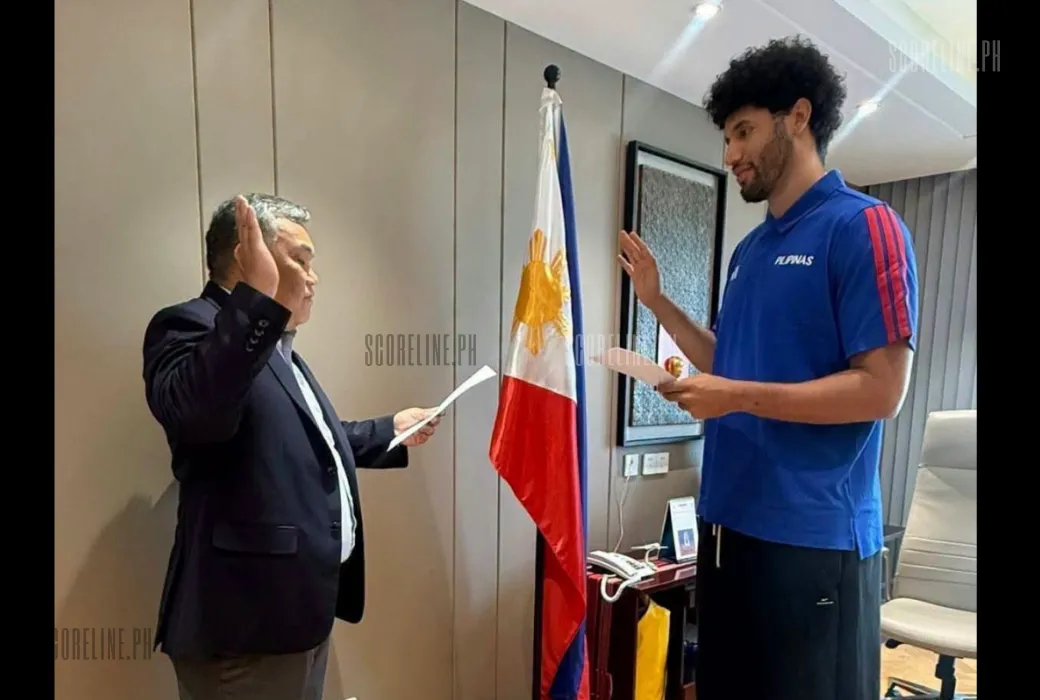
After months of anticipation, Bennie Boatwright has taken a significant step toward representing the Philippines, officially taking his Oath of Allegiance to the country on Wednesday, October 21, 2026, at the Philippine Embassy in China.

The development brings the 6-foot-10 American basketball standout closer to completing his naturalization process and potentially joining the national team for the upcoming FIBA Basketball World Cup Asian Qualifiers.

But while the oath represents an important milestone, the journey is far from complete.

With a November 14 deadline approaching for the submission of eligibility documents to FIBA, the Samahang Basketbol ng Pilipinas (SBP) faces a race against time to complete the remaining requirements.

For Gilas Pilipinas, Boatwright's potential arrival represents more than another roster addition. It could provide the national team with a different offensive dimension as it prepares for another demanding international campaign.

Boatwright's appearance at the Philippine Embassy in China marked an important development in the country's efforts to secure another naturalized basketball player.

The oath is a significant step in the legal process, but it does not automatically complete all the requirements necessary for him to represent the Philippines internationally.

According to the process outlined by the SBP, Boatwright's oath must still be registered with the Bureau of Immigration.

The registration will be followed by the issuance of his Certificate of Naturalization, after which he can proceed with his application for a Philippine passport.

Even after securing the necessary Philippine documents, his participation in FIBA competitions will remain subject to the international basketball federation's eligibility requirements.

Taking the oath moves Boatwright closer to Gilas. Securing FIBA clearance will determine whether he can finally wear the Philippine jersey.

The urgency surrounding Boatwright's naturalization stems from the approaching FIBA documentation deadline.

SBP Executive Director Erika Dy said the necessary requirements must be submitted to FIBA by November 14, 2026, for Boatwright to become eligible for consideration in the upcoming qualifying window.

Gilas is preparing for scheduled FIBA World Cup Asian Qualifiers games in Malaysia on November 27 and 29.

That leaves a limited period to complete the remaining documentation, obtain international eligibility clearance, and potentially integrate Boatwright into the national team's preparation.

For head coach Tim Cone, the situation presents both an opportunity and a challenge.

Boatwright could provide additional scoring and size, but his availability cannot be treated as guaranteed until the necessary requirements are satisfied.

The coaching staff must therefore prepare for multiple roster possibilities.

The talent is available. The opportunity is approaching. But the paperwork must be completed before the basketball can begin

At 6-foot-10, Boatwright offers a combination of height, shooting ability, and offensive versatility that could make him a valuable reinforcement for the national team.

Unlike traditional centers who operate primarily inside the paint, Boatwright is capable of stretching the floor and creating scoring opportunities from the perimeter.

His shooting range could force opposing big men to defend farther from the basket, potentially opening driving lanes for Filipino guards and additional space for interior players.

That offensive flexibility could become particularly valuable against Asian opponents that rely on size, physicality, and disciplined half-court defense.

Boatwright's scoring ability could also give Gilas another option when opposing teams successfully disrupt its offensive sets.

Currently playing for the Fujian Sturgeons in the Chinese Basketball Association, he continues to gain professional experience in a competitive international environment.

However, success in club basketball does not automatically guarantee immediate effectiveness in FIBA competition.

International basketball presents different tactical challenges, defensive systems, and physical demands.

Boatwright would need to adjust to Cone's offensive structure, develop chemistry with his teammates, and understand the responsibilities expected of him within the national team.

Gilas would not simply be adding another tall player. It would potentially be adding a big man capable of changing how opposing teams defend the Philippines.

Boatwright's progress comes at a time when the availability of veteran naturalized star Justin Brownlee remains uncertain.

Brownlee has been one of the most influential figures in Gilas Pilipinas' recent international campaigns.

His familiarity with Cone's system, leadership, offensive creativity, and ability to perform under pressure have made him a trusted national team reinforcement.

But relying exclusively on one naturalized player presents risks when injuries, scheduling conflicts, or other availability concerns arise.

Boatwright's eligibility could give the coaching staff another option. The two players offer different strengths.

Brownlee provides experience, playmaking, and an established understanding of the team's system.

Boatwright could offer additional height, perimeter shooting, and offensive versatility.

Under FIBA's standard national team eligibility rules, only one player classified as naturalized may generally be included in a team's game roster.

Therefore, having both Brownlee and Boatwright available would primarily provide Gilas with greater flexibility in selecting its naturalized reinforcement.

The question should not simply be Brownlee or Boatwright. The bigger objective is ensuring that Gilas has reliable options when international competitions arrive.

Boatwright's potential arrival also comes during a transition period for the national team.

Nine-time PBA Most Valuable Player June Mar Fajardo has confirmed that his Gilas Pilipinas career is over, ending the international journey of one of the country's most accomplished big men.

His departure leaves a significant gap in experience and interior presence.

Younger Filipino talents such as Kai Sotto and AJ Edu represent important pieces of the national team's future, but their availability and continued development remain essential considerations.

Boatwright could help strengthen the frontcourt while providing a different offensive skill set.

Still, his potential inclusion should complement rather than replace long-term investment in Filipino big men.

A sustainable national team program requires both experienced reinforcements and a dependable pipeline of locally developed talent.

Naturalization can strengthen a national team, but it cannot substitute for a comprehensive player development system.

Boatwright's possible addition will undoubtedly generate excitement among Filipino basketball fans.

But the national team's recent challenges have demonstrated that individual talent alone is not enough to guarantee success.

Player availability, preparation time, roster continuity, and effective coordination with professional clubs remain critical.

The Philippines' disappointing ninth-place finish at the 2026 Asian Games raised questions about the national team's ability to assemble its strongest possible lineup.

Several overseas-based Filipino players were unable to participate because of professional club commitments.

That experience highlighted the importance of early planning and stronger coordination among basketball stakeholders.

Boatwright's naturalization process represents another test of the country's preparation system.

Completing his eligibility requirements would provide a valuable option, but the coaching staff would still need sufficient time to establish his role.

A powerful scorer can help win games. A well-prepared team is what creates sustained international success.

With Boatwright's oath of allegiance completed, attention now shifts to the remaining administrative and international eligibility requirements.

The SBP must secure the necessary documentation and meet the November 14 submission deadline.

If the process is completed successfully and FIBA grants the required clearance, Boatwright could become available for national team selection.

But until those steps are finalized, his participation remains uncertain.

For Cone and Gilas Pilipinas, the immediate priority is preparing a competitive lineup regardless of the outcome.
Boatwright's potential arrival offers optimism, but the national team cannot afford to build its entire preparation around an unresolved eligibility process.

For Bennie Boatwright, representing the Philippines would mark a significant milestone in his professional basketball career.

For Gilas Pilipinas, it could provide another valuable weapon against Asia's strongest teams.

And for Filipino basketball fans, the possibility of seeing a versatile 6-foot-10 scorer wearing the national colors offers renewed excitement.

But the true significance of his arrival would be measured by how effectively he contributes to the team.

The Philippines needs more than impressive individual performances.

It needs consistent preparation, reliable player availability, and a system capable of competing internationally over the long term.

Boatwright could become an important part of that effort.

THE OATH HAS BEEN TAKEN. THE DEADLINE IS APPROACHING. THE POSSIBILITY OF A NEW GILAS WEAPON IS GETTING CLOSER.

But the next chapter will depend on completing the legal process, securing FIBA eligibility, and preparing the team for the challenges ahead.

22.10.2026
June Mar Fajardo

June Mar Fajardo Reaches 10,000 Career Points, Cements Legacy Among Basketball Legends

With nine MVP awards and 14 years of dominance, San Miguel Beermen superstar June Mar Fajardo adds another historic achievement to one of the greatest careers in Philippine basketball.

Some basketball players make history with spectacular dunks, breathtaking three-pointers, or dramatic game-winning shots.

For June Mar Fajardo, one of the most significant moments of his illustrious Philippine Basketball Association (PBA) career came from something he has perfected over the years.

A simple, unstoppable jump hook.

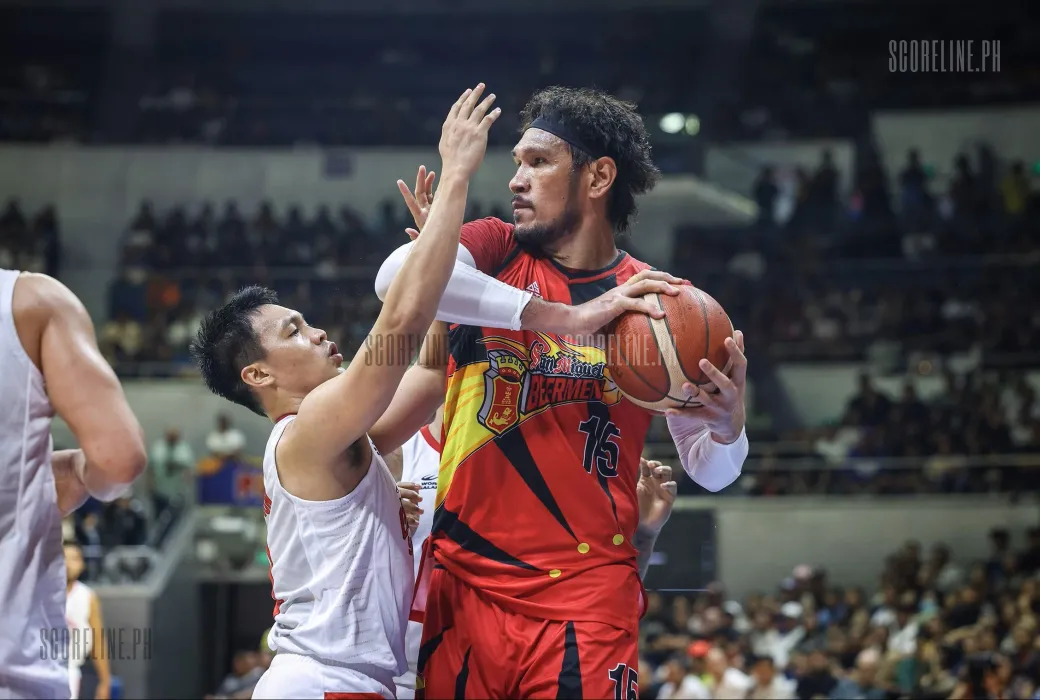
On Wednesday, October 21, 2026, the 6-foot-10 San Miguel Beermen superstar officially joined the PBA's exclusive 10,000-point club, becoming only the 19th player in league history to reach the remarkable scoring milestone.

The historic basket came against the NLEX Road Warriors at the Ynares Center, adding another achievement to the career of the nine-time PBA Most Valuable Player.

For Fajardo, it was another demonstration of the consistency, discipline, and dominance that have defined his professional basketball journey.

Fourteen years. Nine MVP awards. Ten thousand career points. One extraordinary Filipino basketball legend.

With only five points needed to reach the milestone entering the game, Fajardo wasted little time making history.

At the 2:21 mark of the first quarter, the veteran center established his position inside the paint, received an entry pass, and executed his trademark turnaround jump hook over his defender.

The shot looked ordinary by Fajardo's standards.

But its significance was anything but ordinary.

It officially pushed his career scoring total to 10,000 points, placing him alongside some of the most celebrated names in Philippine basketball history.

There was something fitting about the way the milestone unfolded.

No complicated offensive play. No desperation shot from beyond the arc. No flashy maneuver designed to impress the crowd.

Just Fajardo doing what he has done successfully for more than a decade.

Establish position. Receive the basketball. Execute with precision.

The same fundamentals that built his career delivered one of its most memorable milestones.

Reaching 10,000 career points is an achievement reserved for a select group of players who have demonstrated exceptional scoring ability and longevity.

Fajardo became the 19th member of the prestigious club, joining an extraordinary collection of PBA legends.

Among them are fellow Cebuano great Ramon Fernandez, Alvin Patrimonio, Abet Guidaben, Allan Caidic, Robert Jaworski Sr., Atoy Co, Nelson Asaytono, Phillip Cezar, Jojo Lastimosa, William "Bogs" Adornado, and Jerry Codiñera.

The list also includes Benjie Paras, Francis Arnaiz, James Yap, Mark Caguioa, Arwind Santos, Jayson Castro, and former import Norman Black.

Castro was the most recent player to achieve the milestone before Fajardo, reaching the mark in May 2026.

For the San Miguel center, joining this group represents another significant achievement in a career already filled with individual honors and team success.

But his entry into the club carries a particularly interesting distinction.

Unlike many prolific scorers who built their reputations through perimeter shooting and explosive offensive performances, Fajardo accumulated much of his scoring through traditional post play.

His success has been built around size, footwork, positioning, touch, and an exceptional understanding of how to operate near the basket.

In an era increasingly dominated by three-point shooting, Fajardo has demonstrated the enduring value of a dominant traditional center.

Modern basketball has undergone a dramatic transformation over the past decade.

Teams increasingly emphasize perimeter shooting, floor spacing, defensive switching, and versatile players capable of operating across multiple positions.

Traditional centers have been challenged to adjust their games to faster and more perimeter-oriented systems.

Yet Fajardo has continued to thrive.

His offensive effectiveness is rooted in his ability to establish deep post position, read defenders, and finish efficiently around the basket.

His jump hook has become one of the most recognizable offensive weapons in Philippine basketball.

Opposing teams know it is coming.

Defenders prepare for it.

Coaches design schemes to limit his opportunities.

But stopping the Kraken remains a difficult assignment.

His combination of physical strength, soft shooting touch, and excellent footwork allows him to create scoring opportunities even against aggressive interior defenses.

Everyone knows Fajardo's moves. Very few have consistently found a way to stop them.

That reliability has helped make him the centerpiece of San Miguel's success for much of his professional career.

Fajardo's 10,000-point achievement adds to an already remarkable collection of individual accomplishments.

His nine PBA Most Valuable Player awards stand as a testament to his sustained excellence.

Winning an MVP award requires an exceptional season.

Winning multiple MVP awards demands consistency across several years.

Reaching nine reflects a level of dominance rarely seen in Philippine professional basketball.

Throughout his career, Fajardo has remained a central figure in San Miguel's championship campaigns, providing interior scoring, rebounding, defensive presence, and leadership.

His ability to maintain a high level of performance across different seasons, opponents, and tactical systems has distinguished him from many of his contemporaries.

For younger Filipino centers, his career offers an important lesson.

Basketball excellence does not always require extraordinary athleticism or flashy offensive moves.

Fundamentals, discipline, physical preparation, and continuous improvement can be equally valuable.

Fajardo's greatness has never depended on reinventing his game every season. It has depended on mastering the skills that make him effective.

Fajardo's journey from Cebu to becoming one of the PBA's most decorated players represents one of the defining success stories of modern Philippine basketball.

Before becoming the Kraken, he was a promising young big man working to develop his abilities and establish himself against more experienced competitors.

His rise required patience, training, and the determination to improve his game.
Over time, he transformed into one of the most feared interior players in the league.

His accomplishments have also brought recognition to Cebu, a province with a rich basketball tradition that has produced several notable Filipino players.
Now, by joining the 10,000-point club, Fajardo shares another distinction with fellow Cebuano basketball icon Ramon Fernandez.

Their careers belong to different generations, but both have left lasting marks on the history of Philippine basketball.

For Fajardo, the latest milestone further strengthens his place among the country's greatest professional players.

Whenever discussions turn to the greatest players in PBA history, Fajardo's name is increasingly difficult to ignore.

His nine MVP awards, championship contributions, scoring achievements, and sustained dominance provide a compelling case for his inclusion among the league's all-time greats.

However, comparing players from different generations remains complicated.

Basketball rules, playing styles, competition levels, and team systems have changed considerably over the decades.

Legends such as Ramon Fernandez, Abet Guidaben, and Benjie Paras established their reputations under different circumstances.

Each brought unique strengths and accomplishments to Philippine basketball.

But Fajardo's combination of individual awards, longevity, and offensive consistency ensures that he belongs in those discussions.

The question is no longer whether June Mar Fajardo deserves to be considered among the PBA's greatest centers. His career achievements have already established his place in that conversation.

The debate now centers on where his legacy stands alongside the sport's most celebrated figures.

The significance of reaching 10,000 career points extends beyond the number itself.

It represents thousands of possessions, countless hours of practice, and years of maintaining the physical conditioning necessary to compete professionally.

It also reflects the trust placed in Fajardo by teammates and coaches throughout his career.

For San Miguel, he has remained a reliable offensive option capable of producing points in demanding situations.

For opposing teams, he has consistently presented one of the league's most difficult defensive challenges.

And for Filipino basketball fans, he has become a symbol of sustained excellence.

The historic basket against NLEX was merely one shot in a career filled with memorable performances.

But it represented the accumulation of everything that came before it.

Ten thousand points are not scored in one extraordinary game. They are earned through years of preparation, consistency, and commitment.

Even after reaching another historic milestone, Fajardo's professional basketball journey continues.

His retirement from Gilas Pilipinas has closed an important chapter of his international career, but his contributions to the PBA remain significant.

At San Miguel, he continues to demonstrate the value of experience and leadership while competing against younger players eager to establish their own reputations.

The league will eventually welcome another generation of talented centers.

Some may possess greater speed, shooting range, or athletic versatility.

But matching Fajardo's combination of individual achievements and sustained success will be an enormous challenge.

His 10,000-point milestone adds another benchmark for future Filipino players to pursue.

For 14 years, June Mar Fajardo has built his career around a simple basketball philosophy.

Work hard. Master the fundamentals. Trust the process. Deliver when needed.

Those principles have helped him become one of the most decorated players in Philippine basketball history.

His latest milestone serves as another reminder that greatness can emerge from consistency rather than spectacle.

On October 21, 2026, one familiar jump hook officially placed the Kraken among the PBA's most prolific scorers.

But the significance of that moment reaches far beyond the basket itself.

It represents a career defined by dedication, dominance, and an extraordinary commitment to excellence.

NINE MVP AWARDS. FOURTEEN YEARS OF DOMINANCE. TEN THOUSAND CAREER POINTS.

FROM CEBU TO PBA IMMORTALITY, JUNE MAR FAJARDO HAS WRITTEN ANOTHER GOLDEN CHAPTER IN PHILIPPINE BASKETBALL HISTORY.

And as long as the Kraken continues stepping onto the court, his remarkable legacy will continue to grow.

THE MOVE WAS FAMILIAR. THE MOMENT WAS HISTORIC. THE LEGACY IS LEGENDARY. 

21.10.2026
tim cone and bennie boatwright

Can Bennie Boatwright Become the Missing Piece in Philippine Basketball's Comeback?

BROWNLEE'S STATUS UNCERTAIN. FAJARDO'S GILAS CHAPTER CLOSED. THE PRESSURE IS ON — AND BENNIE BOATWRIGHT COULD BE THE ANSWER.

Philippine basketball is approaching another crucial crossroads, and Gilas Pilipinas may soon have a new weapon capable of transforming its international campaign.

With veteran naturalized star Justin Brownlee's availability still uncertain, the spotlight is shifting toward 6-foot-11 scoring powerhouse Bennie Boatwright, whose potential inclusion could provide the national team with the size, offensive versatility, and scoring punch it needs against Asia's strongest basketball programs.

But there is one major obstacle.

Boatwright's naturalization and eligibility requirements are still being processed, and time is running out before the November FIBA World Cup Asian Qualifiers.

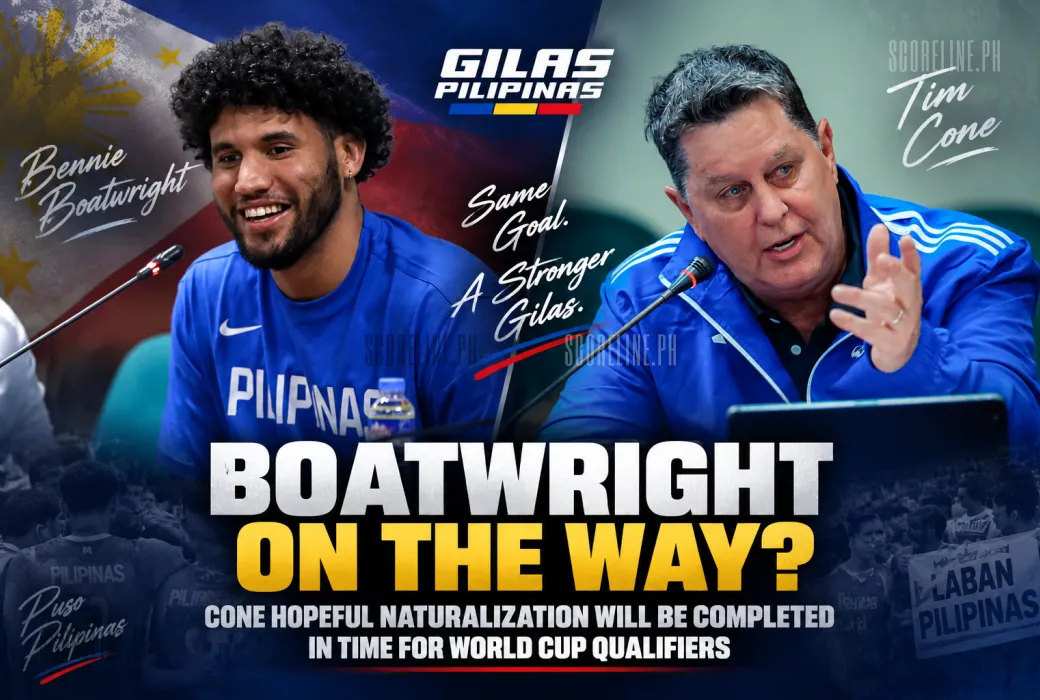
For Gilas head coach Tim Cone, the hope is that the Samahang Basketbol ng Pilipinas (SBP) can complete the necessary requirements before the national team's scheduled games in Malaysia on November 27 and 29.

"They are being worked on," Cone said when asked about Boatwright's documents.

The statement offers hope, but no guarantee.

And for a national team seeking consistency after its disappointing Asian Games campaign, uncertainty is becoming an increasingly familiar challenge.

A 6-Foot-11 Offensive Weapon Gilas Cannot Ignore

Boatwright is not simply another big man who can occupy space inside the paint.

The American forward-center brings an offensive skill set that could significantly expand Gilas' attacking options.

At 6-foot-11, Boatwright combines size with perimeter shooting, mobility, and the ability to score from multiple areas of the court.

Currently playing in China for the Fujian Sturgeons, he has the potential to give the Philippines a different offensive dimension.

His ability to stretch the floor could create additional driving lanes for Filipino guards, while his scoring threat could force opposing defenses to adjust their coverage.

Against physically imposing Asian teams, that versatility could prove valuable.

Gilas doesn't just need another tall player. It needs a big man who can create mismatches, score under pressure, and make the entire offense more difficult to defend.

Boatwright could potentially provide those qualities.

However, his effectiveness would depend on how quickly he adapts to Cone's system, develops chemistry with the local players, and adjusts to international competition.

Talent alone will not guarantee success.

The Brownlee Question: Why Gilas Needs Another Option

For years, Justin Brownlee has been one of the most important figures in Philippine basketball's international campaigns.

His leadership, clutch scoring, and familiarity with Cone's system have made him a trusted offensive centerpiece.

But with his availability uncertain, Gilas cannot afford to build its entire preparation around a single naturalized player.

The lesson is simple: A serious national team must have alternatives before a crisis happens — not after.

Boatwright's potential addition should not automatically be viewed as replacing Brownlee.

Instead, it could give the coaching staff greater flexibility when selecting the team's naturalized reinforcement.

Under FIBA's standard eligibility rules, a national team may generally field only one player classified as naturalized on its game roster.

That means Brownlee and Boatwright would not ordinarily be able to play together if both are classified as naturalized players.

But having both eligible and available would allow Gilas to make strategic decisions based on player health, opponent matchups, and tournament requirements.

The urgency surrounding Boatwright's possible arrival comes after Gilas finished ninth at the 2026 Asian Games in Japan, falling short of defending its historic gold medal.

The disappointing campaign raised serious questions about player availability, roster preparation, and the national team's long-term direction.

Cone previously revealed that several overseas-based Filipino stars were unable to join the Asian Games squad because their professional clubs did not release them.

Among the notable absentees were Kai Sotto, Dwight Ramos, AJ Edu, Kevin Quiambao, and Carl Tamayo.

Their absence exposed an uncomfortable reality.

The Philippines may have the talent to assemble a formidable national team, but talent means little when the best players cannot be brought together at the right time.

Boatwright's situation represents another test of that problem.

If his documentation is not completed in time, Gilas could once again find itself preparing for major international competition without an important potential reinforcement.

That is why the SBP must treat naturalization, player eligibility, overseas club coordination, and long-term roster planning as essential parts of national team development.

Gilas Has Already Proven It Can Fight Without a Naturalized Star

Despite the criticism surrounding its recent international performances, Gilas has shown that an all-local lineup can compete.

Victories over Jordan and Iran in the Asian Qualifiers demonstrated the team's resilience and ability to execute under pressure.

Those results should not be overlooked.

They showed that Filipino players possess the talent and determination to challenge quality international opposition.

But competing consistently against Asia's elite requires more than occasional impressive victories.

It demands offensive balance, defensive discipline, rebounding, reliable shooting, and roster continuity.

A naturalized reinforcement can help address specific weaknesses, but cannot solve every structural problem.

Boatwright could strengthen Gilas. He cannot single-handedly fix Philippine basketball.

The responsibility remains with the coaching staff and basketball leadership to establish a sustainable system capable of producing results regardless of which naturalized player is available.

Another major challenge facing Gilas is the departure of June Mar Fajardo from international competition.

The nine-time PBA MVP has confirmed that his national team career is over, closing an important chapter for Philippine basketball.

His retirement leaves Gilas without one of its most experienced interior players.

While younger talents such as Kai Sotto and AJ Edu represent the future of the national team's frontline, their availability and continued development remain important factors.

Boatwright could provide additional size and offensive versatility during this transition.

But the Philippines must avoid treating naturalization as a substitute for developing its homegrown big men.

The long-term objective should be to develop a frontcourt capable of competing internationally for years, not merely finding short-term solutions before every qualifying window.

The upcoming FIBA World Cup Asian Qualifiers in Malaysia will provide another opportunity for Gilas to demonstrate progress.

But the immediate question remains unanswered.

Will Boatwright's documents and eligibility be completed in time?

And if they are, will he have sufficient preparation to contribute effectively to Cone's system?

These are significant questions with no guaranteed answers.

Even if his naturalization is completed, international eligibility requirements and tournament registration procedures must still be satisfied.

The SBP cannot afford to confuse optimism with readiness. For a national team seeking to regain momentum, every available training session and every roster decision matters.

Boatwright's potential arrival is exciting, but the conversation should not stop with his scoring ability or physical attributes.

The Philippines needs a deeper and more reliable national basketball program.

That means stronger coordination with overseas clubs, better long-term player development, early roster planning, and greater flexibility in preparing for international tournaments.

Brownlee has already demonstrated the value of having a dependable naturalized player who understands the national team's system.

Boatwright could offer a different set of strengths.

Together, as alternative naturalized options, they could give Cone greater flexibility.

But neither player should be expected to carry the entire burden of Philippine basketball's international ambitions.

Boatwright may be an important piece of that system.

He could provide the offensive firepower, size, and versatility Gilas needs against bigger and more physical opponents.

But the real victory would be establishing a national team program that is prepared long before the opening tip.

The Next Chapter Begins With Preparation

For Bennie Boatwright, the opportunity to represent the Philippines could become a defining moment in his basketball career.

For Tim Cone, it could provide another valuable offensive option.

And for Filipino basketball fans, it offers renewed hope that Gilas can strengthen its roster and compete more consistently on the international stage.

But the countdown has already begun.

The paperwork must be completed.

The eligibility requirements must be satisfied.

And the national team must be ready to compete, with or without its preferred reinforcement.

THE PHILIPPINES HAS THE PASSION. IT HAS THE TALENT. IT HAS THE POTENTIAL.

NOW IT NEEDS THE PREPARATION, DEPTH, AND ORGANIZATION TO TURN THAT POTENTIAL INTO RESULTS.

BENNIE BOATWRIGHT COULD BE THE NEW WEAPON. BUT A STRONGER GILAS SYSTEM MUST BE THE REAL GAME-CHANGER. 

19.10.2026
June Mar Fajardo

June Mar Fajardo confirmed that his retirement from Gilas Pilipinas is Final

🇵🇭🏀💔 END OF AN ERA! JUNE MAR FAJARDO CLOSES THE DOOR ON GILAS PILIPINAS COMEBACK!

 “OK na ako sa national team.” — June Mar Fajardo

THE KRAKEN HAS SPOKEN. HIS NATIONAL TEAM JOURNEY IS OVER! 🏆🇵🇭

Nine-time PBA MVP JUNE MAR FAJARDO has confirmed that his retirement from Gilas Pilipinas is FINAL, ending an unforgettable chapter in Philippine basketball.

The 36-year-old basketball legend revealed that his final appearance for Gilas came against Iran during the FIBA World Cup qualifying window.

Fajardo also made it clear that even if he had been invited to join the 2026 Asian Games squad, he would have declined.

His decision comes as Gilas faces serious questions following its disappointing ninth-place finish at the Asian Games in Japan.

For years, the Kraken battled Asia's toughest big men, sacrificed his body, and proudly carried the Philippine flag in international competition.

He gave his strength, experience, and commitment to the national team.

The next generation of Filipino big men must step up.

Players like Kai Sotto, AJ Edu, and other emerging talents represent the future of the national team's frontline.

But developing that future requires more than simply naming replacements.

It demands proper preparation, player availability, long-term planning, and a system that allows younger players to grow into leadership roles.

June Mar's national team chapter may be over, but his contributions to Philippine basketball will remain part of its history.

For every battle under the basket.

For every sacrifice wearing the national colors.

For every moment you gave Filipino basketball fans something to cheer about.

ONCE A GILAS WARRIOR. FOREVER THE KRAKEN. FOREVER A PHILIPPINE BASKETBALL LEGEND! 

19.10.2026
Coach Tim Cone

Gilas Pilipinas Asian Games Gold Defense Crippled by Missing Stars - Tim Cone

 TIM CONE SPEAKS OUT! GILAS' ASIAN GAMES GOLD DEFENSE CRIPPLED BY MISSING STARS.

HOW CAN GILAS DEFEND ITS GOLD MEDAL WHEN SOME OF ITS BEST PLAYERS CAN'T EVEN SUIT UP?

Gilas Pilipinas head coach TIM CONE revealed during the October 8 Senate Committee Hearing on Sports that the national team had hoped to assemble its strongest possible lineup to defend its historic Asian Games basketball gold.

But those plans hit a major snag when overseas club commitments kept several Filipino stars from joining the squad!

🚨 THE MISSING FIREPOWER:

🏀 Kai Sotto

🏀 Dwight Ramos

🏀 AJ Edu

🏀 Kevin Quiambao

🏀 Carl Tamayo

According to Cone, Japanese and South Korean clubs did not release the players despite their willingness to represent the Philippines.

And here's the frustrating part!

THE ASIAN GAMES ARE NOT UNDER FIBA'S MANDATORY PLAYER-RELEASE RULES!

That means overseas clubs are not automatically required to release their Filipino players for the tournament.

Cone also questioned why Japanese and Korean national teams could field their players while Filipino imports competing in those leagues couldn't join Gilas.

The result?

GILAS FINISHED 9TH OUT OF 12 TEAMS, falling short in its bid to defend the Asian Games gold medal.

OUR TAKE: YOU CANNOT EXPECT A NATIONAL TEAM TO COMPETE AT ITS HIGHEST LEVEL WITHOUT A RELIABLE SYSTEM FOR PLAYER AVAILABILITY!

This is not simply about blaming overseas clubs.

Those clubs have contracts, schedules, and professional obligations to consider.

But Philippine basketball officials must also recognize that international success requires planning, coordination, and negotiations long before major tournaments begin.

THE SOLUTION ISN'T JUST FINDING BETTER PLAYERS — IT'S MAKING SURE OUR BEST PLAYERS CAN ACTUALLY REPRESENT THE COUNTRY!

The Samahang Basketbol ng Pilipinas, overseas clubs, and other basketball stakeholders need stronger agreements and better scheduling coordination.

Because when the Asian Games arrive, Gilas should be preparing to beat Asia's best — not scrambling to complete its roster!

And let's be clear:

A GOLD MEDAL CANNOT BE DEFENDED BY TALENT ALONE. IT REQUIRES PREPARATION, COMMITMENT, AND COOPERATION!

19.10.2026
Justin Brownlee

Gilas Pilipinas did not just lose a star. It lost the heart of its championship identity.

Justin Brownlee’s absence from the Philippines’ disastrous 2026 Asian Games campaign was not simply a matter of injury or basketball availability. It was a health issue involving blood pressure and the heart, according to national team coach Tim Cone.

Speaking at a Senate hearing Thursday, Cone revealed why the naturalized Filipino star has been unable to play for both Gilas Pilipinas and Barangay Ginebra in the PBA.

“Because he’s had health concerns regarding blood pressure and heart issues. So he is not able to play at this point,” Cone said.

The revelation puts Brownlee’s prolonged absence into a more serious perspective. This is not just about missing a tournament or a key player being unavailable for a crucial stretch. It is about an athlete dealing with a potentially serious health concern—and the need to put his well-being ahead of basketball.

For a player who has carried the Philippines through some of its biggest recent triumphs, that reality deserves understanding, not pressure.

THE ABSENCE THAT GILAS COULD NOT OVERCOME

Brownlee was instrumental in the Philippines’ historic gold medal run at the 2023 Asian Games in Hangzhou, helping end a 61-year wait for the country’s men’s basketball team to reclaim the continental crown.

His value went beyond scoring. He provided experience, composure, versatility, and the kind of big-game presence that can steady a team when everything starts falling apart.

In Aichi-Nagoya, Gilas had none of that from its naturalized star.

The national team entered the competition with an all-PBA roster but failed to reach the knockout stage, settling for ninth place in one of its worst Asian Games campaigns in men's 5-on-5 basketball. Its preliminary-round schedule included a crushing 105-61 defeat to China.

Brownlee had also missed the Philippines’ two home games in the fourth window of the FIBA World Cup Asian Qualifiers in August and remained unavailable for Ginebra throughout the PBA Governors’ Cup.

His absence was a significant setback. But it would be too simplistic to blame the entire Asian Games collapse on one player’s unavailability.

A championship team must have contingency plans. It must develop alternatives, establish a system that can survive personnel changes, and prepare for the possibility that even its best players will not always be available.

Gilas struggled badly without Brownlee. That should prompt difficult questions about roster construction, preparation, and the team's ability to adapt—not criticism of a player whose health must come first.

A WARNING FOR PHILIPPINE BASKETBALL

Brownlee’s situation also highlights a broader truth: national team planning cannot depend indefinitely on one irreplaceable figure.

His contributions have been enormous, but the Philippines needs a deeper pool of players capable of delivering under pressure. It needs a reliable structure that does not unravel when a key star is sidelined.

That responsibility falls on the people building and managing the program.

The Asian Games campaign exposed the consequences of entering a major tournament without a naturalized player of Brownlee’s caliber. The challenge now is to learn from that experience instead of treating his return as the only solution.

And while fans understandably want to see him back on the court, the priority must remain clear.

Heart-related health concerns are not something to rush through for a tournament, a club, or a national team. Brownlee's recovery and medical clearance must take precedence over the demands of competition.

LET THE MAN HEAL

Brownlee has already given Philippine basketball unforgettable moments. He helped deliver an Asian Games gold medal and earned the trust of Filipino fans through his performances for Gilas and Ginebra.

He does not owe anyone a premature return.

The country can hope to see him play again, but that hope must come with patience. Until he is medically cleared, his absence should be understood for what it is: a health matter, not a failure of commitment.

Gilas must now confront its own shortcomings and build a team capable of competing even when its biggest weapon is unavailable.

Justin Brownlee needs to focus on his health. Gilas needs to focus on fixing its problems. Neither responsibility should be sacrificed for the other.

The Philippines needs its basketball heroes—but first, it needs them healthy.

09.10.2026
DJ Fenner

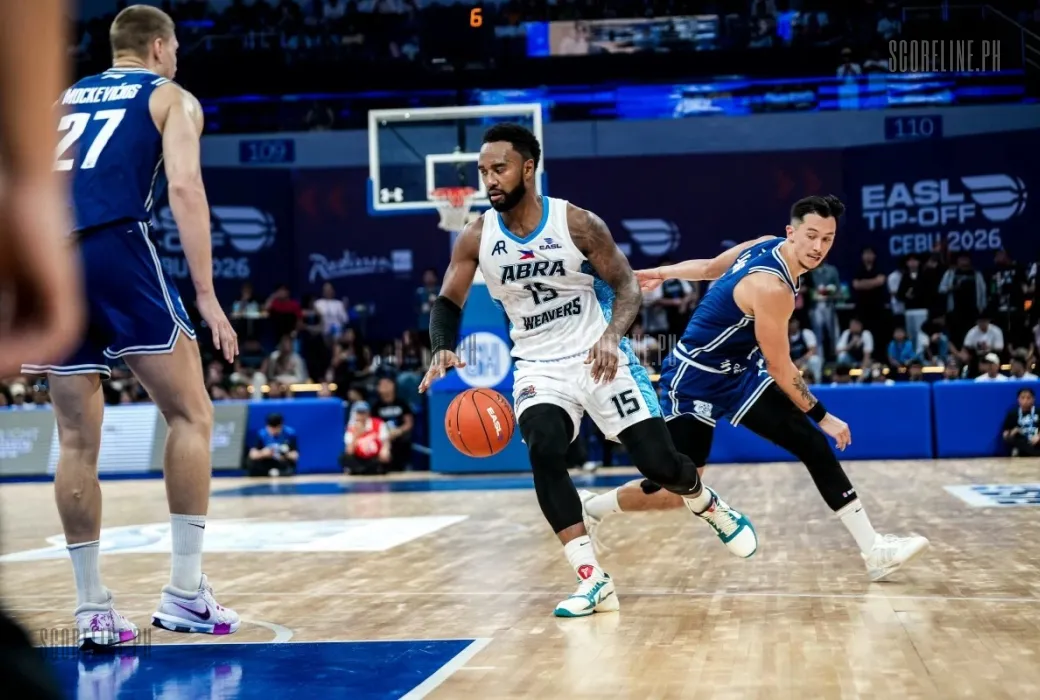
Abra Makes a Statement in EASL Debut With Character Win Over Hong Kong Eastern

Abra knew its character would be tested the moment it stepped onto the East Asia Super League stage.

The Weavers answered that test with composure, grit and a statement victory.

Making their EASL debut before a good-sized crowd at the newly inaugurated SM Seaside Cebu Arena, Abra held its nerve against Hong Kong Eastern to carve out a hard-earned 79-72 victory and announce that it belongs on the regional stage.

For a team often viewed as the replacement for the usual PBA representatives in the tournament, the Weavers had something to prove—and they played like a squad determined to make the most of its opportunity.

“It’s a character win for us,” said Abra star Dave Ildefonso after the game.

For Ildefonso, the victory was about more than simply opening the EASL campaign with a win. It was about a group of players carrying something to prove stepping up when the pressure was highest.

“If you look at our guys, if you look at our lineup, there’s a bunch of players who just want to prove themselves,” he said.

Ildefonso pointed to the personal journeys of several teammates as part of what fueled Abra's performance.

His own stint in Korea did not go as planned. Jake Figueroa experienced a similar setback, while veteran DJ Fenner continues to show that he can still perform at a high level despite his age.

Mike Eric, meanwhile, is also determined to prove that he remains among the best players of his generation.

“I’m still trying to prove that at my age I am still a high-level player,” Fenner said in Ildefonso’s account of the team's mindset.

That collective hunger translated on the court.

Ildefonso contributed nine points, four rebounds and a block, while Fenner finished with 13 points, five rebounds, three assists and three steals.

Eric added 10 points and five rebounds, while Figueroa delivered a crucial three-pointer before his night ended after he was ejected for two technical fouls.

Imports Jaylen Johnson and Freddy Ibrahim led the Weavers with 14 points apiece, providing the offensive punch Abra needed to keep Hong Kong Eastern at bay.

For Ildefonso, however, the numbers only tell part of the story.

The bigger accomplishment was proving that Abra could withstand the pressure of its first international assignment.

“If you look at us, the team we’re really here to prove something to ourselves and to other people,” he said.

“Siguro after this win, siyempre first game pa lang, but it is a step towards the right direction for most of us.”

The Weavers now return their attention to another important mission—the MPBL playoffs, where they are the defending champions.

Their EASL campaign will resume on November 4, when Abra faces the Ryukyu Golden Kings, the Japan B.League runner-up led by Filipino guard Kieffer Ravena.

One game is in the books.

But for Abra, the message from its international debut is already clear:

The Weavers did not come to the EASL simply to fill a slot. They came to prove they belong.

06.10.2026
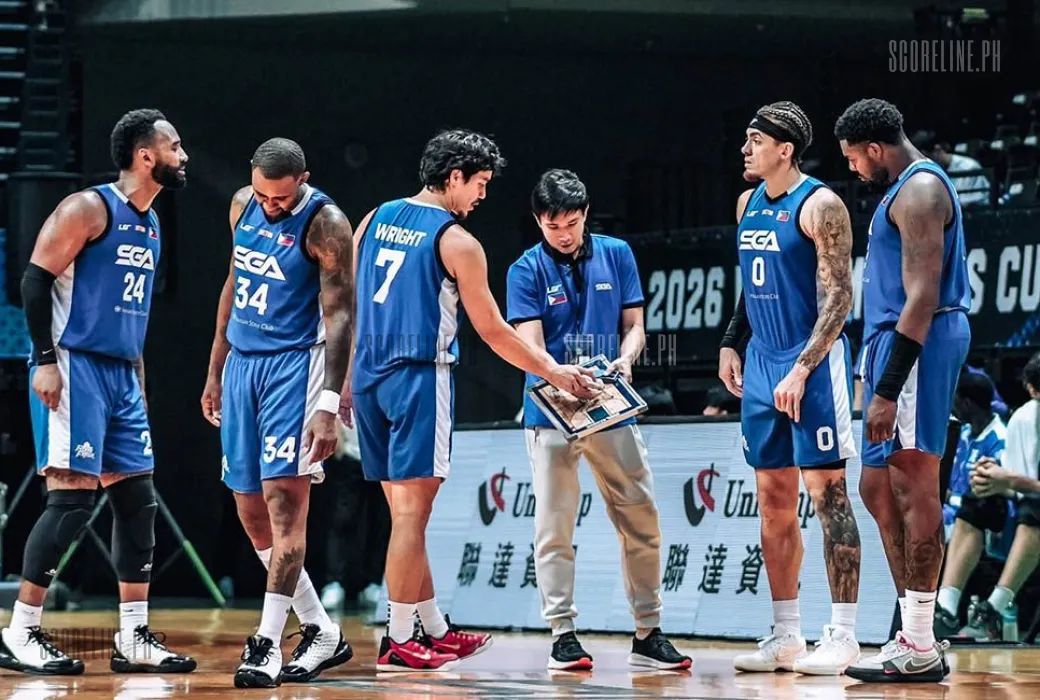
SGA Team

Apology Made. Damage Done. Jones Cup Format Change Puts SGA in the Crossfire

CTBA admits Strong Group Athletics was the “biggest victim” of the controversial format change—but for the two-time champions, an apology may not be enough.

The apology has been made.

But for Strong Group Athletics, the damage already been done.

The Chinese Taipei Basketball Association (CTBA), organizer of the 2026 William Jones Cup, has publicly apologized over a sudden change to the tournament format that put SGA's bid for a historic three-peat in jeopardy.

And in a striking admission, the organizers themselves acknowledged that the Philippine-based squad may have been the “biggest victim” of the new format.

That acknowledgment, however, does little to erase what happened on the court.

SGA entered the final stretch of group play with a 4-1 record, seemingly putting Charles Tiu's squad in prime position for another deep run.

But the new format changed the equation.

CTBA decided to guarantee a semifinal berth for Chinese Taipei Blue, despite the host team sitting at the bottom of Group A with a 1-4 record.

For SGA, it created a problem. A team with four wins could now be watching the semifinals from the sidelines.

The complicated situation became even more difficult because of the tournament's margin-of-victory tiebreaker.

SGA needed to beat South Korea's Wonju DB Promy by at least 32 points to strengthen its chances of advancing.

Instead, the Korean side—powered by Ethan Alvano—handed SGA a 110-79 defeat in their opening meeting.

South Korea's position at the top of Group A secured the other semifinal spot, leaving SGA dependent on the results of other games.

Suddenly, the defending two-time champion was no longer in control of its own destiny.

The rationale?

Chinese Taipei Blue had been hit by injuries, leaving the team depleted and forcing younger, less experienced players into the lineup.

For the host, the change offered another chance.

Although, CTBA explained that the format adjustment was made partly to allow Chinese Taipei Blue to remain competitive and give local fans an opportunity to see their hometown team reach the semifinals.

The organizers also said scheduling adjustments were made to provide teams with more adequate rest.

But CTBA recognized the obvious consequence. SGA already paid the price.

“The two-time champion Philippine SGA team… may be the biggest victim of the new competition format this year.”

That is quite an admission.

The organizers also praised SGA for its performance throughout the tournament and thanked the team for contributing to the competition.

But here's the uncomfortable question:

Should a team with a 4-1 record have to depend on other results simply because the rules changed during the tournament?

There is nothing wrong with acknowledging a mistake. In fact, CTBA's public apology is important.

But an apology does not add another win to SGA's record. It does not erase the 32-point requirement.

It does not restore the team's control over its semifinal destiny. And it certainly does not guarantee another Jones Cup championship.

For a team chasing a historic three-peat, those details matter.

Despite the controversy, SGA don't quit.

The Philippine-based squad still faced Chinese Taipei Blue in its final group assignment, knowing that even a victory may not guarantee a Final Four berth.

Japan's result against South Korea also factors into the equation.

That is the frustrating part. SGA did the work on the court.

The Jones Cup has apologized. But for SGA, the message is simple: Again, an apology can acknowledge the damage. It cannot undo it.

And if SGA somehow survives this mess and reaches the semifinals, it won't just be playing for another Jones Cup title.

It will be playing with something to prove. Let's find out what's next for them. 

06.10.2026
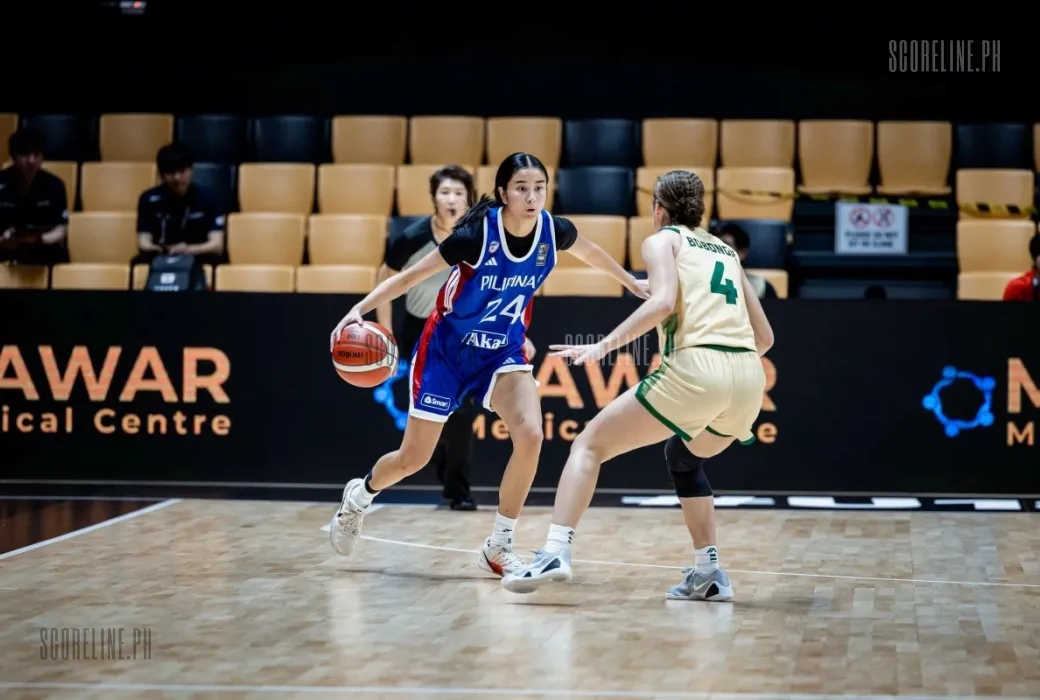
Gilas Pilpinas vs. Australia

Gilas Girls suffer rude awakening against Australia

A TOUGH START FOR GILAS GIRLS. 🇵🇭🏀

The Gilas Pilipinas Girls opened their Division A FIBA Women’s U18 Asia Cup campaign with a brutal reality check, falling to defending champion Australia, 102-47, at the Karisma Arena in Seremban, Malaysia on Sunday, Oct. 4.

The Australian Gems wasted no time showing why they are the defending champions, exploding to a 30-8 lead after the opening quarter and putting the Filipinas in a hole they could never escape.

By halftime, the damage was already done.

Australia stretched its advantage to 60-20, effectively putting the game out of reach after two quarters.

Tiffany Reyes and Zaydhen Rosano led Gilas with 10 points apiece, but Australia’s depth proved too much. Five Australian players scored in double figures, led by Sophie Richardson with 18 points and Isabel Smith with 17.

But there’s no time to dwell on the loss.

The Filipinas return to action Monday, Oct. 5, against South Korea, before wrapping up the Group A preliminaries against New Zealand on Tuesday.

THE AUSTRALIAN WALL WAS TOO HIGH. NOW COMES THE RESPONSE.

The score is final.

THE FIGHT ISN’T.

04.10.2026
yeng guiao

Rain or Shine secures Coach Yeng Guiao until 2030 in ultimate power move

In the volatile world of professional basketball where coaching carousels turn overnight, the Rain or Shine Elasto Painters just sent a seismic shockwave of stability across the PBA landscape.The mastermind isn't going anywhere. Rain or Shine management has officially signed firebrand head coach Yeng Guiao to a monumental contract extension that will keep him at the helm of the franchise until 2030.

In a massive display of corporate faith, the new deal—which adds an extra two years to his horizon—was signed despite Guiao still having two years left on his current five-year pact.The statement from team co-owners Raymund Yu and Terry Que is loud, clear, and absolute: 

Trust the process. 

Trust the coach. Trust the culture.The Culture Is the CatalystWhen Coach Yeng returned to the Elasto Painters baseline in 2022 after a six-year stint with NLEX, he inherited a franchise searching for its lost identity. What followed wasn't a quick-fix patch, but a complete structural overhaul.Since his return, Rain or Shine has transformed from a lottery-bound, rebuilding squad into a legitimate, feared title contender. Under his watchful eye, the Elasto Painters have stormed their way into the semifinals in five of the last six conferences.That kind of consistent deep playoff execution isn't a fluke. 

That is the byproduct of an unyielding system.Instead of chasing high-priced superstars, Guiao went to work in the laboratory, developing a lethal, high-octane young core led by Adrian Nocum, Jhonard Clarito, Andrei Caracut, and Santi Santillan. By locking Guiao down until 2030, management is guaranteeing that this young core will reach its absolute prime under the exact architect who drafted them.From Stability to SilverwareThe timing of the announcement provides a massive psychological boost right before the season-ending Governors’ Cup resumes this October. 

Rain or Shine currently sits comfortably at the top tier of Group B with a strong 4-2 win-loss slate.To make things even scarier for the rest of the league, the Elasto Painters recently paraded powerhouse veteran Stanley Pringle and speedy sophomore sensation Felix Lemetti in a competitive tune-up game against the Korean Basketball League's (KBL) LG Sakers.Guiao already steered the franchise to its only two PBA championships during his first legendary stint from 2011 to 2016, including their last taste of glory in the 2016 Commissioner’s Cup.

The question was never whether Rain or Shine believed in Yeng Guiao's blueprint. The front office just gave the entire basketball community a definitive, long-term answer.Now, with his future cemented and the pieces firmly on the board, the clock begins to tick: Can the Elasto Painters translate ultimate organizational stability into championship silverware?

17.09.2026
elizabeth means

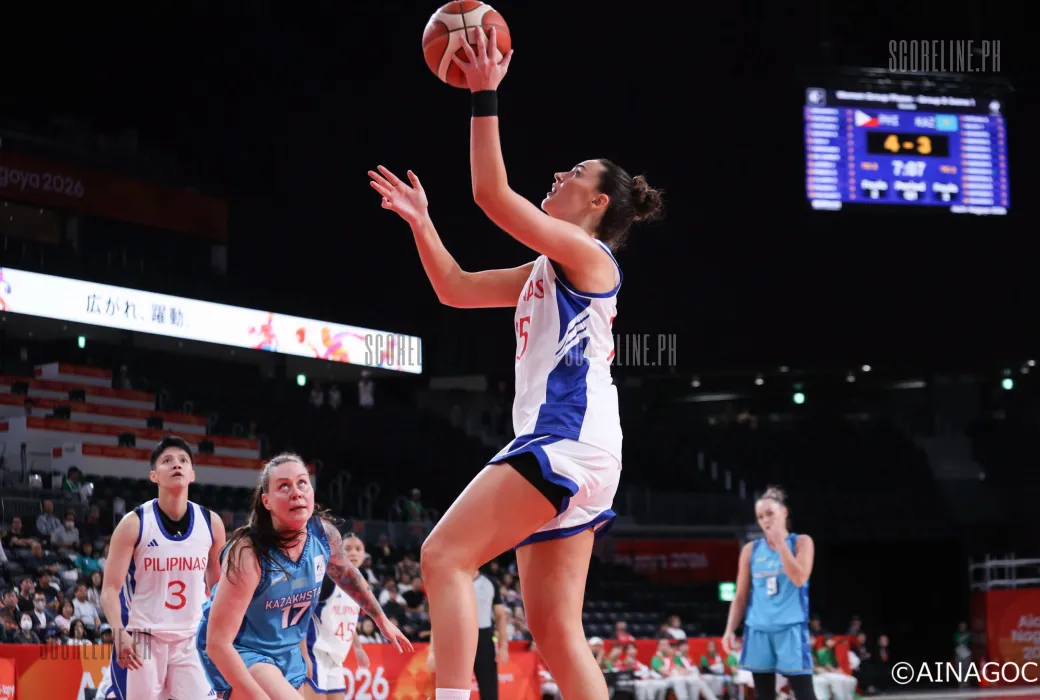
Elizabeth Means shines in debut as Gilas Women crush Kazakhstan in Asian Games opener

The Elizabeth Means era for Philippine women's basketball has officially arrived, and it comes with a lethal dose of defensive havoc and offensive brilliance.

Gilas Pilipinas Women opened their 20th Asian Games campaign with a resounding statement, dismantling Kazakhstan, 86-58, on Thursday, September 17, at the Aichi International Arena.

The lopsided victory immediately propelled the Filipinas to a 1-0 start in Group B, signaling their serious intent to contend for a podium finish in this year's tournament.

The Elizabeth Means Show

All eyes were on the newly minted naturalized reinforcement Elizabeth Means, and she did not disappoint. Making her highly anticipated 5-on-5 debut for the national team, Means spearheaded a relentless Filipino attack.

After Kazakhstan opened the game with a brief 2-0 lead, Means and the Filipinas locked down defensively, orchestrating a massive breakaway that saw the lead swell to as many as 39 points. Means finished the evening with a spectacular game-high 23 points, 4 rebounds, and an elite 8 steals, completely disrupting Kazakhstan’s backcourt rhythm.

Complete Team Effort

While Means provided the frontline firepower, the Gilas local crew showcased the depth and chemistry built under the national program.

Stef Berberabe pulling the strings flawlessly, flirting with a double-double by putting up 11 points, 8 assists, and 4 rebounds.

The trio of Jhaz Joson, Kent Pastrana, and veteran sniper Janine Pontejos providing steady ammunition off the wings, chipping in 8 points apiece to keep the Kazakh defense guessing.

Kazakhs Stifled

Kazakhstan struggled heavily against the Filipinas' full-court pressure and active hands. Tamara Noiok paced the losing squad with 11 points and two assists, while Anna Bezgovada fought hard in the paint to salvage a 10-point, 15-rebound double-double, but their efforts were ultimately drowned out by Gilas' transition game.

What's Next?

With momentum firmly on their side, Gilas Pilipinas Women will look to make it two in a row when they return to action on Sunday, September 20, facing off against Hong Kong.

Tip-off is scheduled for 9:00 AM, Manila time.

17.09.2026
Gilas Pilipinas

Gilas Pilipinas begins Asian Games title defense with a new-look squad

Gilas Pilipinas begins its campaign to defend the men’s basketball gold medal at the 2026 Asian Games with a significantly different lineup from the team that ended the country’s 61-year title drought in Hangzhou.

The Philippines opens its title defense against Bahrain on September 11 in Nagoya, Japan, beginning a challenging tournament that will test whether the new-look national team can once again rise to the occasion on the Asian stage.

The men’s basketball competition will be held from September 10 to 20, ahead of the official Asian Games opening ceremony, with the 5-on-5 tournament taking place at the Aichi International Arena in Nagoya.

Coach Tim Cone is building the 2026 squad primarily around players from the Philippine Basketball Association (PBA) after several regular Gilas players based in Japan and South Korea became unavailable because the Asian Games falls outside the regular FIBA competition calendar.

That has left the Philippines with a roster that looks markedly different from the squad that won gold in Hangzhou in 2023.

A very different Gilas team

The Philippines will enter the tournament without several key players who have been part of its recent international campaigns.

Among those unavailable are Kai Sotto, Dwight Ramos, AJ Edu, Kevin Quiambao and Carl Tamayo, while veteran center June Mar Fajardo has already retired from international basketball.

Cone has confirmed that RJ Abarrientos, Justin Arana and Justin Baltazar will be part of the Asian Games team, while players such as Robert Bolick and Adrian Nocum are among the prominent candidates for the final 12-man lineup.

The final roster, however, remained subject to confirmation as of September 1.

The changes mean Cone will have to build a team around a different mix of size, athleticism and offensive firepower.

With a smaller lineup compared with previous Gilas squads, the coach is expected to emphasize speed, quickness and an up-tempo style of basketball.

The approach could allow the Philippines to maximize its athleticism, but it also presents challenges against teams capable of exploiting Gilas’ lack of size in the frontcourt.

Brownlee remains the biggest question

Perhaps the most important unresolved issue surrounding the team is the availability of Justin Brownlee.

The veteran naturalized player played a pivotal role in Gilas’ historic 2023 Asian Games campaign, but his participation in Nagoya has yet to be confirmed.

Cone said the Philippines has reserved a roster spot for Brownlee, leaving the door open for his return if he is healthy enough to compete.

Brownlee had been dealing with leg, hamstring and knee problems and missed Gilas’ recent FIBA World Cup Asian Qualifiers games against Jordan and Iran.

His importance to the team is difficult to overstate.

In the 2023 Asian Games semifinals, Brownlee erupted for 33 points, including 17 in the fourth quarter, as the Philippines overcame a 20-point deficit to stun host China, 77-76.

He followed that performance with 20 points, 10 rebounds, five assists and two steals in the championship game against Jordan as Gilas won 70-60 and captured the gold medal.

If Brownlee is healthy and commits to the team, his experience and scoring ability could provide a major boost to an otherwise revamped lineup.

No Kai Sotto, no June Mar Fajardo

The absence of Kai Sotto is another significant change.

Cone confirmed that Sotto would participate in the August FIBA World Cup Asian Qualifiers but would not be part of the Asian Games squad.

No specific reason was given for Sotto’s absence.

The 7-foot-3 center had recently returned from a lengthy injury layoff and helped Gilas defeat Jordan and Iran in the World Cup qualifiers, averaging 15.5 points, 15 rebounds, three assists and one block across the two victories.

Sotto is currently unsigned after his contract in Japan expired, while his basketball future remained uncertain as he awaited developments regarding his eligibility to play in the US NCAA.

Meanwhile, Fajardo has officially ended his Gilas career.

The 36-year-old center retired from international basketball after more than a decade representing the Philippines, including three FIBA World Cup appearances and the historic Asian Games championship in 2023.

Overseas commitments reshape the roster

The absence of several other Gilas regulars is largely tied to the timing of the Asian Games.

Dwight Ramos and AJ Edu play in Japan, while Kevin Quiambao and Carl Tamayo are based in South Korea. Because the Asian Games is outside the regular FIBA competition calendar, securing the release of overseas players becomes more difficult.

That prompted Cone and the Samahang Basketbol ng Pilipinas to construct a separate team largely composed of PBA players.

It is a situation that creates both uncertainty and opportunity.

The new lineup may lack the familiarity and international experience of the 2023 champions, but it also gives a new generation of PBA standouts an opportunity to establish themselves on the Asian stage.

Boatwright unavailable

Another potential option has also been removed from consideration.

Bennie Boatwright will not play for Gilas in Nagoya because his naturalization and Philippine passport requirements were not completed in time.

Cone had identified Boatwright as a possible naturalized-player option, but with the passport unavailable before the tournament, Brownlee remains the preferred choice if he is healthy and willing to return.

A familiar opponent awaits

Gilas has been drawn into Group C alongside China, Bahrain and Kazakhstan.

The Philippines opens against Bahrain on September 11 before facing Kazakhstan the following day.

The group-stage schedule then culminates in a highly anticipated meeting with China on September 14.

The matchup carries plenty of history.

Three years ago in Hangzhou, Gilas stunned the host nation with one of the most memorable comebacks in Philippine basketball history.

The Philippines trailed China by 20 points before Brownlee and the Nationals completed the comeback for a dramatic 77-76 victory.

Now, the two teams meet again—this time in the group stage.

The circumstances, however, are very different.

The Philippines is defending the title with a largely new squad, while China will be eager to erase the memory of its painful semifinal defeat on home soil.

The road to another gold medal

After the group stage, the quarterfinals are scheduled for September 16, followed by the semifinals on September 18.

The medal games are set for September 20, with the bronze-medal game scheduled at 3:40 p.m. Philippine time and the gold-medal game at 6:40 p.m.

Gilas’ exact quarterfinal and semifinal schedules will depend on its group-stage finish and subsequent tournament results.

Gilas Pilipinas Asian Games schedule

September 11 — vs. Bahrain, 12 noon Philippine time

September 12 — vs. Kazakhstan, 6 p.m.

September 14 — vs. China, 12 noon

September 16 — Quarterfinals

September 18 — Semifinals

September 20 — Bronze-medal game or gold-medal game

Japan is one hour ahead of the Philippines, with the schedule above converted to Philippine time.

Can Gilas defend the crown?

The Philippines enters Nagoya as the reigning Asian Games champion, but repeating that achievement will be far from straightforward.

The team that conquered Hangzhou three years ago featured Brownlee, Fajardo and several established national-team stars. The 2026 squad, meanwhile, will be asked to succeed without many of those familiar faces.

The final roster and Brownlee’s availability could significantly affect Gilas’ chances.

Still, the mission remains unchanged.

Win gold.

The Philippines ended a 61-year wait for the Asian Games basketball championship in 2023. Now, a new-look Gilas team must prove that the victory in Hangzhou was not simply a one-time breakthrough.

For Cone and his players, the challenge is clear: adapt quickly, embrace the pressure and keep the gold in Philippine hands.

The title defense begins September 11.

Different players. Different circumstances. Same dream.

06.09.2026
Scottie Thompson

Scottie Thompson: The Stats May Not Show It, But Gilas Needs Him

Scottie Thompson made the mistake that everyone saw.

But apparently, some fans also missed everything else he did.

The Gilas Pilipinas veteran became an easy target after committing a crucial five-second inbound violation with seven seconds left in the Philippines’ thrilling 82-81 win over Jordan. The error gave Jordan one final chance to steal the game—only for Kai Sotto to come up with the game-saving block.

The mistake was real. The criticism is understandable.

But reducing Thompson’s entire performance to one turnover? That’s where the criticism misses the bigger picture.

Head coach Tim Cone knows exactly what Thompson brings, and it goes far beyond scoring.

He rebounded. He chased loose balls. He defended Jordan’s best guards, including Jalen Harris and Freddy Ybrahim. More importantly, his presence helped settle Gilas after the team fell behind by a staggering 18 points, 26-8, in the first quarter.

Thompson finished with a +13 efficiency, another indication of the impact that doesn't always appear in the traditional box score.

As Cone put it, people tend to dismiss the “Scottie things”—the dirty work, the defense, the rebounds and the little plays that help a team win.

And that may be the biggest misunderstanding about Thompson.

He doesn't have to be the star to be important.

Basketball isn't always about who scores the most. Sometimes, it's about who does the jobs nobody else wants to do.

So yes, criticize the five-second violation.

But don't let one mistake erase everything Scottie Thompson contributed to the comeback.

Gilas didn't need another scorer that night. It needed a worker. And Scottie did what Scottie does.

30.08.2026
dwight ramos

Gilas Pilipinas Shows Its Grit, Completes Another Comeback Win

Gilas Pilipinas is proving that this team is not one that folds when the pressure rises.

The Nationals overcame another double-digit deficit and stormed back to beat Iran, 68-56, on Sunday at the Mall of Asia Arena, securing their second straight victory in the 2027 FIBA World Cup Asian Qualifiers.

It was far from a perfect performance, but that may be exactly what makes the win more impressive.

After escaping Jordan in an overtime thriller, 82-81, last Friday, Gilas once again found itself in trouble early. Instead of panicking, however, the Filipinos responded with the kind of defensive intensity and composure that ultimately turned the game around.

The victory gives Gilas its fourth win in eight games in Group E and, more importantly, another confidence boost heading deeper into the qualifying campaign.

Two games, two comebacks, two statement wins.

Gilas may still have plenty to fix, but one thing is becoming increasingly clear: this team has learned how to fight back.

And when the Philippines plays with that kind of heart and hustle, no lead feels completely safe against Gilas.

The comeback kings are making noise again. 🇵🇭🏀🔥

30.08.2026
RHJ

TNT Faces Early Test in Title Defense as Rondae Hollis-Jefferson's Return Remains Months Away

Defending PBA Governors' Cup champion TNT Tropang 5G faces a critical stretch in its title defense with star import Rondae Hollis-Jefferson still months away from returning to game action.

Team manager Jojo Lastimosa confirmed that the three-time PBA Best Import is expected to arrive in the Philippines on August 2 after completing part of his rehabilitation in the United States. However, despite encouraging progress in his recovery from a ruptured Achilles tendon, Hollis-Jefferson is not expected to suit up until around October.

According to Lastimosa, the former NBA forward will first participate in full-court team activities upon his arrival before any timetable for his competitive return can be established.

The extended absence places even greater pressure on TNT as it attempts to defend its championship without the player who has become the centerpiece of the franchise's recent success. Hollis-Jefferson has been instrumental in the Tropang 5G's title-winning campaigns, providing elite scoring, rebounding, defense, and leadership on both ends of the floor.

In the meantime, the responsibility falls on current import Darius Days—and the rest of the roster—to keep TNT competitive until Hollis-Jefferson is fully healthy.

That challenge became even more apparent following TNT's 111-106 overtime loss to Terrafirma, a result that dropped the Tropang 5G to a 1-2 record in Group A of the Governors' Cup. Days struggled to make an impact, finishing with just 10 points and five rebounds while battling foul trouble throughout the contest.

The defeat highlighted the team's current concerns. Without its proven import leading the charge, TNT has struggled to establish consistency on both offense and defense, while its supporting cast has yet to consistently fill the production gap left by Hollis-Jefferson.

The road ahead offers little relief.

TNT's upcoming schedule features consecutive matchups against some of the tournament's strongest teams, including Converge, San Miguel Beer, and NLEX. Those games could significantly shape the team's playoff position long before Hollis-Jefferson becomes available.

Waiting for the former Best Import to return is understandable given his value to the franchise, but relying solely on that timeline carries considerable risk. Achilles injuries are among the most challenging recoveries in professional sports, and even after medical clearance, regaining game rhythm and peak conditioning often requires additional time.

For TNT, the focus must shift toward maximizing the players currently available. Veterans will need to provide leadership, the local core must elevate its production, and Days—or any potential replacement import—must deliver more consistent performances if the defending champions hope to remain in contention.

Championship teams are ultimately measured by their ability to overcome adversity. While Hollis-Jefferson's eventual return could provide a major boost, the Tropang 5G cannot afford to simply wait for their superstar to rescue their campaign.

The coming weeks may ultimately determine whether TNT remains a legitimate championship contender or enters October merely fighting to secure a favorable playoff position. Until Hollis-Jefferson returns, every game carries added importance, and every victory becomes essential in keeping the team's title defense on course.

26.07.2026
Yeng Guiao & Gian Mamuyac

"Sometimes, You Cannot Control Your Destiny": Yeng Guiao Bids Farewell to Gian Mamuyac

Rain or Shine head coach Yeng Guiao shared a heartfelt reaction following the trade that sent Gian Mamuyac to the Phoenix Fuel Masters, acknowledging both his disappointment and the realities of professional basketball.

"Sometimes, you cannot control your destiny," Guiao said, reflecting on the move.

The veteran coach admitted he had hoped Mamuyac would remain with the Elasto Painters, where the young guard spent the first four seasons of his PBA career. During that time, Mamuyac developed into a dependable contributor under Guiao's guidance, earning respect for his work ethic and steady improvement.

Despite his disappointment, Guiao expressed gratitude for everything Mamuyac brought to the team and voiced confidence that the hardworking guard will continue to succeed with Phoenix.

Guiao also emphasized a truth that every professional athlete eventually faces: trades are part of the business. While players and coaches may not always have control over where their careers lead, they can control how they respond to change.

Rain or Shine played a significant role in Mamuyac's development, and Phoenix now acquires a player whose ceiling remains high. A new environment could provide the opportunity for another step forward in his career.

Guiao's message served as a reminder that while teams and jerseys may change, professionalism, gratitude, and mutual respect remain enduring values in sports.

23.07.2026
UAAP Logo

UAAP Extends Ateneo Deadline for Internal Investigation

The University Athletic Association of the Philippines (UAAP) has granted Ateneo de Manila University an extension to submit the findings of its internal investigation into the tragic drowning deaths of student-athletes Rene Baterbonia and Divine Adili in Dipaculao, Aurora on June 8.

Originally due on July 15, the report will now be submitted on July 24 after Ateneo requested additional time before the initial deadline.

Despite the extension, the UAAP said the preventive sanctions it previously imposed will remain in effect while the investigation is ongoing. These include the suspension of Ateneo's coaching staff from participating in all UAAP-related activities.

During the ongoing probe, Louie Alas will continue to serve as the Blue Eagles' interim head coach, while former Ateneo standout Nico Salva remains the team's manager until the investigation is completed and the UAAP acts on its findings.

16.07.2026

Top News

Kenji Moral

Kenji Moral’s Fast Break to Rising Star in PH's Youth Basketball

2,196
Mario Barasi Jr.

Mario Barasi Jr.: Rising Big Man ready for the PBA stage

832
Michael Martinez

Michael Martinez: The Filipino Athlete Who Funded His Own Olympic Dream

416
Masters Pinoy Pilipinas Basketball squad with team Mongolia.

Masters Pinoy captures basketball gold at the World Masters Games

392
janine

Exclusive: Janine Nicandro, The Journey of a PBA Referee

377
Loren Brill

Loren Brill: Reigniting a basketball legacy born of champions

343
Guiness Nabung of Masters Pinoy Pilipinas Basketball team.

Guiness Nabung - Masters Pinoy Pilipinas Basketball Profile

307
Johann Chua & Carlo Biado

17 Filipino cue artists eye glory at World Pool Championship in Saudi Arabia

304
Isaiah Africano poses for Scoreline.ph during the PBA 50th Rookie Draft

Isaiah Africano joins Guam National Team for FIBA WCA Qualifiers

303
Efren Reyes

Player Profile Series: “The Magician” Efren “Bata” Reyes

297
Gilas Pilipinas

Gilas Pilipinas begins Asian Games title defense with a new-look squad

294
Andre Jamgerald Ugaddan

Andre Jamgerald Ugaddan – “Batang Mamaw” ng Reg. 4A

293
Kevin Quiambao

UAAP: UP fighting Maroons fall short to Green Archers, forced to Game 3

283
Paul Reguera

Paul Reguera - Masters Pinoy Pilipinas Basketball Profile

270
Dr. Obet Vital is the new Assistant Coach of the UP Fighting Maroons Women's Volleyball Team

Looking Ahead: Obet Vital's new era of growth and opportunity

266
Alvin "The Captain" Patrimonio - a player with a lion heart.

Player Profile Series: “The Captain” Alvin Patrimonio’s lion heart

245
Deanna Wong

Player Profile Series: Deanna Wong, The Court’s Quiet Leader

236
Ricky Ricafuente

Ricky Ricafuente - Masters Pinoy Pilipinas Basketball Profile

233
First ever PBA MVP William "Bogs" Adornado.

Player Profile: William "Bogs" Adornado - First PBA MVP

229
Oliver Agapito of Masters Pinoy Pilipinas Basketball team.

Oliver Agapito resharpens his basketball form with Masters Pinoy

224
Roger Yap of Masters Pinoy Pilipinas Basketball team.

Roger Yap - Masters Pinoy Pilipinas Basketball Profile

217
Aiza Maizo-Pontillas

Player Profile Series: The fierce journey of Aiza Maizo-Pontillas

214
Captain Nica Celis of the UP Fighting Maroons Women's Volleyball Team

Nica Celis aims to helm Fighting Maroons' escape from bottom spot

202
Alberto "Abet" Guidaben - PBA 50 Greatest Players (2000)

Player Profile Series: Abet Guidaben – PBA Legend, 2 Slams

195
Toshihiko Era

Japanese boxer scores a remarkable victory in Bangkok at age 50

193
Johann Chua

Player Profile Series: Johann Gonzales Chua - The "Bad Koi"

192
Cloanne Mondonedo

Player Profile Series: Clo Mondoñedo’s journey to setter glory

187
Alex Pagulayan

Player Profile Series: Billiards' "Lion Heart" Alex Pagulayan

184
Kamille Cal

Player Profile Series: Kamille Cal brings precision to Akari

180
Association of Boxing Alliances in the Philippines

13-strong boxers to lead PH Boxing Team in 2025 SEA Games

177
Sisi Rondina and Bernadeth Pons

Rondina, Pons claim first Challenge win at Beach Pro Tour Nuvali

175
Sisi Rondina

Player Profile Series: Sisi Rondina, Volleyball’s Cherry Bomb

171
"The Quick Brown Fox" - Ricardo Brown

Player Profile Series: Ricardo Brown – "The Quick Brown Fox"

169
PBA Commissioner Willie Marcial

PBA Season 50 eyes more overseas tours and foreign guest teams

158
Spike and Serve with Petro Gazz Angels & Volleybukids

Spike and Serve reaches out to Volleybukids in Morong, Bataan

156
Arena Fitness Dojo

From Grassroots to Global: Arena Fitness Dojo

156
Ricky Ricafuente

Ricky Ricafuente brings his global experience to Masters Pinoy

155
Francisico Bustamante

Player Profile Series: The iconic Francisco "Django" Bustamante

152
Philip Cezar - PBA's Tapal King

Player Profile Series: Philip Cezar – The PBA's Tapal King

152
Freddie Hubalde - The Silent Operator

Player Profile Series: Freddie Hubalde - The Silent Operator

150
Ginebra's RJ Abarrientos tries to score against NorthPort's import Kadeem Jack.

Ginebra dominates NorthPort to get Game 1 of their Semis series

147
Jelena Todorovic is the new Head Coach of Fortaleza Basquete Cearens.

Brazil’s NBB gets first female coach in Jelena Todorovic

146