SiPons
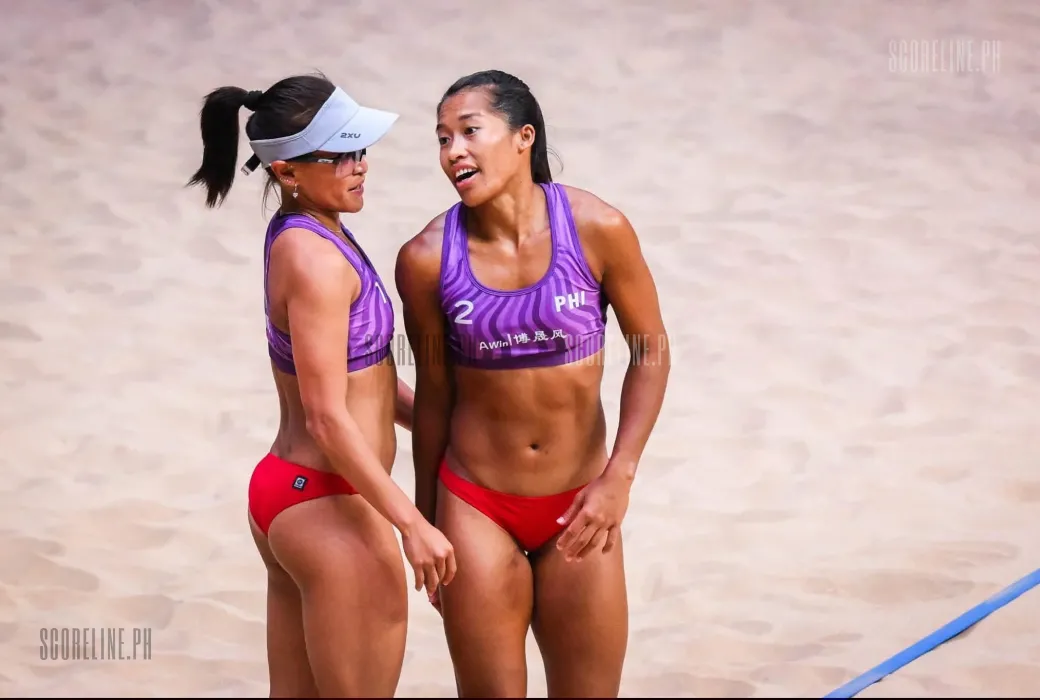
SisiRondina BernadethPons AlasPilipinasWomen BeachVolleyball

Alas Pilipinas leave with pride, purpose and unfinished business

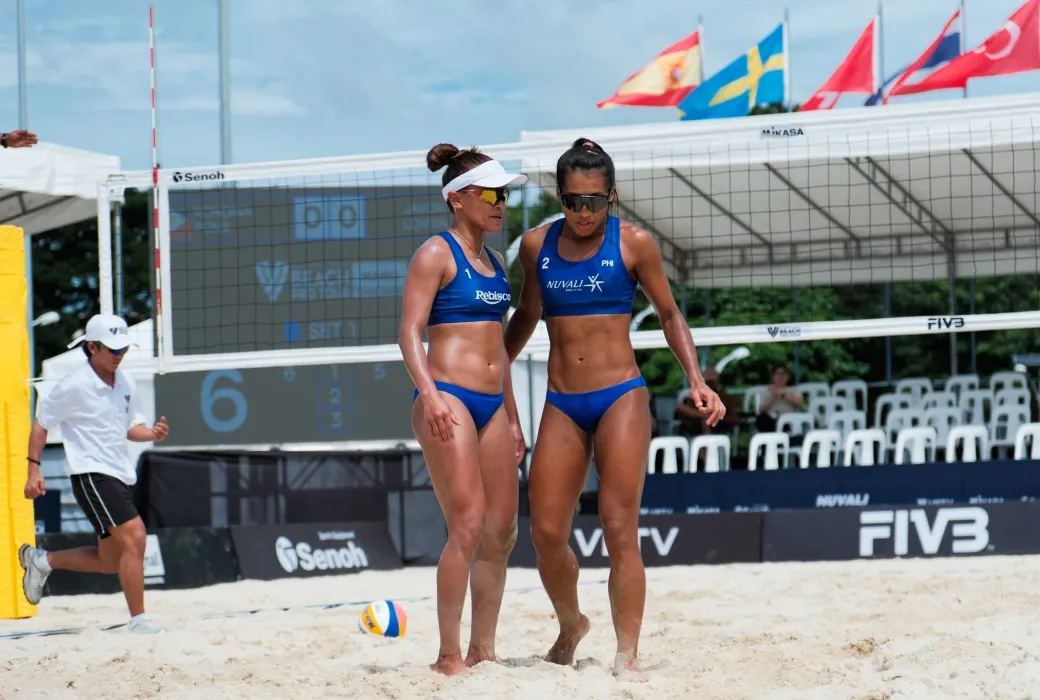
They may not have gotten the result they dreamed of, but Sisi Rondina and Alas Pilipinas beach volleyball gave the Philippines something far bigger—a reason to be proud.

For Rondina, simply stepping onto the international stage was already a dream fulfilled.

Representing the country at that level is an opportunity few athletes get to experience, and the Filipina star understands exactly what it means to carry the Philippine flag in competition against the best.

But dreams are rarely measured by one result.

Sometimes, they are measured by the courage to show up, the battles fought, and the lessons carried home.

And that is exactly what Alas Pilipinas now has.

A journey worth remembering

The campaign may not have ended the way the team hoped, but every match gave the Filipinas another opportunity to test themselves, learn and grow.

They leave the competition carrying more than memories.

They leave with experience.

They leave with lessons.

And most importantly, they leave with an even stronger hunger for what comes next.

For a team continuing to make its mark in international beach volleyball, every high-pressure match is another building block toward a bigger future.

The disappointment may sting now.

But it does not erase what they accomplished.

The dream continues

There will be another tournament. Another court. Another opportunity to wear the national colors.

And when that moment comes, Rondina and her teammates will bring everything they learned from this journey with them.

Because this was never simply about winning one match or one tournament.

It was about fighting for the flag.

It was about carrying the Philippines with pride.

And it was about proving that Alas Pilipinas belongs on the international stage.

So, kudos, mga Alas. 🇵🇭🔥

You fought.

You battled.

You represented.

And you gave Filipinos another reason to believe.

This may not be the ending you wanted.

But it is definitely NOT the end of the dream.

The dream continues. 🇵🇭🔥

News

Alex Eala

Alex Eala Pushes World No. 13 Diana Shnaider but Falls Short in WTA 500 Battle

Despite a straight-set defeat, the 21-year-old Filipina showed flashes of her aggressive game against one of the world's top players. With Tokyo next on her schedule, consistency and execution remain the biggest challenges in her breakthrough WTA season.

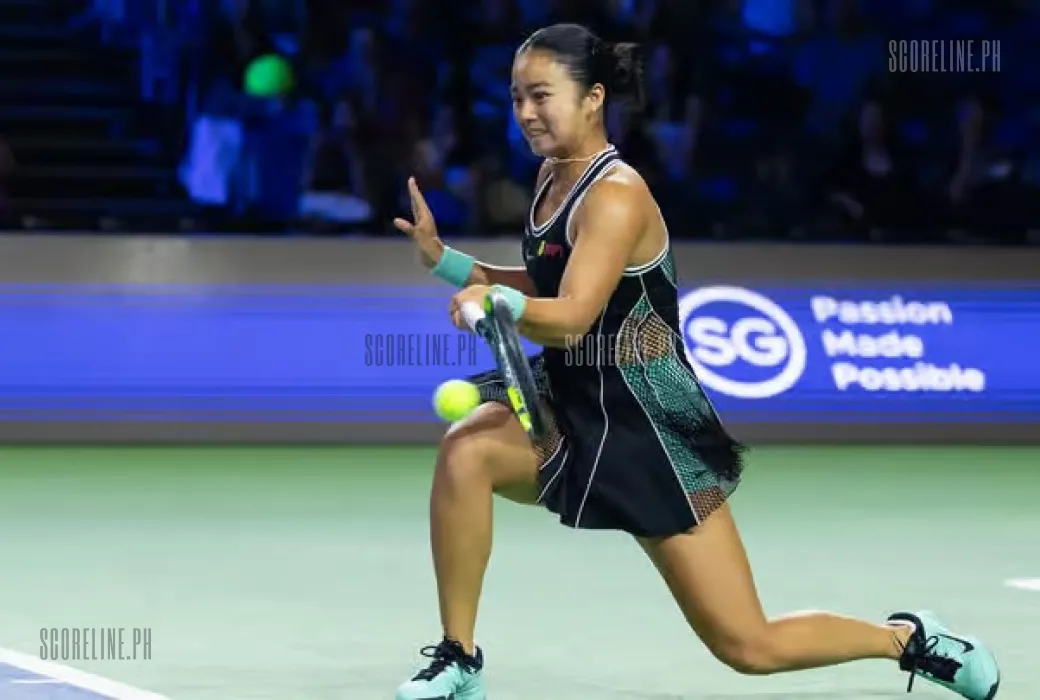
Alex Eala's search for consistency on the Women's Tennis Association (WTA) Tour continues after the Filipina tennis sensation suffered a hard-fought defeat against world No. 13 Diana Shnaider of Russia in the Round of 16 of the 2026 Ningbo Open.

Competing at the Yinzhou Tennis Center, Eala pushed the highly ranked Russian in a competitive encounter before bowing out, 5-7, 4-6, in a match that lasted one hour and 55 minutes.

The result ended the 21-year-old Filipina's campaign at the WTA 500 tournament, but the scoreline did not fully reflect the intensity of the contest.

Eala challenged Shnaider in extended rallies, fought back from difficult positions, and displayed the aggressive baseline game that has helped establish her among the world's leading young players.

However, crucial service breaks and missed opportunities during decisive moments ultimately prevented her from advancing to the quarterfinals.

For Eala, the defeat was another reminder that competing against the world's best is one challenge — consistently beating them is another.

The Ningbo showdown featured two aggressive left-handed players capable of generating pace and controlling rallies from the baseline.

Shnaider entered the match as the more established competitor, carrying a world ranking of No. 13, five WTA singles titles, and a career-high ranking of No. 11.

Eala, meanwhile, was looking to build momentum after a difficult stretch of early tournament exits.

The opening set quickly developed into a competitive battle as both players attempted to establish control through their service games and powerful groundstrokes.

Neither competitor was willing to surrender easy points.

Shnaider eventually gained an advantage by breaking Eala's serve late in the set to move ahead, 5-4.

But the Filipina refused to concede.

Eala responded with a break of her own, leveling the score at 5-5 and briefly shifting the momentum.

The comeback, however, proved insufficient.

Shnaider immediately regained control, breaking Eala again before holding serve to capture the opening set, 7-5.

Eala had demonstrated that she could challenge the Russian, but Shnaider proved more effective when the set reached its decisive stage.

The second set followed a similar pattern, with both players struggling to consistently protect their service games.

The opening six games featured repeated service breaks as Eala and Shnaider traded aggressive baseline exchanges.

Eala eventually managed to hold serve and move ahead, 4-3, putting herself in a position to extend the match.

It was an important moment for the Filipina.

With the possibility of forcing a deciding set, Eala needed to maintain her momentum and apply pressure on Shnaider's next service game.

But the Russian responded with the composure expected of a top-ranked player.

Shnaider held serve to level the set at 4-4, then broke Eala for a 5-4 advantage.

Serving for the match, the Russian completed the victory, 6-4, securing her place in the quarterfinals.

Shnaider advanced to face American world No. 12 Iva Jovic.

For Eala, the defeat was particularly frustrating because she had opportunities to challenge for both sets.

The difference was not simply power or shot-making ability. It was the execution of crucial points when the pressure was greatest.

Despite winning in straight sets, Shnaider acknowledged that the match had been far from comfortable.

The Russian praised Eala's aggressive approach and recognized the difficulty of facing another powerful left-handed player.

"I'm obviously very happy with the way I played and competed today because Alex is a very dangerous and tough opponent. She's another lefty and a big hitter," Shnaider said after the match.

She also highlighted Eala's willingness to attack during rallies.

"She never backs down. She steps in and rips the ball, so I knew it was going to be tough. I'm very proud and happy with the way I performed today."

The comments reflected the competitive challenge Eala presented throughout the match.

Although she failed to secure the victory, her ability to push an established top-15 player demonstrated the offensive weapons available in her game.

Eala's aggressive groundstrokes and willingness to take control of rallies remain important strengths.

However, converting those strengths into consistent victories against elite opposition will require continued improvement.

Eala's defeat in Ningbo highlighted a familiar challenge in professional tennis.

At the highest level, the difference between victory and defeat often comes down to a handful of crucial points.

A missed first serve, an unforced error during a break-point opportunity, or a failure to protect a narrow lead can change the direction of an entire match.

Against Shnaider, Eala demonstrated that she could compete in demanding baseline exchanges.

But maintaining that level of execution across an entire match proved difficult.

Her service games remain an important area for development.

A more reliable serve could help Eala protect leads, reduce pressure during close sets, and create opportunities to attack opponents' returns.

Equally important is her ability to manage crucial moments without allowing momentum to shift too easily.

The next stage of Eala's development is not simply about hitting harder or playing more aggressively. It is about becoming more efficient, composed, and consistent when matches are on the line.

Although Eala's campaign ended in the Round of 16, her performance represented an improvement over her previous tournaments.

Before arriving in Ningbo, the Filipina had suffered opening-round defeats at the Singapore Open and Wuhan Open.

Those results placed additional pressure on her to regain confidence and rediscover her winning rhythm.

She responded by defeating France's Diane Parry in the opening round of Ningbo, earning another opportunity to test herself against elite opposition.

Her victory over Parry ended a difficult stretch and provided a valuable confidence boost.

The subsequent loss to Shnaider showed that challenges remain, but it also gave Eala another competitive experience against a highly ranked opponent.

Professional tennis development rarely follows a straight path.

Young players experience breakthrough victories, disappointing defeats, and periods of adjustment as they compete against increasingly difficult opposition.

For Eala, the important task is to learn from those experiences and continue improving.

Eala's Round of 16 appearance also brought financial and ranking benefits.

The Filipina earned $17,795 in prize money, approximately ₱1.1 million, along with ranking points from her Ningbo campaign.

While financial rewards are part of professional tennis, the more important long-term benefit comes from competing regularly at WTA 500 tournaments.

Such events provide opportunities to face established international players, experience different playing conditions, and develop the physical and mental endurance required at the highest level.

For Eala, those experiences will be valuable as she continues building her professional career.

Eala's 2026 season has already marked a significant chapter in Philippine tennis.

Her breakthrough WTA singles title in Washington, D.C., demonstrated her ability to succeed on the international professional circuit.

Her rise into the world's top 20 further strengthened her position among the sport's emerging stars.

But success also brings expectations.

As her ranking improves, opponents become more familiar with her playing style and increasingly prepared to challenge her strengths.

Maintaining a high ranking requires consistent results across different tournaments, surfaces, and playing conditions.

That challenge becomes particularly demanding during a long season involving extensive international travel and repeated high-level competition.

At 21, Eala remains in an important stage of her professional development.

Her achievements have already demonstrated considerable potential.

The next objective is sustaining that level of performance.

Eala will now shift her attention to Japan, where she is scheduled to make her debut at the Toray Pan Pacific Open, beginning October 26 in Tokyo.

The WTA 500 tournament represents another important opportunity to regain momentum before the final stretch of her season.

Eala has expressed excitement about competing in Japan, particularly because of the Filipino community expected to support her.

The tournament could provide an encouraging environment as she attempts to translate her recent lessons into stronger performances.

But Tokyo will also present another demanding field of international competitors.

Eala will need to improve her service-game consistency, execute more effectively during crucial points, and maintain confidence against experienced opponents.

Following Tokyo, she is scheduled to compete at the Hong Kong Tennis Open before concluding her WTA season.

She is also expected to return to the Philippines for an exhibition event at Philippine Arena on December 8.

Eala's growing international profile has helped generate renewed interest in tennis across the Philippines.

Her achievements have inspired young players and demonstrated that Filipino athletes can compete successfully on the professional women's tour.

But the country's long-term tennis ambitions should extend beyond the success of one player.

Developing future international competitors will require stronger grassroots programs, accessible training facilities, qualified coaching, and opportunities for young athletes to gain international experience.

Eala's rise provides an example of what dedicated preparation and competitive exposure can achieve.

Her journey should encourage greater investment in the next generation of Filipino tennis players.

The goal should not simply be to celebrate Alex Eala's victories. It should also be to create opportunities for more Filipino athletes to follow her path.

The Ningbo defeat was disappointing, particularly because Eala had opportunities to challenge for both sets.

But it should also be viewed within the broader context of her development.

She competed against one of the world's leading players and demonstrated the ability to produce aggressive, competitive tennis.

Her opponent acknowledged her quality.

And despite the defeat, Eala gained another opportunity to identify areas requiring improvement.

The challenge now is converting those lessons into results.

At the elite level, talent creates opportunities.

Consistency determines how often those opportunities become victories.

ALEX EALA HAS ALREADY PROVEN SHE CAN COMPETE WITH THE WORLD'S BEST. THE NEXT CHALLENGE IS LEARNING HOW TO BEAT THEM MORE CONSISTENTLY.

As she prepares for Tokyo, the Filipina carries both the lessons of Ningbo and the determination to continue improving.

The road ahead will not always be easy.

But every match offers another opportunity to grow.

ONE TOUGH LOSS DOES NOT DEFINE A CAREER. WHAT MATTERS IS HOW AN ATHLETE RESPONDS, IMPROVES, AND RETURNS STRONGER.

NEXT STOP: TOKYO. THE JOURNEY CONTINUES FOR ALEX EALA.
3
Learn more
Inoue-Rodriguez

Boxing's Dream Superfight Faces Uncertain Future as Inoue Eyes Featherweight Move

Two undefeated pound-for-pound superstars, one potential blockbuster showdown, and a growing concern that boxing fans could miss one of this generation's greatest matchups of this generation.
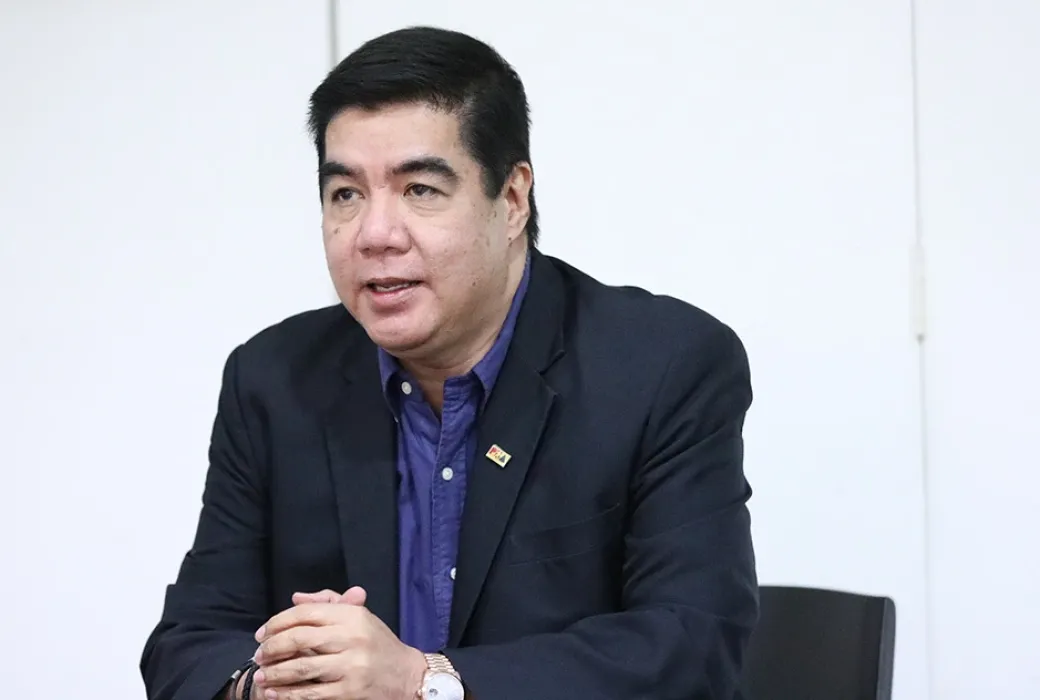
The boxing world may be on the verge of witnessing one of the most fascinating fights of the modern era.

But just as anticipation builds for a possible 2027 showdown between Japanese superstar Naoya “The Monster” Inoue and undefeated American sensation Jesse “Bam” Rodriguez, conflicting career plans are threatening to delay — or potentially derail — the highly anticipated encounter.

Inoue, the undisputed super bantamweight champion, has established himself as one of boxing's most dominant pound-for-pound fighters.

Rodriguez, meanwhile, continues his remarkable rise through the lower weight divisions, combining technical brilliance, speed, and finishing ability to build an undefeated championship career.

On paper, the matchup has everything boxing fans could want.

Two undefeated champions. Two elite technicians. Two devastating finishers. One potential generational superfight.

Yet the biggest obstacle may not be either fighter's ability.

It could be timing.

Inoue enters the discussion with a remarkable professional record of 33 victories without defeat, including 27 knockouts.

The Japanese superstar currently reigns over the 122-pound super bantamweight division, holding the WBA, WBC, WBO, and IBF world championships.

His combination of explosive punching power, exceptional timing, precise counterpunching, and disciplined ring intelligence has made him one of the most feared fighters in boxing.

Across the Pacific, Rodriguez has built an equally impressive reputation.

The San Antonio, Texas native boasts an undefeated 24-0 record with 17 knockouts, establishing himself as one of America's most exciting young boxing talents.

Rodriguez has captured world championships across multiple weight divisions, demonstrating his ability to carry speed, skill, and power as he moves up in weight.

His recent sixth-round knockout of Antonio Vargas to capture the WBA bantamweight championship at 118 pounds brought him closer to Inoue's territory.

With only four pounds separating the two fighters' current divisions, the possibility of a showdown at 122 pounds appeared increasingly realistic.

For boxing fans, the dream matchup was no longer just fantasy. It was beginning to look achievable.

Saudi boxing powerbroker Turki Alalshikh, one of the most influential figures behind the Riyadh Season boxing events, has reportedly expressed interest in staging the Inoue-Rodriguez showdown as early as January 2027.

Tokyo and Nagoya have emerged as potential host cities.

A fight in Japan would provide an extraordinary setting for the matchup.

Inoue enjoys enormous popularity in his home country, where his championship appearances have become major sporting events.

A showdown against another undefeated pound-for-pound star could attract worldwide attention and reinforce Japan's growing importance as a destination for elite professional boxing.

Rodriguez would also have an opportunity to establish himself internationally against one of the sport's most accomplished champions.

But despite the financial possibilities and global interest, negotiations face a major complication.

Reports indicate that Inoue is considering moving up to the 126-pound featherweight division.

The proposed move would allow the Japanese champion to pursue additional world titles and extend his legacy across another weight class.

For a fighter who has already achieved undisputed status, conquering another division presents a significant career opportunity.

However, moving to featherweight could place additional distance between Inoue and Rodriguez.

While Rodriguez has recently advanced to 118 pounds, Inoue's potential move to 126 would create an eight-pound gap between their divisions.

That difference could make negotiations more complicated, particularly if either fighter prefers to compete at a weight that best suits his physical development.

The timing is equally important.

Rodriguez's camp is reportedly considering a December bantamweight unification fight against WBO champion Christian Medina of Mexico.

Such a bout would allow Rodriguez to pursue another championship objective before potentially moving up to super bantamweight.

But it could also interfere with the proposed January 2027 schedule.

The problem is becoming clear: Inoue may be ready to pursue bigger challenges at featherweight while Rodriguez still has unfinished business at bantamweight.

If the fight eventually materializes, it would present one of the most intriguing technical matchups in boxing.

Inoue's greatest weapon is not simply his punching power.

It is his ability to create openings through positioning, timing, and precise offensive execution.

The Japanese champion can attack the body, counter opponents attempting to close the distance, and finish combinations with devastating accuracy.

His power has remained effective throughout his progression across multiple weight divisions.

Rodriguez, however, offers a different set of challenges.

The American southpaw is known for his intelligent footwork, sharp angles, combination punching, and ability to control exchanges through positioning.

He frequently uses subtle movements to create attacking opportunities while avoiding unnecessary punishment.

Against Inoue, Rodriguez's speed and technical adaptability could become crucial.

The fight would likely feature a fascinating battle over distance, timing, and ring control.

Inoue would attempt to impose his explosive offense and punish mistakes.

Rodriguez would look to use his movement, precision, and tactical awareness to disrupt the Japanese champion's rhythm.

MONSTER'S EXPLOSIVE POWER AND TIMING AGAINST BAM'S SPEED, ANGLES, AND TECHNICAL BRILLIANCE.

It is the kind of matchup that could test both fighters in ways few previous opponents have managed.

The Weight Question Could Decide Everything

Although both fighters have demonstrated success across different weight classes, moving up presents physical and tactical challenges.

A fighter who dominates at 118 pounds may not immediately reproduce the same results against an elite opponent at 122.

Differences in strength, punch resistance, and physical conditioning can become more significant at the highest level.

For Rodriguez, moving up to challenge Inoue would require careful preparation.

For Inoue, remaining at super bantamweight could mean postponing his ambitions of competing at featherweight.

Neither fighter can be expected to make such decisions without considering long-term career goals.

The ideal matchup would require a mutually acceptable weight agreement and sufficient preparation time.

A rushed arrangement could undermine the quality of a fight that has the potential to become a major boxing event.

Professional boxing has a long history of highly anticipated matchups being delayed by promotional negotiations, weight disagreements, scheduling conflicts, and competing championship obligations.

Some eventually become legendary events.

Others never happen.

The possibility of Inoue versus Rodriguez raises concerns that boxing could once again struggle to bring together two elite fighters while both remain near their competitive peaks.

The sport benefits when its leading champions face opponents capable of genuinely testing them.

Such matchups generate excitement, attract new audiences, and provide opportunities to establish lasting sporting legacies.

However, boxing is also a business in which athletes must carefully manage physical risks and career opportunities.

The challenge is finding a balance between competitive ambition, commercial interests, and realistic preparation.

A dream fight should not happen simply because fans demand it. But when two elite fighters are willing, and the conditions are right, the sport benefits from making those opportunities possible.

For Inoue, defeating Rodriguez would add another elite name to an already remarkable résumé.

A victory over an undefeated, multi-division world champion could further strengthen his standing among boxing's greatest fighters.

For Rodriguez, defeating Inoue would represent a career-defining achievement.

Overcoming one of the most dominant champions of the modern era could dramatically elevate his international profile and establish him among the sport's leading stars.

Both fighters also face considerable risks.

Inoue would be confronting a younger, technically gifted opponent capable of exploiting defensive mistakes.

Rodriguez would be stepping into the ring against a naturally larger champion with exceptional punching power and championship experience.

The uncertainty surrounding the result is precisely what makes the matchup compelling.

Neither fighter needs this bout to establish his greatness. But facing each other could add an extraordinary chapter to both careers.

The proposed January schedule remains ambitious.

Rodriguez's potential December championship unification fight would leave limited recovery and preparation time for another major contest.

Inoue's possible move to featherweight could further complicate the timeline.

For the superfight to happen, both camps would need to reach agreements on weight, scheduling, financial terms, and championship considerations.

Until those matters are resolved, the matchup remains a possibility rather than a confirmed event.

Boxing fans may therefore need to wait longer than originally anticipated.

But postponement does not necessarily mean cancellation.

Both fighters remain undefeated, internationally recognized, and capable of generating enormous interest in a future showdown.

Naoya Inoue and Jesse Rodriguez represent two of the finest talents in contemporary boxing.

Their achievements across multiple weight divisions demonstrate extraordinary technical ability, discipline, and competitive ambition.

A meeting between them could become one of the defining fights of the decade. But timing will be critical.

If Inoue moves permanently to featherweight while Rodriguez continues building his career at bantamweight, the opportunity for a natural meeting at 122 pounds could become increasingly difficult.

The sport has witnessed too many potential superfights lose momentum as fighters pursue different career paths.

Inoue versus Rodriguez deserves serious consideration because it offers something increasingly valuable in professional boxing:

Two undefeated elite champions with contrasting styles and a genuine opportunity to test each other's greatness.

Whether the fight happens in Tokyo, Nagoya, or another international venue, its appeal would extend far beyond the championship belts involved.

It would be a contest between two exceptional fighters seeking to strengthen their legacies.

For now, boxing fans can only watch as the two camps determine their next moves.

TWO UNDEFEATED STARS. ONE DREAM MATCHUP. A WINDOW OF OPPORTUNITY THAT MAY NOT REMAIN OPEN FOREVER.

NAOYA “THE MONSTER” INOUE VS. JESSE “BAM” RODRIGUEZ — THE SUPERFIGHT BOXING FANS WANT, BUT THE SPORT HAS YET TO DELIVER.

3
Learn more
Bennie Boatwright

Bennie Boatwright Takes Oath of Allegiance as Race Against FIBA Deadline Begins

The 6-foot-10 scoring powerhouse moves closer to becoming Gilas Pilipinas' newest naturalized reinforcement, but legal documentation and international eligibility requirements remain crucial before his anticipated national team debut.

Gilas Pilipinas may soon have another powerful weapon in its international basketball arsenal.

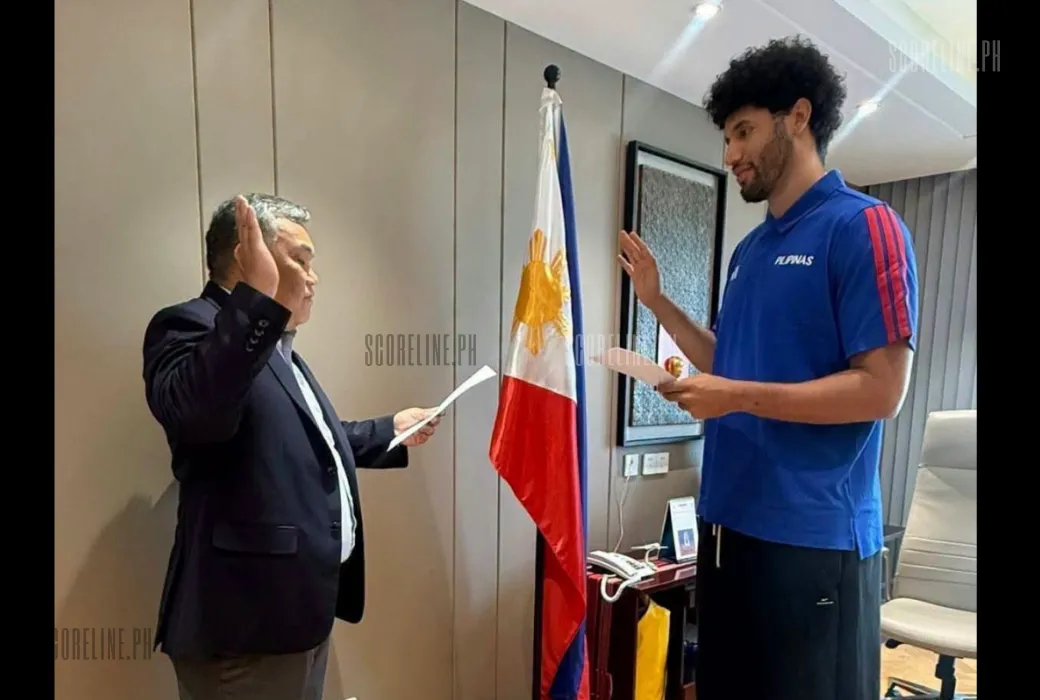
After months of anticipation, Bennie Boatwright has taken a significant step toward representing the Philippines, officially taking his Oath of Allegiance to the country on Wednesday, October 21, 2026, at the Philippine Embassy in China.

The development brings the 6-foot-10 American basketball standout closer to completing his naturalization process and potentially joining the national team for the upcoming FIBA Basketball World Cup Asian Qualifiers.

But while the oath represents an important milestone, the journey is far from complete.

With a November 14 deadline approaching for the submission of eligibility documents to FIBA, the Samahang Basketbol ng Pilipinas (SBP) faces a race against time to complete the remaining requirements.

For Gilas Pilipinas, Boatwright's potential arrival represents more than another roster addition. It could provide the national team with a different offensive dimension as it prepares for another demanding international campaign.

Boatwright's appearance at the Philippine Embassy in China marked an important development in the country's efforts to secure another naturalized basketball player.

The oath is a significant step in the legal process, but it does not automatically complete all the requirements necessary for him to represent the Philippines internationally.

According to the process outlined by the SBP, Boatwright's oath must still be registered with the Bureau of Immigration.

The registration will be followed by the issuance of his Certificate of Naturalization, after which he can proceed with his application for a Philippine passport.

Even after securing the necessary Philippine documents, his participation in FIBA competitions will remain subject to the international basketball federation's eligibility requirements.

Taking the oath moves Boatwright closer to Gilas. Securing FIBA clearance will determine whether he can finally wear the Philippine jersey.

The urgency surrounding Boatwright's naturalization stems from the approaching FIBA documentation deadline.

SBP Executive Director Erika Dy said the necessary requirements must be submitted to FIBA by November 14, 2026, for Boatwright to become eligible for consideration in the upcoming qualifying window.

Gilas is preparing for scheduled FIBA World Cup Asian Qualifiers games in Malaysia on November 27 and 29.

That leaves a limited period to complete the remaining documentation, obtain international eligibility clearance, and potentially integrate Boatwright into the national team's preparation.

For head coach Tim Cone, the situation presents both an opportunity and a challenge.

Boatwright could provide additional scoring and size, but his availability cannot be treated as guaranteed until the necessary requirements are satisfied.

The coaching staff must therefore prepare for multiple roster possibilities.

The talent is available. The opportunity is approaching. But the paperwork must be completed before the basketball can begin

At 6-foot-10, Boatwright offers a combination of height, shooting ability, and offensive versatility that could make him a valuable reinforcement for the national team.

Unlike traditional centers who operate primarily inside the paint, Boatwright is capable of stretching the floor and creating scoring opportunities from the perimeter.

His shooting range could force opposing big men to defend farther from the basket, potentially opening driving lanes for Filipino guards and additional space for interior players.

That offensive flexibility could become particularly valuable against Asian opponents that rely on size, physicality, and disciplined half-court defense.

Boatwright's scoring ability could also give Gilas another option when opposing teams successfully disrupt its offensive sets.

Currently playing for the Fujian Sturgeons in the Chinese Basketball Association, he continues to gain professional experience in a competitive international environment.

However, success in club basketball does not automatically guarantee immediate effectiveness in FIBA competition.

International basketball presents different tactical challenges, defensive systems, and physical demands.

Boatwright would need to adjust to Cone's offensive structure, develop chemistry with his teammates, and understand the responsibilities expected of him within the national team.

Gilas would not simply be adding another tall player. It would potentially be adding a big man capable of changing how opposing teams defend the Philippines.

Boatwright's progress comes at a time when the availability of veteran naturalized star Justin Brownlee remains uncertain.

Brownlee has been one of the most influential figures in Gilas Pilipinas' recent international campaigns.

His familiarity with Cone's system, leadership, offensive creativity, and ability to perform under pressure have made him a trusted national team reinforcement.

But relying exclusively on one naturalized player presents risks when injuries, scheduling conflicts, or other availability concerns arise.

Boatwright's eligibility could give the coaching staff another option. The two players offer different strengths.

Brownlee provides experience, playmaking, and an established understanding of the team's system.

Boatwright could offer additional height, perimeter shooting, and offensive versatility.

Under FIBA's standard national team eligibility rules, only one player classified as naturalized may generally be included in a team's game roster.

Therefore, having both Brownlee and Boatwright available would primarily provide Gilas with greater flexibility in selecting its naturalized reinforcement.

The question should not simply be Brownlee or Boatwright. The bigger objective is ensuring that Gilas has reliable options when international competitions arrive.

Boatwright's potential arrival also comes during a transition period for the national team.

Nine-time PBA Most Valuable Player June Mar Fajardo has confirmed that his Gilas Pilipinas career is over, ending the international journey of one of the country's most accomplished big men.

His departure leaves a significant gap in experience and interior presence.

Younger Filipino talents such as Kai Sotto and AJ Edu represent important pieces of the national team's future, but their availability and continued development remain essential considerations.

Boatwright could help strengthen the frontcourt while providing a different offensive skill set.

Still, his potential inclusion should complement rather than replace long-term investment in Filipino big men.

A sustainable national team program requires both experienced reinforcements and a dependable pipeline of locally developed talent.

Naturalization can strengthen a national team, but it cannot substitute for a comprehensive player development system.

Boatwright's possible addition will undoubtedly generate excitement among Filipino basketball fans.

But the national team's recent challenges have demonstrated that individual talent alone is not enough to guarantee success.

Player availability, preparation time, roster continuity, and effective coordination with professional clubs remain critical.

The Philippines' disappointing ninth-place finish at the 2026 Asian Games raised questions about the national team's ability to assemble its strongest possible lineup.

Several overseas-based Filipino players were unable to participate because of professional club commitments.

That experience highlighted the importance of early planning and stronger coordination among basketball stakeholders.

Boatwright's naturalization process represents another test of the country's preparation system.

Completing his eligibility requirements would provide a valuable option, but the coaching staff would still need sufficient time to establish his role.

A powerful scorer can help win games. A well-prepared team is what creates sustained international success.

With Boatwright's oath of allegiance completed, attention now shifts to the remaining administrative and international eligibility requirements.

The SBP must secure the necessary documentation and meet the November 14 submission deadline.

If the process is completed successfully and FIBA grants the required clearance, Boatwright could become available for national team selection.

But until those steps are finalized, his participation remains uncertain.

For Cone and Gilas Pilipinas, the immediate priority is preparing a competitive lineup regardless of the outcome.

Boatwright's potential arrival offers optimism, but the national team cannot afford to build its entire preparation around an unresolved eligibility process.

For Bennie Boatwright, representing the Philippines would mark a significant milestone in his professional basketball career.

For Gilas Pilipinas, it could provide another valuable weapon against Asia's strongest teams.

And for Filipino basketball fans, the possibility of seeing a versatile 6-foot-10 scorer wearing the national colors offers renewed excitement.

But the true significance of his arrival would be measured by how effectively he contributes to the team.

The Philippines needs more than impressive individual performances.

It needs consistent preparation, reliable player availability, and a system capable of competing internationally over the long term.

Boatwright could become an important part of that effort.

THE OATH HAS BEEN TAKEN. THE DEADLINE IS APPROACHING. THE POSSIBILITY OF A NEW GILAS WEAPON IS GETTING CLOSER.

But the next chapter will depend on completing the legal process, securing FIBA eligibility, and preparing the team for the challenges ahead.

5
Learn more
photo comparison

Why Asian Para Games Champions Receive Half the Cash Incentives

The ₱2-million and ₱1-million gold-medal incentives under Republic Act No. 10699 have renewed questions about equality, athlete recognition, and the treatment of Filipino para-athletes.

They train for years, compete against Asia's finest athletes, overcome enormous pressure, and proudly carry the same Philippine flag onto the international stage.

They stand on the podium as gold medalists, bringing honor to the country and inspiring millions of Filipinos.

Yet under Philippine law, winning gold at the Asian Games and winning gold at the Asian Para Games carry different financial rewards.

₱2 million for an Asian Games individual gold medal. ₱1 million for an Asian Para Games individual gold medal.

The difference has brought renewed attention to Republic Act No. 10699, or the National Athletes and Coaches Benefits and Incentives Act, following the achievements of Filipino athletes at the 2026 Asian Games and Asian Para Games.

At the center of the discussion is a fundamental question:

Should two Filipino national athletes who win gold at their respective continental championships receive different statutory cash incentives?

A ₱1-Million Difference Written Into Law

Under Section 8 of Republic Act No. 10699, individual gold medalists at the Asian Games are entitled to a statutory cash incentive of ₱2 million.

Individual gold medalists at the Asian Para Games, meanwhile, are entitled to ₱1 million.

The difference is not the result of a discretionary decision by sports officials following a competition.

It is established under the existing national sports incentives law.

The distinction becomes particularly noticeable when comparing the achievements of Filipino champions at the 2026 continental competitions.

Among the Asian Games gold medalists are gymnastics superstar Carlos Yulo, pole vaulter EJ Obiena, and taekwondo athlete Jeus Gabriel Yape.

Meanwhile, para swimming champions Ernie Gawilan and Ariel Joseph Alegarbes have also delivered gold-medal performances for the Philippines at the Asian Para Games.

The statutory incentives for individual gold medals are:

Competition

Gold medal incentive

Asian Games

₱2,000,000

Asian Para Games

₱1,000,000

Difference

₱1,000,000

The figures represent statutory cash incentives for individual events. They do not necessarily reflect the total financial rewards an athlete may receive from other government programs, local governments, or private sponsors.

Nevertheless, the difference in the national incentive structure raises questions about how achievements in para sports are recognized.

Different Competitions, Shared National Responsibility

The Asian Games and Asian Para Games are separate international sporting competitions with different event classifications, eligibility requirements, and competition structures.

The Asian Games brings together elite athletes from across the continent, while the Asian Para Games provides high-level international competition for athletes with eligible disabilities.

Both demand years of preparation, specialized coaching, physical conditioning, and technical excellence.

Both require competitors to meet demanding international standards.

And both provide opportunities for Filipino athletes to represent the country against Asia's strongest sporting talents.

For para-athletes, preparation may also involve specialized equipment, accessible training environments, and individualized support services.

These requirements make investment in para sports particularly important.

The two competitions may be different, but the dedication and sporting achievements of their champions deserve serious national recognition.

Ernie Gawilan: A Champion Whose Achievements Speak for Themselves

Among the Filipino athletes whose performances have brought attention to the issue is veteran para swimmer Ernie Gawilan.

At 35, Gawilan continues to establish himself as one of the Philippines' most accomplished para-athletes.

During the Aichi-Nagoya 2026 Asian Para Games, he captured gold in the men's 400-meter freestyle S7 with a time of 4 minutes and 56.72 seconds.

The victory marked his third consecutive Asian Para Games gold medal in the event.

He followed that performance with silver in the men's 200-meter individual medley SM7, clocking 2 minutes and 52.72 seconds.

His achievements reflect years of international competition, technical development, and sustained excellence.

Gawilan's success is not simply an inspirational personal story.

He is an elite competitor whose results demonstrate the quality of Philippine para swimming.

His gold medal carries the same national significance of bringing international sporting recognition to the Philippines.

Yet the statutory incentive attached to his Asian Para Games gold is half the amount provided for an individual Asian Games gold.

That distinction has become part of a broader discussion about athlete recognition.

Why Does Republic Act No. 10699 Provide Different Amounts?

Republic Act No. 10699 was enacted to strengthen benefits and incentives for national athletes and coaches.

The law establishes financial rewards for medal-winning performances in recognized international competitions, including the Olympics, Paralympics, Asian Games, Asian Para Games, and Southeast Asian Games.

Its incentive schedule assigns different amounts according to the competition and medal category.

For the Asian Games and Asian Para Games, the prescribed individual gold-medal incentives differ by ₱1 million.

However, the existence of different amounts does not, by itself, explain the full legislative reasoning behind the distinction.

Understanding that reasoning would require examining the law's legislative history, policy objectives, and the factors considered when the incentive categories were established.

The current discussion therefore presents an opportunity to review whether the existing structure remains appropriate for Philippine sports development.

Equal Recognition and Equal Incentives: A National Debate

The difference between Asian Games and Asian Para Games incentives raises two related but distinct issues.

The first concerns recognition.

Filipino para-athletes represent the country in international competition and deserve recognition for their achievements as elite national athletes.

The second concerns financial policy.

Should the government provide identical statutory cash incentives for equivalent medals at the Asian Games and Asian Para Games, or should the competitions retain separate incentive schedules?

Supporters of equal incentives may argue that both groups of athletes dedicate comparable effort to representing the Philippines and that equal gold-medal rewards would reinforce the principle of inclusive national recognition.

Others may point to differences in competition structures, event categories, and the broader incentive framework as considerations that policymakers must examine.

These perspectives form part of a legitimate discussion about how public sports incentives should be designed.

The central policy question is not whether para-athletes deserve recognition. It is how that recognition should be reflected in the country's financial incentive system.

Can the Incentive Structure Be Changed?

Republic Act No. 10699 includes provisions that allow the Philippine Sports Commission to periodically review and adjust incentive amounts, in consultation with PAGCOR and in accordance with the prescribed process.

Congress also has the authority to amend the law.

Any proposed adjustment would require consideration of the legal framework, financial implications, athlete classifications, and long-term sustainability of the incentives program.

A review could examine whether Asian Games and Asian Para Games gold medalists should receive equivalent statutory awards.

It could also consider whether similar differences exist across other competitions covered by the law.

Such an assessment would provide policymakers with an opportunity to evaluate the incentives framework as a whole rather than focusing exclusively on one medal category.

While the ₱1-million difference has attracted attention, athlete incentives represent only one part of the broader discussion.

Para-athletes also require reliable training allowances, accessible facilities, specialized coaching, sports medicine, rehabilitation support, and international competition opportunities.

The Philippines has produced successful para-athletes despite continuing challenges in access to sporting resources.

Strengthening those systems could help develop more athletes capable of competing internationally.

Cash incentives recognize achievements after medals are won.

Development programs, meanwhile, help create the conditions that make those achievements possible.

Recognition after victory matters. Sustained support before competition matters just as much.

The debate surrounding Republic Act No. 10699 could therefore become an opportunity to examine the wider needs of Philippine para sports.

For athletes such as Carlos Yulo, EJ Obiena, Jeus Gabriel Yape, Ernie Gawilan, and Ariel Joseph Alegarbes, international competition represents the culmination of years of preparation.

Their events are different.

Their athletic disciplines require different skills.

Their competitive journeys are unique.

But their victories share one important distinction.

They bring sporting honor to the Philippines.

The national incentive system is intended to recognize those accomplishments while supporting athletes who dedicate themselves to international competition.

The question now is whether the current framework reflects the standards of recognition and inclusion that Philippine sports seeks to promote.

A Question Worth Bringing to the National Conversation

The difference between the statutory incentives for Asian Games and Asian Para Games champions is clear.

The individual gold-medal amounts are ₱2 million and ₱1 million, respectively.

What remains open for discussion is whether that distinction should continue.

A review of the law could provide an opportunity to examine the rationale behind the existing amounts, the financial implications of possible changes, and the broader objectives of athlete recognition.

For Filipino sports fans, the issue is also a reminder that national athletes compete in many different disciplines and circumstances.

Their achievements deserve attention beyond medal counts and championship celebrations.

The Philippine flag does not change when a para-athlete stands on the podium. The national pride attached to that achievement remains.

Whether the statutory incentives should be equalized is a question for lawmakers, sports institutions, athletes, and the public to examine through an informed policy discussion.

But one principle remains important:

Filipino para-athletes are national athletes whose sporting achievements form an essential part of the country's international success.

SAME PHILIPPINE FLAG. SAME NATIONAL PRIDE. DIFFERENT STATUTORY CASH REWARDS.

THE ₱1-MILLION DIFFERENCE IS CLEAR. THE QUESTION IS WHETHER PHILIPPINE SPORTS POLICY SHOULD CONTINUE TO MAKE THAT DISTINCTION.

5
Learn more
YAN YAN LARIBA

The Filipina athlete Who Made Olympic History at 21 and Left a Legacy That Will Never Be Forgotten

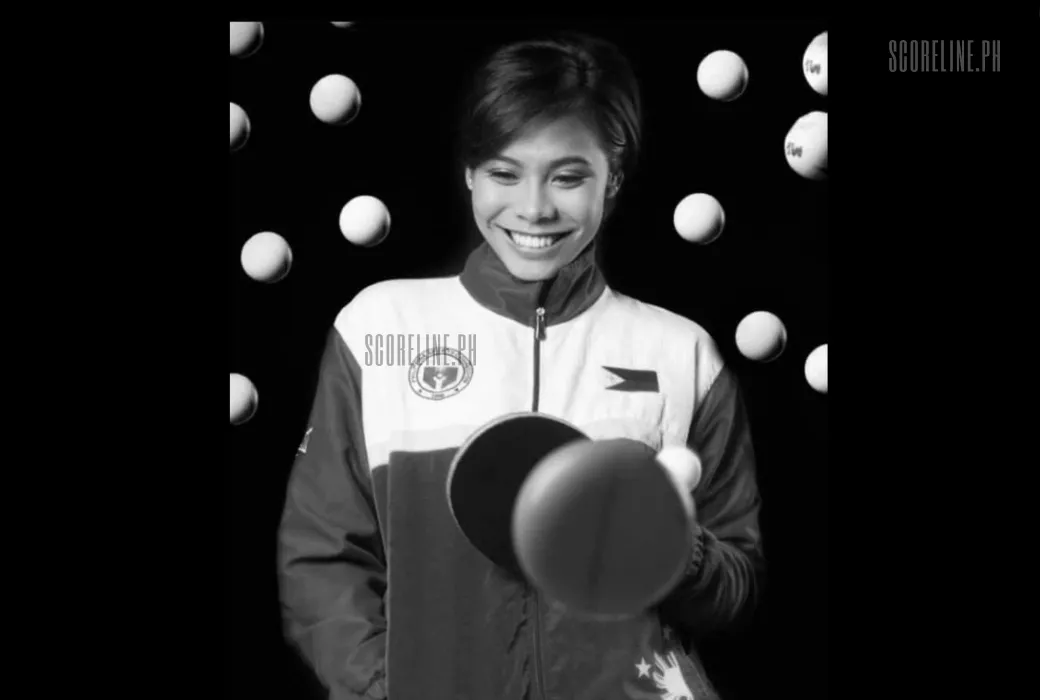
At just 21 years old, the young athlete from Cagayan de Oro City became the first Filipina table tennis player to compete in the Olympic Games, representing the Philippines in women's singles at the 2016 Rio Olympics.

It was a breakthrough moment for a sport that had long struggled to receive the same attention as basketball, boxing, and other popular disciplines in the country.

But only two years after achieving her Olympic dream, Philippine sports lost one of its brightest young talents.

On September 2, 2018, Lariba passed away following a battle with acute myeloid leukemia.

She was only 23.

Her career was painfully short. Her contribution to Philippine sports was anything but small.

From dominating UAAP table tennis to breaking barriers at the Rio Olympics, Ian Lariba achieved what no Filipina had done before. Her life ended at just 23, but her place in Philippine sports history remains secure.

Some athletes spend decades chasing greatness. Others accomplish something extraordinary in a much shorter time, leaving a legacy that extends far beyond their years.

For Ian Lariba, that legacy was built through determination, discipline, and a historic achievement that forever changed Philippine table tennis.

Before becoming an Olympian, Lariba had already established herself as one of the most accomplished student-athletes in Philippine collegiate table tennis.

Representing De La Salle University, she built a remarkable record in the University Athletic Association of the Philippines (UAAP).

Her achievements reflected not only her natural ability but also the consistency and discipline required to remain competitive at the highest collegiate level.

Lariba announced her arrival by winning the UAAP Rookie of the Year award in Season 74.

She followed that achievement with three Most Valuable Player awards in Seasons 75, 77, and 78.

She was also recognized twice as UAAP Athlete of the Year and helped De La Salle capture three team championships.

Those accomplishments made her one of the defining figures of her generation in collegiate table tennis.

But Lariba was not content with succeeding only at the university level.

She had a bigger dream.

She wanted to represent the Philippines at the Olympic Games.

In 2016, Lariba accomplished what no Filipina table tennis player had achieved since the sport became part of the Olympic program in 1988.

She qualified for the Rio de Janeiro Olympics.

At 21, she stepped onto the world's biggest sporting stage carrying the Philippine flag and the hopes of a growing table tennis community.

Her participation marked an important breakthrough for Philippine sports.

For years, Filipino table tennis players had competed in regional and international tournaments, but an Olympic appearance had remained elusive. Lariba changed that.

Her qualification demonstrated that Filipino athletes could reach the highest level of international competition even in sports that receive comparatively limited public attention.

Although she did not win an Olympic medal, her presence in Rio represented an achievement that went beyond the result of a single match.

She had opened a door that future generations of Filipino table tennis players could now dream of walking through.

For aspiring young athletes, particularly girls hoping to compete internationally, Lariba became proof that the Olympic stage was within reach.

Following her Olympic appearance, Lariba appeared positioned to continue developing her international career.

At 21, she had already accomplished more than many athletes achieve in a lifetime.

Her collegiate dominance, national team experience, and Olympic qualification provided a strong foundation for future competitions.

She still had opportunities to improve her skills, compete internationally, and inspire more young Filipinos to pursue table tennis.

But in May 2017, her life took an unexpected turn.

Lariba was diagnosed with acute myeloid leukemia, an aggressive form of blood cancer.

The diagnosis brought an abrupt interruption to her sporting career.

Instead of preparing for another tournament, she faced intensive medical treatment and the uncertainty of a serious illness.

The news deeply affected the Philippine sports community, particularly her teammates, coaches, supporters, and fellow student-athletes.

September 2, 2018: Philippine Sports Loses a Trailblazer

Despite undergoing treatment, Lariba passed away on September 2, 2018, approximately 15 months after her diagnosis.

She was 23 years old.

Her death brought an early end to a career filled with promise.

For Philippine table tennis, the loss was especially significant.

The country had lost its first female Olympic representative in the sport, an accomplished collegiate champion, and an athlete who had inspired others through her achievements.

For her family, friends, and teammates, the loss was far more personal.

Beyond the medals and championships was a young woman whose life had touched those around her.

Her passing served as a painful reminder that even the most accomplished athletes face circumstances beyond their control.

There would be no comeback tournament, no second Olympic appearance, and no opportunity to discover how much further her career might have gone.

But the achievements she left behind would remain.

Philippine sports history is often told through Olympic medals, world championships, and record-breaking performances.

Those achievements deserve recognition.

But there is another kind of sporting greatness: becoming the first to accomplish something that once seemed beyond reach.

Lariba belonged to that category.

Her Olympic qualification was a milestone not only for herself but also for Philippine table tennis.

She demonstrated that athletes competing outside the country's most popular sports could achieve international breakthroughs.

Her journey also highlighted the importance of collegiate athletics as a pathway toward national representation.

The UAAP provided Lariba with opportunities to develop her competitive abilities and establish herself as an elite player.

From there, she progressed to international competition and ultimately the Olympics.

Her career showed how grassroots participation, collegiate development, and international opportunities can help produce historic achievements.

The most meaningful way to preserve Lariba's legacy is to ensure that future Filipino table tennis players have opportunities to pursue their own ambitions.

Table tennis requires specialized coaching, consistent competition, proper equipment, and access to training facilities.

For young athletes outside major urban centers, those resources can be difficult to obtain.

Strengthening school-based programs, supporting collegiate competitions, and expanding access to national training opportunities could help more Filipino players develop their potential.

Lariba's achievements provide an important example of what can happen when talent is supported by discipline and competitive opportunities.

Her story should encourage greater recognition for athletes competing in less-publicized sports.

The next Filipino table tennis Olympian may already be training in a school gymnasium somewhere in the country.

Providing that athlete with opportunities to grow would be a meaningful continuation of Lariba's legacy.

Ian Lariba's story is both a celebration of sporting achievement and a reminder of a life that ended far too soon.

At 21, she made Olympic history.

At 23, she was gone.

Between those years, she had already accomplished something extraordinary for Philippine sports.

Her UAAP championships established her as a collegiate great. Her Olympic qualification made her a national trailblazer.

And her journey continues to inspire discussions about opportunity, perseverance, and the importance of recognizing athletes beyond the country's most popular sports.

Ian Lariba did not need an Olympic medal to earn her place in Philippine sports history.

She achieved something no Filipina table tennis player had accomplished before her.

That distinction will remain part of the country's Olympic story.

Her life reminds us that sporting greatness is not measured only by the length of an athlete's career or the number of trophies collected.

Sometimes, it is measured by the barriers an athlete breaks and the possibilities those achievements create for others.

SHE MADE HISTORY AT 21. SHE LEFT US AT 23. BUT HER LEGACY WILL OUTLIVE THE YEARS SHE WAS GIVEN.

IAN LARIBA (1994–2018)

The first Filipina Olympic table tennis player. A UAAP champion. A Philippine sports trailblazer.

FOREVER REMEMBERED. FOREVER PART OF PHILIPPINE OLYMPIC HISTORY.

5
Learn more

Top News

Kenji Moral

Kenji Moral’s Fast Break to Rising Star in PH's Youth Basketball

2,174
Mario Barasi Jr.

Mario Barasi Jr.: Rising Big Man ready for the PBA stage

826
Michael Martinez

Michael Martinez: The Filipino Athlete Who Funded His Own Olympic Dream

397
Masters Pinoy Pilipinas Basketball squad with team Mongolia.

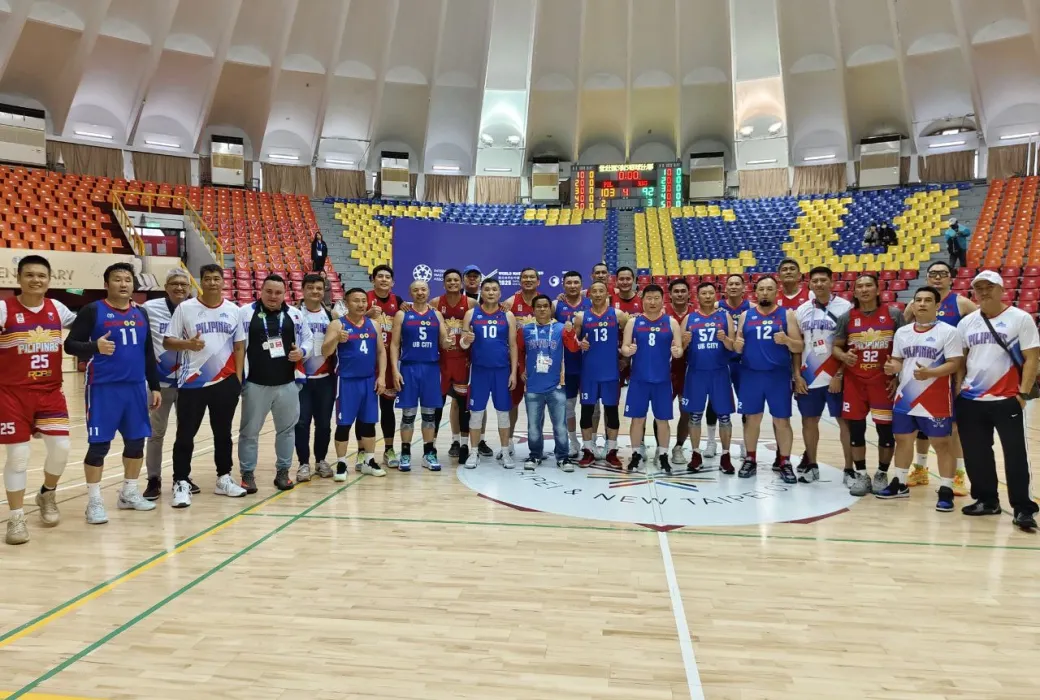
Masters Pinoy captures basketball gold at the World Masters Games

386
janine

Exclusive: Janine Nicandro, The Journey of a PBA Referee

363
Loren Brill

Loren Brill: Reigniting a basketball legacy born of champions

335
Guiness Nabung of Masters Pinoy Pilipinas Basketball team.

Guiness Nabung - Masters Pinoy Pilipinas Basketball Profile

300
Isaiah Africano poses for Scoreline.ph during the PBA 50th Rookie Draft

Isaiah Africano joins Guam National Team for FIBA WCA Qualifiers

299
Johann Chua & Carlo Biado

17 Filipino cue artists eye glory at World Pool Championship in Saudi Arabia

292
Gilas Pilipinas

Gilas Pilipinas begins Asian Games title defense with a new-look squad

285
Efren Reyes

Player Profile Series: “The Magician” Efren “Bata” Reyes

279
Andre Jamgerald Ugaddan

Andre Jamgerald Ugaddan – “Batang Mamaw” ng Reg. 4A

279
Kevin Quiambao

UAAP: UP fighting Maroons fall short to Green Archers, forced to Game 3

266
Paul Reguera

Paul Reguera - Masters Pinoy Pilipinas Basketball Profile

259
Dr. Obet Vital is the new Assistant Coach of the UP Fighting Maroons Women's Volleyball Team

Looking Ahead: Obet Vital's new era of growth and opportunity

257
Alvin "The Captain" Patrimonio - a player with a lion heart.

Player Profile Series: “The Captain” Alvin Patrimonio’s lion heart

235
Deanna Wong

Player Profile Series: Deanna Wong, The Court’s Quiet Leader

225
Ricky Ricafuente

Ricky Ricafuente - Masters Pinoy Pilipinas Basketball Profile

222
First ever PBA MVP William "Bogs" Adornado.

Player Profile: William "Bogs" Adornado - First PBA MVP

217
Oliver Agapito of Masters Pinoy Pilipinas Basketball team.

Oliver Agapito resharpens his basketball form with Masters Pinoy

217
Roger Yap of Masters Pinoy Pilipinas Basketball team.

Roger Yap - Masters Pinoy Pilipinas Basketball Profile

204
Captain Nica Celis of the UP Fighting Maroons Women's Volleyball Team

Nica Celis aims to helm Fighting Maroons' escape from bottom spot

197
Toshihiko Era

Japanese boxer scores a remarkable victory in Bangkok at age 50

188
Alberto "Abet" Guidaben - PBA 50 Greatest Players (2000)

Player Profile Series: Abet Guidaben – PBA Legend, 2 Slams

184
Aiza Maizo-Pontillas

Player Profile Series: The fierce journey of Aiza Maizo-Pontillas

184
Johann Chua

Player Profile Series: Johann Gonzales Chua - The "Bad Koi"

177
Cloanne Mondonedo

Player Profile Series: Clo Mondoñedo’s journey to setter glory

175
Sisi Rondina and Bernadeth Pons

Rondina, Pons claim first Challenge win at Beach Pro Tour Nuvali

173
Alex Pagulayan

Player Profile Series: Billiards' "Lion Heart" Alex Pagulayan

172
Kamille Cal

Player Profile Series: Kamille Cal brings precision to Akari

170
Association of Boxing Alliances in the Philippines

13-strong boxers to lead PH Boxing Team in 2025 SEA Games

169
Sisi Rondina

Player Profile Series: Sisi Rondina, Volleyball’s Cherry Bomb

165
"The Quick Brown Fox" - Ricardo Brown

Player Profile Series: Ricardo Brown – "The Quick Brown Fox"

163
Arena Fitness Dojo

From Grassroots to Global: Arena Fitness Dojo

153
PBA Commissioner Willie Marcial

PBA Season 50 eyes more overseas tours and foreign guest teams

152
Spike and Serve with Petro Gazz Angels & Volleybukids

Spike and Serve reaches out to Volleybukids in Morong, Bataan

150
Ricky Ricafuente

Ricky Ricafuente brings his global experience to Masters Pinoy

146
Ginebra's RJ Abarrientos tries to score against NorthPort's import Kadeem Jack.

Ginebra dominates NorthPort to get Game 1 of their Semis series

142
Freddie Hubalde - The Silent Operator

Player Profile Series: Freddie Hubalde - The Silent Operator

141
Francisico Bustamante

Player Profile Series: The iconic Francisco "Django" Bustamante

140
Jelena Todorovic is the new Head Coach of Fortaleza Basquete Cearens.

Brazil’s NBB gets first female coach in Jelena Todorovic

140
Carlo Biado

Player Profile Series: Carlo Biado, the WPA World 9-Ball Champion

138