
Why Asian Para Games Champions Receive Half the Cash Incentives
The ₱2-million and ₱1-million gold-medal incentives under Republic Act No. 10699 have renewed questions about equality, athlete recognition, and the treatment of Filipino para-athletes.
They train for years, compete against Asia's finest athletes, overcome enormous pressure, and proudly carry the same Philippine flag onto the international stage.
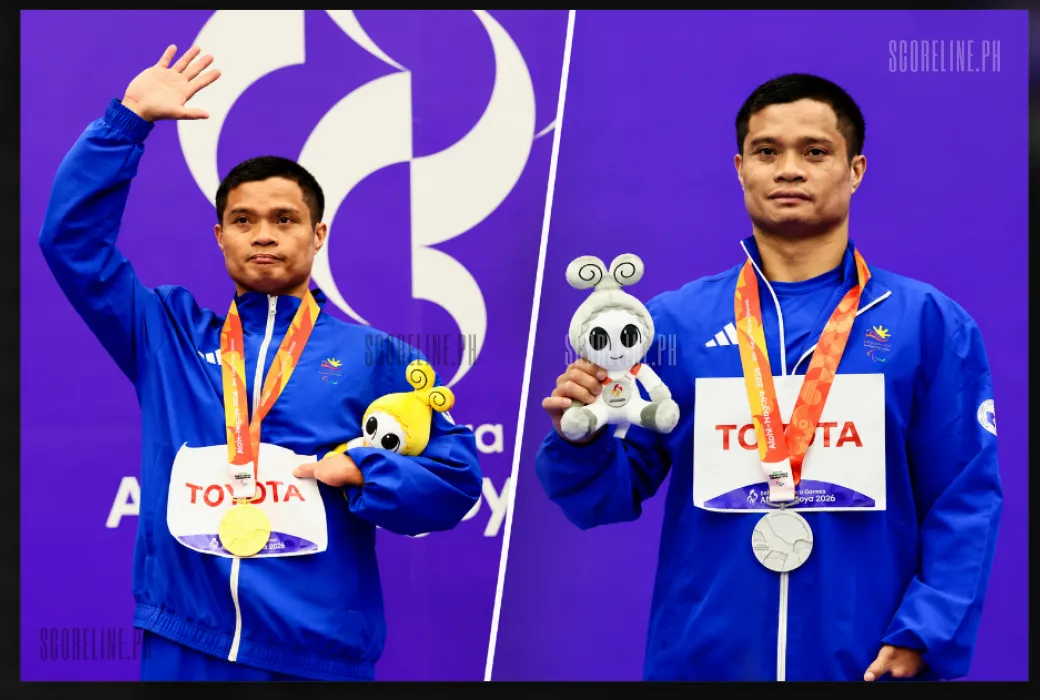
They stand on the podium as gold medalists, bringing honor to the country and inspiring millions of Filipinos.
Yet under Philippine law, winning gold at the Asian Games and winning gold at the Asian Para Games carry different financial rewards.
₱2 million for an Asian Games individual gold medal. ₱1 million for an Asian Para Games individual gold medal.
The difference has brought renewed attention to Republic Act No. 10699, or the National Athletes and Coaches Benefits and Incentives Act, following the achievements of Filipino athletes at the 2026 Asian Games and Asian Para Games.
At the center of the discussion is a fundamental question:
Should two Filipino national athletes who win gold at their respective continental championships receive different statutory cash incentives?
A ₱1-Million Difference Written Into Law
Under Section 8 of Republic Act No. 10699, individual gold medalists at the Asian Games are entitled to a statutory cash incentive of ₱2 million.
Individual gold medalists at the Asian Para Games, meanwhile, are entitled to ₱1 million.
The difference is not the result of a discretionary decision by sports officials following a competition.
It is established under the existing national sports incentives law.
The distinction becomes particularly noticeable when comparing the achievements of Filipino champions at the 2026 continental competitions.
Among the Asian Games gold medalists are gymnastics superstar Carlos Yulo, pole vaulter EJ Obiena, and taekwondo athlete Jeus Gabriel Yape.
Meanwhile, para swimming champions Ernie Gawilan and Ariel Joseph Alegarbes have also delivered gold-medal performances for the Philippines at the Asian Para Games.
The statutory incentives for individual gold medals are:
Competition
Gold medal incentive
Asian Games
₱2,000,000
Asian Para Games
₱1,000,000
Difference
₱1,000,000
The figures represent statutory cash incentives for individual events. They do not necessarily reflect the total financial rewards an athlete may receive from other government programs, local governments, or private sponsors.
Nevertheless, the difference in the national incentive structure raises questions about how achievements in para sports are recognized.
Different Competitions, Shared National Responsibility
The Asian Games and Asian Para Games are separate international sporting competitions with different event classifications, eligibility requirements, and competition structures.
The Asian Games brings together elite athletes from across the continent, while the Asian Para Games provides high-level international competition for athletes with eligible disabilities.
Both demand years of preparation, specialized coaching, physical conditioning, and technical excellence.
Both require competitors to meet demanding international standards.
And both provide opportunities for Filipino athletes to represent the country against Asia's strongest sporting talents.
For para-athletes, preparation may also involve specialized equipment, accessible training environments, and individualized support services.
These requirements make investment in para sports particularly important.
The two competitions may be different, but the dedication and sporting achievements of their champions deserve serious national recognition.
Ernie Gawilan: A Champion Whose Achievements Speak for Themselves
Among the Filipino athletes whose performances have brought attention to the issue is veteran para swimmer Ernie Gawilan.
At 35, Gawilan continues to establish himself as one of the Philippines' most accomplished para-athletes.
During the Aichi-Nagoya 2026 Asian Para Games, he captured gold in the men's 400-meter freestyle S7 with a time of 4 minutes and 56.72 seconds.
The victory marked his third consecutive Asian Para Games gold medal in the event.
He followed that performance with silver in the men's 200-meter individual medley SM7, clocking 2 minutes and 52.72 seconds.
His achievements reflect years of international competition, technical development, and sustained excellence.
Gawilan's success is not simply an inspirational personal story.
He is an elite competitor whose results demonstrate the quality of Philippine para swimming.
His gold medal carries the same national significance of bringing international sporting recognition to the Philippines.
Yet the statutory incentive attached to his Asian Para Games gold is half the amount provided for an individual Asian Games gold.
That distinction has become part of a broader discussion about athlete recognition.
Why Does Republic Act No. 10699 Provide Different Amounts?
Republic Act No. 10699 was enacted to strengthen benefits and incentives for national athletes and coaches.
The law establishes financial rewards for medal-winning performances in recognized international competitions, including the Olympics, Paralympics, Asian Games, Asian Para Games, and Southeast Asian Games.
Its incentive schedule assigns different amounts according to the competition and medal category.
For the Asian Games and Asian Para Games, the prescribed individual gold-medal incentives differ by ₱1 million.
However, the existence of different amounts does not, by itself, explain the full legislative reasoning behind the distinction.
Understanding that reasoning would require examining the law's legislative history, policy objectives, and the factors considered when the incentive categories were established.
The current discussion therefore presents an opportunity to review whether the existing structure remains appropriate for Philippine sports development.
Equal Recognition and Equal Incentives: A National Debate
The difference between Asian Games and Asian Para Games incentives raises two related but distinct issues.
The first concerns recognition.
Filipino para-athletes represent the country in international competition and deserve recognition for their achievements as elite national athletes.
The second concerns financial policy.
Should the government provide identical statutory cash incentives for equivalent medals at the Asian Games and Asian Para Games, or should the competitions retain separate incentive schedules?
Supporters of equal incentives may argue that both groups of athletes dedicate comparable effort to representing the Philippines and that equal gold-medal rewards would reinforce the principle of inclusive national recognition.
Others may point to differences in competition structures, event categories, and the broader incentive framework as considerations that policymakers must examine.
These perspectives form part of a legitimate discussion about how public sports incentives should be designed.
The central policy question is not whether para-athletes deserve recognition. It is how that recognition should be reflected in the country's financial incentive system.
Can the Incentive Structure Be Changed?
Republic Act No. 10699 includes provisions that allow the Philippine Sports Commission to periodically review and adjust incentive amounts, in consultation with PAGCOR and in accordance with the prescribed process.
Congress also has the authority to amend the law.
Any proposed adjustment would require consideration of the legal framework, financial implications, athlete classifications, and long-term sustainability of the incentives program.
A review could examine whether Asian Games and Asian Para Games gold medalists should receive equivalent statutory awards.
It could also consider whether similar differences exist across other competitions covered by the law.
Such an assessment would provide policymakers with an opportunity to evaluate the incentives framework as a whole rather than focusing exclusively on one medal category.
While the ₱1-million difference has attracted attention, athlete incentives represent only one part of the broader discussion.
Para-athletes also require reliable training allowances, accessible facilities, specialized coaching, sports medicine, rehabilitation support, and international competition opportunities.
The Philippines has produced successful para-athletes despite continuing challenges in access to sporting resources.
Strengthening those systems could help develop more athletes capable of competing internationally.
Cash incentives recognize achievements after medals are won.
Development programs, meanwhile, help create the conditions that make those achievements possible.
Recognition after victory matters. Sustained support before competition matters just as much.
The debate surrounding Republic Act No. 10699 could therefore become an opportunity to examine the wider needs of Philippine para sports.
For athletes such as Carlos Yulo, EJ Obiena, Jeus Gabriel Yape, Ernie Gawilan, and Ariel Joseph Alegarbes, international competition represents the culmination of years of preparation.
Their events are different.
Their athletic disciplines require different skills.
Their competitive journeys are unique.
But their victories share one important distinction.
They bring sporting honor to the Philippines.
The national incentive system is intended to recognize those accomplishments while supporting athletes who dedicate themselves to international competition.
The question now is whether the current framework reflects the standards of recognition and inclusion that Philippine sports seeks to promote.
A Question Worth Bringing to the National Conversation
The difference between the statutory incentives for Asian Games and Asian Para Games champions is clear.
The individual gold-medal amounts are ₱2 million and ₱1 million, respectively.
What remains open for discussion is whether that distinction should continue.
A review of the law could provide an opportunity to examine the rationale behind the existing amounts, the financial implications of possible changes, and the broader objectives of athlete recognition.
For Filipino sports fans, the issue is also a reminder that national athletes compete in many different disciplines and circumstances.
Their achievements deserve attention beyond medal counts and championship celebrations.
The Philippine flag does not change when a para-athlete stands on the podium. The national pride attached to that achievement remains.
Whether the statutory incentives should be equalized is a question for lawmakers, sports institutions, athletes, and the public to examine through an informed policy discussion.
But one principle remains important:
Filipino para-athletes are national athletes whose sporting achievements form an essential part of the country's international success.
SAME PHILIPPINE FLAG. SAME NATIONAL PRIDE. DIFFERENT STATUTORY CASH REWARDS.
THE ₱1-MILLION DIFFERENCE IS CLEAR. THE QUESTION IS WHETHER PHILIPPINE SPORTS POLICY SHOULD CONTINUE TO MAKE THAT DISTINCTION.