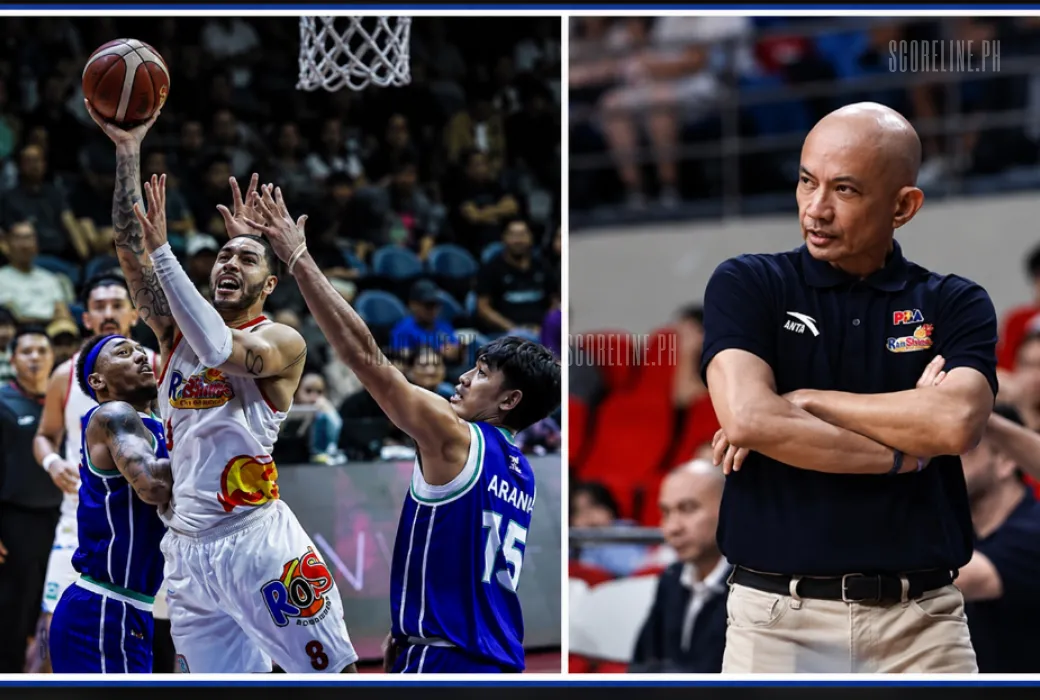
Guiao calls out Fuller as Rain or Shine's playoff collapse exposes bigger offensive flaws
Aaron Fuller's inconsistency drew criticism from Yeng Guiao, but the Elasto Painters' quarterfinal exit against Converge revealed a more troubling reality: hustle and speed can win games, but without reliable half-court execution, championship dreams can quickly fall apart.
Rain or Shine head coach Yeng Guiao did not mince words after the Elasto Painters' disappointing exit from the PBA Season 50 Governors' Cup quarterfinals. His frustration centered on import Aaron Fuller, whose inconsistent production and costly turnovers became glaring problems in a playoff series where every possession mattered.
But beyond Fuller's struggles lies a much bigger question. Has Rain or Shine reached the limit of what its high-energy, fast-paced basketball system can accomplish without a dependable half-court scoring weapon?
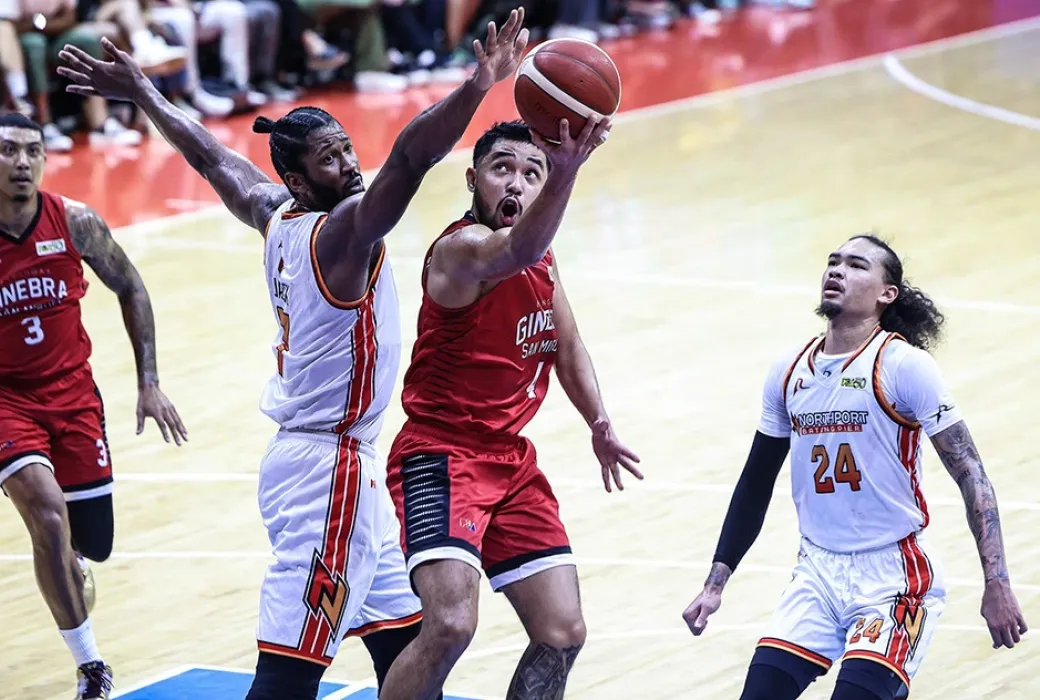
The Elasto Painters entered the playoffs hoping to build on their previous Commissioner's Cup semifinal appearance. Instead, they suffered three consecutive defeats against the Converge FiberXers, ending their latest championship pursuit in Game 4. And for Guiao, the performance of his veteran import left plenty to be desired.
"We're kind of disappointed with Aaron kasi sa tingin namin, he could have been a little bit more impactful dun sa series. We expected a lot more consistency around the basket," Guiao told reporters following the elimination.
"Pero ayun nga, turnover prone siya around the basket eh."
Those remarks reflected more than disappointment over one player's statistics. Rain or Shine needed Fuller to provide stability when its offense struggled, particularly during possessions when transition opportunities disappeared, and the team was forced to execute against Converge's organized defense. Instead, Fuller's production fluctuated dramatically.
He opened the series with 33 points in Game 1 and followed it with 26 in Game 2. Then came a disastrous Game 3. Fuller managed just four points on 2-of-11 shooting, a stunning offensive collapse for a player expected to anchor Rain or Shine's interior attack. He recovered statistically in Game 4 with 23 points and 10 rebounds. But the numbers concealed a damaging reality. Fuller failed to score a single point in the fourth quarter and committed five turnovers. For an import expected to deliver when the stakes were highest, that was a painful finish.
The Elasto Painters' problems extended well beyond their import. Throughout the series, Converge repeatedly capitalized on Rain or Shine's careless ball handling and inability to sustain offensive execution. In Game 1, the FiberXers dominated points off turnovers by a staggering 40-13 margin. That statistic alone illustrated how costly Rain or Shine's mistakes had become.
The struggles continued in Game 2, when Adrian Nocum committed three of his four turnovers during the final three minutes, overshadowing an otherwise outstanding performance of 22 points and 18 assists. In Game 3, Nocum delivered a triple-double but also committed seven turnovers. By Game 4, Fuller and Nocum each finished with five turnovers. These were not isolated mistakes. They were symptoms of a recurring problem that Converge exploited throughout the series.
Rain or Shine could create excitement with its pace, but it struggled to protect possessions when the game demanded patience and precision. And in playoff basketball, careless possessions can destroy even the most promising championship campaign.
Guiao has built an identity around aggressive defense, relentless energy, quick ball movement, and transition scoring. When the Elasto Painters are running, they can overwhelm opponents. Their guards attack unsettled defenses, their wings fill passing lanes, and their big men capitalize on opportunities near the basket.
But playoff basketball presents a different challenge. Opponents have more time to study tendencies, disrupt offensive patterns, and force teams into uncomfortable situations. Converge understood that. Instead of allowing Rain or Shine to dictate the tempo, the FiberXers repeatedly forced the Elasto Painters into half-court possessions. That exposed the limitations of their offense.
The most telling statistic came in the final periods of Games 3 and 4, when Converge outscored Rain or Shine by a combined 54-36. An 18-point fourth-quarter scoring disadvantage across two crucial games told the story of a team that could compete for three quarters but struggled to finish. The FiberXers had the personnel and offensive options to execute when the pace slowed. Rain or Shine lacked the same consistency. And that difference helped decide the series.
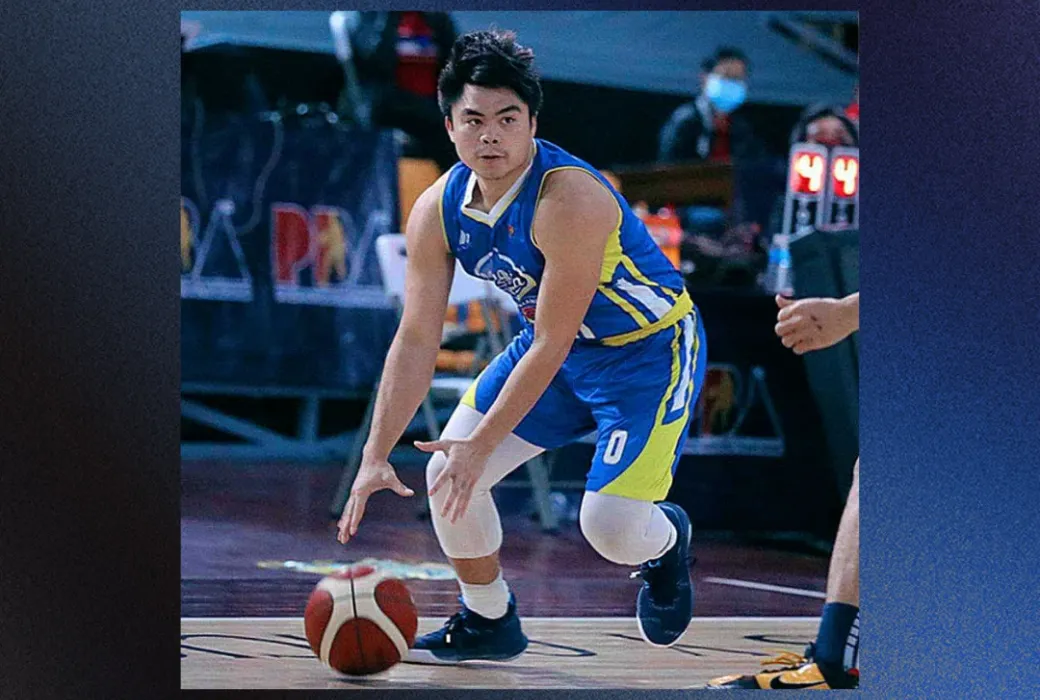
One encouraging development for Rain or Shine was the continued emergence of Adrian Nocum. The talented guard averaged 17.3 points and 12 assists across the four-game series, demonstrating his growing importance as one of the team's primary offensive creators. His ability to penetrate defenses, generate scoring opportunities, and distribute the basketball gave Rain or Shine a legitimate playmaking weapon.
But his production also exposed another weakness. Who takes responsibility when opponents shut down Nocum's first option? Who creates a quality shot when the offense stalls? Who can consistently attack a set defense with the shot clock winding down? Those questions became increasingly difficult to answer against Converge.
Nocum's development deserves recognition, but expecting him to manufacture nearly every important offensive opportunity is not a sustainable championship formula. Rain or Shine needs additional players capable of creating offense independently. Otherwise, opposing teams will continue loading their defenses against its primary playmaker.
Criticizing Fuller's inconsistency is understandable. But expecting him to solve every half-court offensive problem may also have been unrealistic. At 36, Fuller remains a productive interior player who can finish around the basket, rebound, run the floor, and provide physicality. Those strengths can be valuable in Guiao's system. However, being an effective interior finisher is different from being a dependable isolation scorer.
Fuller is not necessarily the type of import who can repeatedly break down defenders, manufacture difficult shots, or rescue possessions when an offensive play collapses. Against Converge's imposing frontcourt of Justin Arana, Justine Baltazar, and import Cam Clark, even his preferred scoring opportunities became more difficult. The FiberXers had the size, defensive presence, and discipline to challenge him around the basket. That forced Rain or Shine to search for other offensive solutions. Too often, those solutions never materialized.
Fuller deserves accountability for his mistakes, but Rain or Shine's offensive limitations cannot be blamed on one player alone. The team's roster construction and tactical flexibility must also be examined.
There is no denying the progress Rain or Shine has made under Guiao. The Elasto Painters have developed a competitive identity, nurtured emerging talent, and established themselves as a difficult opponent for the league's stronger teams. Their energy and defensive intensity make them dangerous. Their willingness to compete has never been the issue.
But there is a difference between being difficult to beat and knowing how to win when the pressure reaches its highest level. The next stage of Rain or Shine's development requires more than additional hustle. It requires a more versatile offensive roster. A dependable late-game scorer. Better ball security. More disciplined half-court execution. And an import whose offensive strengths complement the team's biggest weaknesses.
That does not automatically mean Fuller should be replaced. But it does mean Rain or Shine must seriously evaluate whether its current personnel can provide the offensive versatility needed to survive against elite playoff defenses. Because a team cannot keep relying on transition baskets when championship opponents know exactly how to take those opportunities away.
While much of the discussion has focused on Rain or Shine's shortcomings, Converge deserves recognition for its performance. The FiberXers did more than capitalize on mistakes. They dictated the terms of the series. Their defensive discipline, frontcourt strength, and ability to execute in crucial moments repeatedly disrupted the Elasto Painters' preferred style. Arana, Baltazar, and Clark provided the interior resistance needed to limit Fuller's effectiveness. Meanwhile, Converge's ability to punish turnovers and control late-game possessions gave it a decisive advantage. The result was a playoff victory that reflected both Converge's strengths and Rain or Shine's vulnerabilities. And that is what makes the elimination particularly revealing. Rain or Shine did not simply lose because its import had an inconsistent series. It lost to an opponent that understood how to exploit its weaknesses.
For several conferences, Rain or Shine has shown flashes of becoming a legitimate championship contender. Its young players have developed. Its system has produced competitive performances. Its coaching staff has established a recognizable identity. But potential cannot remain the team's defining achievement forever. At some point, promising teams must become championship teams. And that transformation requires difficult decisions.
Guiao and the Rain or Shine management must determine whether their current roster has enough offensive versatility to compete consistently in high-pressure playoff situations. They must also address the turnovers that repeatedly handed opponents easy scoring opportunities. Most importantly, they must find a way to generate quality shots when transition basketball is no longer available. The answer may involve personnel changes, tactical adjustments, or further development of the team's existing core. But standing still cannot be the solution.
The Elasto Painters have already proven they can compete. They have demonstrated energy, resilience, and the ability to challenge stronger opponents. What they have not consistently demonstrated is the ability to execute when the game slows down and every possession becomes a battle. That is the challenge separating them from the next level.
Guiao's criticism of Fuller may have captured the headlines, but the real lesson from the Converge series is much broader. Rain or Shine needs more than an import who can score. It needs an offense that can survive when scoring becomes difficult. The Elasto Painters cannot depend on Nocum to create everything. They cannot afford repeated turnovers in crucial possessions. And they cannot expect their transition game to rescue them against every playoff opponent.
Until those problems are addressed, their championship ambitions will remain vulnerable.
HUSTLE MAKES YOU COMPETITIVE. EXECUTION MAKES YOU A CHAMPION.
For Yeng Guiao and Rain or Shine, that is the difference they must finally overcome.