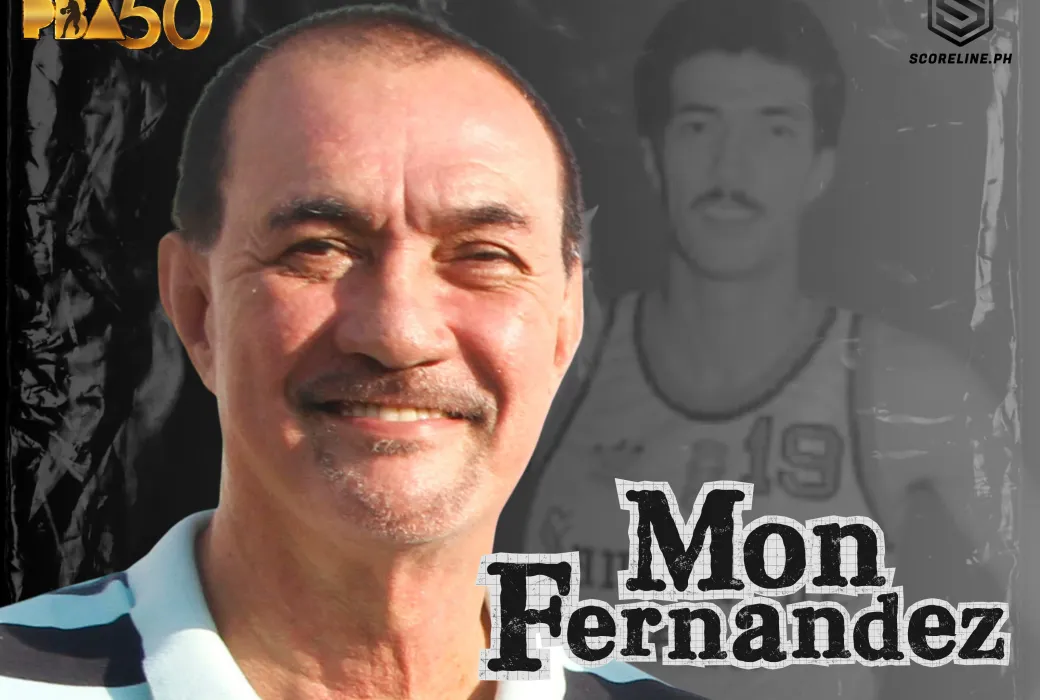
Ramon Fernandez
PBA 50 Greatest Players
Player Profile Series: The Great “El Presidente” Ramon Fernandez
In the continuation of our Profile Series, we shine the spotlight on the first-ever four-time Most Valuable Player in the Philippine Basketball Association — and arguably the league’s greatest of all time — the legendary “El Presidente,” Ramon Fernandez.
Known for his elegant hook shot and unparalleled court vision, Fernandez took the league by storm with MVP wins in 1982, 1984, 1986, and 1988. Beyond individual accolades, he secured 19 championship titles in an illustrious career that spanned two decades.
Born on October 3, 1953, in Maasin, Leyte, Fernandez stood 6-foot-4 and played the center/forward position, but his game defied traditional roles. With the ball-handling of a guard and the mind of a tactician, he was the prototype of the modern big man — long before the game evolved to demand it.
Name: Ramon Fernandez
Nickname: Mon
Birthdate: October 3, 1953
Hometown: Maasin, Leyte
Moniker: El Presidente, Don Ramon
Jersey No’s: 10/19
Don Ramon’s teams
As a player:
1972 - San Miguel Corporation Braves
1973–1984 - Toyota
1984–1985 - Beer Hausen/Manila Beer
1985–1987 - Tanduay Rhum Makers
1988 - Purefoods Hotdogs
1988–1994 - San Miguel Beermen
As a coach:
1988 - Purefoods Hotdogs
Achievements:
- 19× PBA champion (1975 First, 1975 Second, 1977 Invitational, 1978 All-Filipino, 1978 Invitational, 1979 Invitational, 1981 Open, 1982 Reinforced Filipino, 1982 Open, 1986 Reinforced, 1986 All-Filipino, 1987 Open, 1988 Reinforced, 1989 Open, 1989 All-Filipino, 1989 Reinforced, 1992 All-Filipino, 1993 Governors', 1994 All-Filipino)
- 5× PBA All-Star (1989, 1990, 1991, 1993, 1994)
- 4× PBA Most Valuable Player (1982, 1984, 1986, 1988)
- 13× PBA Mythical First Team (1976–1982, 1984, 1986, 1988, 1989, 1991, 1992)
- 3× PBA Mythical Second Team (1985, 1987, 1990)
- 2× PBA scoring champion (1983–1984)
- PBA All-Time Scoring Leader
- 50 Greatest Players in PBA History (2000 selection)
- PBA Hall of Fame Class of 2005
- No. 19 retired by the San Miguel Beermen
International stints:
FIBA Asia Under-18 Championship
- Gold medal – first place (1972 Manila)
FIBA Asia Championship
- Gold medal – first place (1973 Manila)
Asian Games
- Silver medal – second place (1990 Beijing)
Fernandez began his basketball journey at the University of San Carlos in Cebu. In 1972, he played for the San Miguel Braves in the Manila Industrial and Commercial Athletic Association (MICAA), then moved to the newly formed Komatsu Komets, who later became the iconic Toyota Comets.
By 1975, Toyota had joined the PBA as one of its nine founding teams, and Fernandez quickly became one of the league’s brightest stars. Alongside Robert Jaworski and Francis Arnáiz, he led Toyota to nine championships between 1975 and 1983. His 1982 MVP was earned during this era, solidifying his status as the team’s anchor.
After Toyota disbanded in 1984, Fernandez joined Beer Hausen and claimed his second MVP that same year. But the headlines weren’t just about basketball — his growing rift with former teammate Jaworski became one of the PBA’s most talked-about rivalries. Still, Fernandez continued to shine on the court, even though his team never made it to the top.
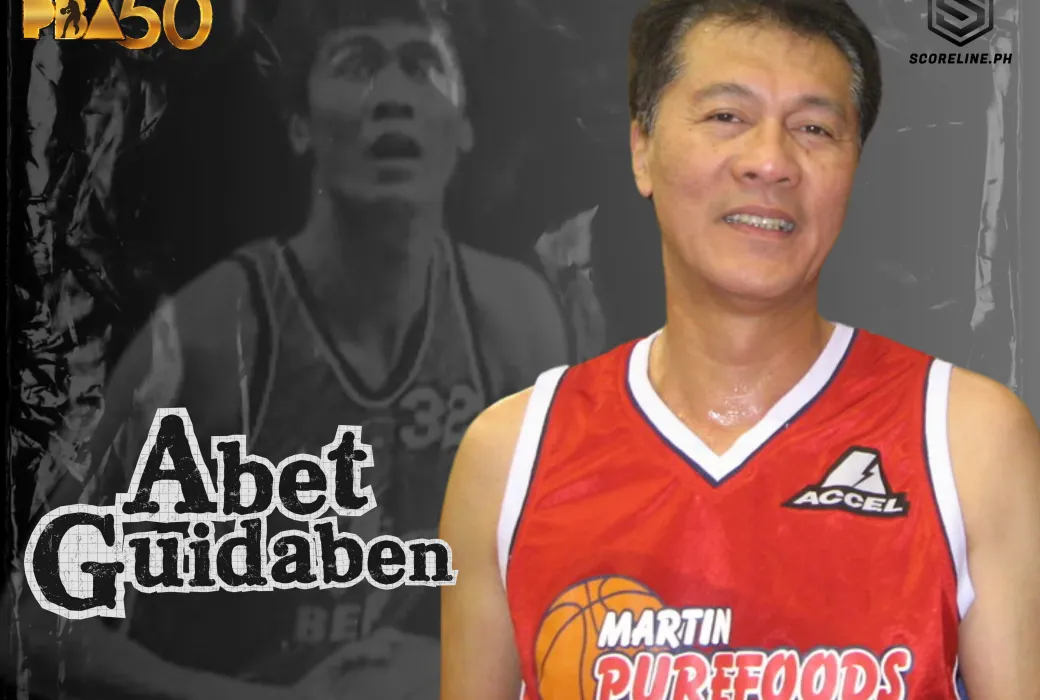
A midseason trade in 1985 sent him to Tanduay in exchange for another elite big man, Abet Guidaben. Teaming up with veterans and talented imports, Fernandez led Tanduay to three championships and secured his third MVP in 1986.
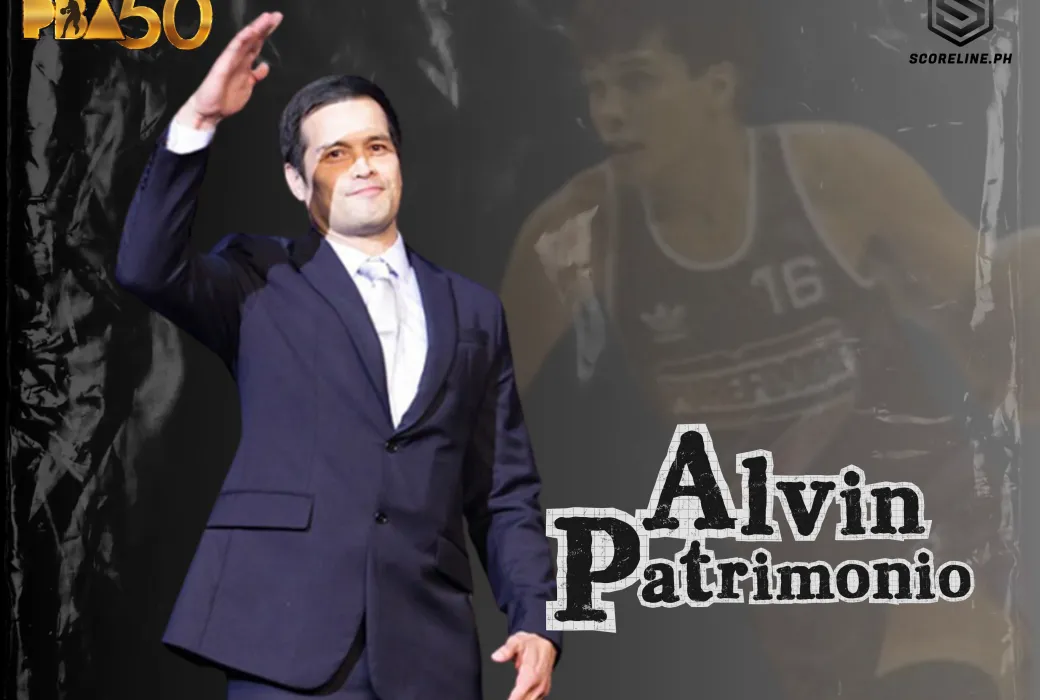
When Tanduay disbanded before the 1988 season, Purefoods acquired the franchise. Fernandez served briefly as a playing coach, guiding a young core that included Jerry Codiñera, Jojo Lastimosa, and Alvin Patrimonio. He led the team to the finals in the 1988 Open Conference but eventually handed off coaching duties mid-season. A controversial benching in the All-Filipino Finals that year led to a blockbuster trade — Fernandez to San Miguel, in exchange once again for Guidaben.
With San Miguel, Fernandez found the perfect ending chapter to his career. He won the 1988 Reinforced Conference, earned his fourth MVP, and played a key role in the Beermen’s historic 1989 Grand Slam. That same year, in the All-Star Game, he and Jaworski finally buried the hatchet with a handshake at center court — a moment orchestrated by coach Baby Dalupan that symbolized closure and mutual respect.
Fernandez continued to represent the country on the international stage, including the 1990 Asian Games where the Philippines claimed silver. He retired in 1994, still a statistical juggernaut:
- Most points: 18,996
- Most rebounds: 8,652
- Most blocks: 1,853
- Most minutes played: 36,624
- Second in assists: 5,220
- Second in games played: over 1,070
He came just five assists shy of averaging a triple-double in the 1984 season.
His career averages — 17.7 points, 8.1 rebounds, 4.9 assists, 1.2 steals, and 1.7 blocks per game — speak volumes about his versatility.
Ramon Fernandez wasn’t just a statistical marvel. He was a cerebral giant, a team-first superstar, and a player who turned every franchise he touched into a contender. For many, he remains the standard by which greatness in Philippine basketball is measured.
“El Presidente” wasn’t just a nickname. It was a title he earned — through elegance, excellence, and an enduring legacy.
News
The Philippine Sports Commission (PSC) is pushing a landmark plan to open government-run golf courses to children aged 15 and below—completely free of charge.
Initiated by PSC chairman Patrick Gregorio, the proposal would give youth access to select courses, including Camp John Hay in Baguio and Intramuros Golf Club in Manila, starting at noon daily, seven days a week.
The plan, now with the Office of the President, awaits approval as President Ferdinand Marcos Jr. consults with golf industry stakeholders.
While some military-run courses may resist concerns about income and congestion, Gregorio believes the long-term benefits for grassroots golf outweigh the drawbacks. “If we want golf to grow, we have to let more Filipino kids touch a golf club—not just the ones who can afford it,” he said.
With golf’s high costs limiting access, the PSC hopes the initiative will spark broader participation, open doors to scholarships, and develop future champions from all backgrounds.

The Philippine women’s softball team—the Blu Girls—are eyeing nothing less than gold as they prepare to defend their title at the 33rd Southeast Asian Games this December in Thailand.
After softball’s two-edition absence from the SEA Games, head coach Ana Santiago said the team’s hunger for victory remains undiminished. “Nothing less than gold ang goal natin,” Santiago declared, recalling the Blu Girls’ last gold win at home in 2019.
A dominant force since 1979, the Blu Girls have collected 11 SEA Games golds and are returning as favorites. Team captain Charlotte Sales and power hitter Roma Cruz, both SEA Games debutantes, expressed confidence in the squad’s readiness, especially after a productive training camp in Taiwan.
“Malaking bagay ‘yung training camp namin. Nakatulong sa teamwork, communication, and ‘yung samahan,” Sales shared.
Cruz, who smashed five homers at the Asian Cup in China last July, is determined to prove herself on the SEA Games stage. “Gusto ko ipakita na kaya ko makipagsabayan,” she said.
While the Blu Girls topped Indonesia for gold in 2019, Santiago sees Singapore as this year’s biggest threat, citing their extensive preparations in Australia, Japan, and Taiwan.
The Philippines opens against Singapore on December 15, then faces Malaysia, Thailand, and Indonesia before the gold medal game on December 20.
Amateur Softball Association of the Philippines president John Henry Lhuillier’s marching order is clear: go for double gold in both women’s and men’s softball. “That’s the goal,” Santiago affirmed.
Cambodia has withdrawn from eight sports in the upcoming Southeast Asian Games in Thailand due to security concerns amid ongoing border tensions, an Olympic official confirmed last November 27.
The decision comes after intermittent military clashes between Cambodia and Thailand throughout the year, including a deadly July outbreak that left over 40 people dead.
Despite a US-brokered truce, diplomatic strains remain.
The National Olympic Committee of Cambodia (NOCC) informed the Southeast Asian Games Federation that it would skip events such as football, petanque, wrestling, judo, and karate, citing “significant security concerns” for its athletes and officials.
NOCC secretary-general Vath Chamroeun emphasized that the move was strictly about safety, reducing the delegation from 333 to 150 athletes competing in 13 sports.
The pullout is aimed at making monitoring easier amid heightened tensions over overlapping claims to ancient temples along the Cambodia-Thailand border.

The Philippines will field its largest-ever delegation for the 2025 Southeast Asian Games in Thailand, sending 1,600 athletes, coaches, and officials to compete in 50 sports at the biennial meet during the 33rd 2025 send-off at Rizal Memorial Coliseum held last November 28.
Philippine Sports Commission Chairman Patrick “Pato” Gregorio said the decision to send a record-sized team was rooted in prioritizing exposure and athlete development over immediate results
“When you send a delegation, they learn. When you send a big delegation, they gain confidence and experience,” Gregorio said. “We want our athletes’ mindset and skills to toughen up so they can compete at the Asian Games and the Olympics.”
The 2025 SEA Games will feature 574 medal events, three demonstration sports—air sports, flying disc, and tug of war—and MMA as a value-added sport.
Gregorio emphasized that investing in athletes’ experience now lays the groundwork for future success. “We’re giving our athletes the exposure they need to compete better in the future,” he said.
The Philippines will target podium finishes in medal-rich sports including basketball, esports, boxing, weightlifting, jiu-jitsu, and athletics when the SEA Games open on December 9.

In a heartfelt send-off, the senate committee on sports, Senator Bong Go, reminded the country’s national athletes of the immense pride and hope they bring as they head into international competitions.
“Always remember, you carry not just your name, but the spirit of every Filipino,” Go said. “When you win, the whole nation wins with you. No matter the result, you already carry the pride and admiration of the Filipino people.”
Reassuring the athletes of his unwavering support, the official added, “My office is always open for you. If you need anything—whether a solution or a problem—just come to my office.”
As the delegation prepared to embark on their journey, he encouraged them to fight with determination and honor the country. “Fight with all your heart. Bring home the bacon. The honor you bring to the country—you will carry it for the rest of your life. It is engraved in the history of the Philippines.”
He closed by urging the team to give their best, stay united, and make every Filipino proud: “Show the world how strong and united Filipinos can be.”