Alex Eala's Hong Kong heartbreak: A painful defeat, but a season worth celebrating
Alex Eala's story is far from finished.
The Filipina tennis sensation fell short of another WTA championship after losing to Claire Liu in straight sets, but her remarkable journey in Hong Kong proved that one disappointing final cannot erase a season of breakthroughs.
The championship trophy was within reach. The stage was set for another unforgettable moment in Philippine tennis.
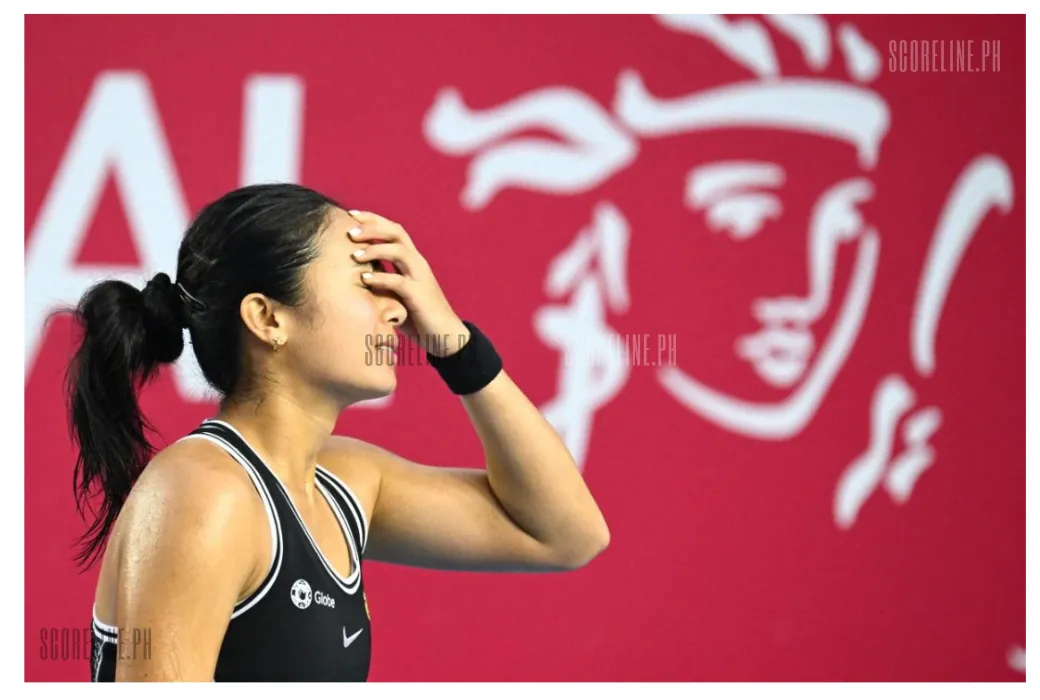
But for Alex Eala, the final chapter of her Hong Kong Open campaign ended not in celebration, but in heartbreak.
The Filipina tennis star suffered a painful 6-3, 6-0 defeat to American Claire Liu in the women's singles final of the 2026 Hong Kong Tennis Open at Victoria Park on Sunday, November 8.
It was a disappointing conclusion to a tournament that had showcased Eala's resilience, competitive maturity, and ability to challenge established international opponents.
For Liu, the victory marked her first WTA Tour championship, completing an impressive tournament run without dropping a single set.
For Eala, it was another reminder of how unforgiving professional tennis can be.
One day, you are celebrating a career-defining victory. The next, you are confronting the painful reality of championship defeat.
Yet there was far more to Eala's Hong Kong campaign than the final score suggested.
Less than 24 hours before facing Liu, Eala had delivered one of the most impressive performances of her tournament.
Against Greece's Maria Sakkari, ranked world No. 30, the Filipina demonstrated tremendous composure and fighting spirit to secure a thrilling 7-5, 3-6, 6-4 semifinal victory.
It was the kind of performance that reinforced her growing reputation as a dangerous competitor on the WTA Tour.
Eala absorbed pressure, fought through difficult stretches, and found the decisive shots when the match demanded them.
The victory carried her into the championship match with momentum and renewed hopes of capturing another title.
But Liu presented a different challenge.
The American entered the final having dominated her previous opponents, displaying consistency, tactical discipline, and confidence throughout the week.
And when the championship match began, she proved difficult to contain.
Eala opened the final with determination.
She broke Liu's serve to love in the third game, taking an early 2-1 advantage and offering Filipino supporters reason to believe another breakthrough was possible.
For a brief moment, the momentum appeared to favor the Filipina.
But Liu responded immediately. The American broke back, held serve, and moved ahead 3-2.
Eala answered with an impressive love hold to level the opening set at 3-3, but Liu continued applying pressure.
The American reclaimed the lead at 4-3 and gradually established control of the exchanges.
Then came a moment that raised concern. Eala requested a medical timeout before her next service game.
When she returned to the court, her right knee and thigh were heavily wrapped.
The visible strapping raised questions about her physical condition, although the precise nature and severity of the problem were not established.
From that point, Eala struggled to regain momentum.
Liu capitalized and closed out the opening set, 6-3.
What had begun as a promising championship opportunity was rapidly turning into a battle for survival.
If one game captured the frustration of Eala's final, it was the opening game of the second set.
For an extraordinary 26 minutes, Eala and Liu engaged in a marathon battle filled with long rallies, tactical exchanges, and relentless pressure.
The game featured 11 deuces, with Eala repeatedly fighting to protect her serve. Seven times, the Filipina earned game point. Seven times, she failed to convert.
Liu refused to surrender, continuing to chase every ball and force Eala into difficult shots.
Eventually, the American created another break opportunity. A missed backhand from Eala handed Liu the crucial break.
It was a devastating turning point.
The game had demanded enormous physical and mental effort, yet Eala emerged without the reward she desperately needed.
Liu, meanwhile, gained another surge of confidence.
The American went on to dominate the remainder of the set, completing a 6-0 shutout and sealing the championship.
The scoreboard showed a comfortable victory. The opening game of the second set revealed just how fiercely Eala had fought to stay in contention.
While Eala's defeat naturally disappointed Filipino supporters, Liu's achievement deserves recognition.
The world No. 102 entered the tournament determined to make an impact and left Hong Kong with the biggest title of her WTA career.
She did so without surrendering a set throughout the competition.
Against Eala, Liu demonstrated impressive consistency, effective court coverage, and the ability to deliver under pressure.
Her composure during the marathon second-set game proved particularly important.
Rather than allowing missed opportunities to affect her concentration, she remained patient and eventually converted the break that helped decide the match.
It was a championship performance built on discipline and execution. And Eala was gracious enough to acknowledge it.
"I want to congratulate Claire on an amazing tournament, a great week and a great match. Very, very well-deserved, congratulations," Eala said following the final.
Those words reflected the sportsmanship of a competitor who understood that defeat should never diminish the achievement of a deserving opponent.
For Eala, the Hong Kong Open represented the final tournament of a remarkable 2026 campaign.
Throughout the year, she continued establishing herself as one of the most recognizable figures in Philippine tennis.
Her progress on the international circuit, impressive victories against experienced opponents, and growing ability to compete in demanding matches provided encouraging signs of her development.
Her run in Hong Kong was another important achievement.
She defeated Australian Emerson Jones in the opening round, overcame Tereza Valentova in the next stage, and produced a memorable semifinal victory against Sakkari.
Those results carried her into another WTA championship match.
Although the final ended in disappointment, reaching that stage was itself evidence of her competitive progress.
A runner-up finish should not be mistaken for failure simply because the championship trophy went to someone else.
Professional tennis is a sport where even the world's greatest players experience painful defeats.
The challenge is learning from those moments and returning stronger.
Eala's medical timeout during the final also highlighted the physical demands of competing at the highest level.
Professional tennis requires athletes to endure repeated matches, intense rallies, constant movement, and limited recovery time between important contests.
Eala had battled through a demanding three-set semifinal against Sakkari before returning for the championship match the following day.
Whether that quick turnaround contributed to her difficulties against Liu cannot be established from the available information.
But the circumstances underline the importance of conditioning, recovery, and careful management of an athlete's physical workload.
For Eala, protecting her long-term health must remain a priority as she continues building her professional career.
The desire to win championships should always be balanced with the need to remain healthy enough to compete consistently.
Her visible discomfort during the final was concerning, but it should not overshadow the quality of her tournament campaign.
The next challenge: Turning deep runs into championships
Reaching a final is an achievement.
Winning one requires another level of execution.
That is the challenge Eala will continue facing as her career develops.
Against Liu, she created opportunities but struggled to capitalize on them.
The seven missed game points in the second set were particularly costly.
At the highest level of professional tennis, those moments often determine the difference between victory and defeat.
Improving her consistency under pressure, maximizing break opportunities, and maintaining physical readiness will be important as she pursues more titles.
But these are challenges that come with competing against increasingly difficult opposition.
Eala has already demonstrated that she possesses the talent and determination to reach championship matches.
The next step is finding ways to finish them successfully.
The goal is no longer simply to prove that she belongs on the WTA Tour. It is to establish herself as a consistent championship contender.
For Filipino sports fans, Eala's rise represents something bigger than individual victories.
Tennis has traditionally competed for attention in a country where basketball, boxing, and volleyball dominate much of the sporting conversation.
Eala's achievements have helped bring greater attention to the sport and inspire young Filipinos who dream of competing internationally.
Her journey demonstrates that Filipino athletes can challenge established players on some of the world's most demanding competitive stages.
But supporting an athlete also means accepting the difficult moments.
There will be defeats. There will be missed opportunities.
There will be tournaments where the results do not match expectations.
And there will be days when even the strongest determination is not enough.
True support should not disappear when the championship trophy goes to someone else.
Eala deserves recognition for the progress she has made, not criticism simply because she finished second.
As Liu celebrated her first WTA championship, Eala was left to reflect on a tournament that brought both triumph and disappointment.
She had fought through challenging matches, defeated a highly ranked opponent, and earned another opportunity to compete for a title. The final result was painful.
But it did not erase the victories that brought her there.
Nor did it diminish the progress she has made throughout the season.
For Eala, the next chapter will involve recovery, reflection, and preparation for the challenges ahead. There will be more opponents. More difficult matches.
More opportunities to compete for championships. And perhaps more painful lessons along the way.
That is the reality of professional sports.
The best athletes are not those who never lose. They are those who continue improving after defeat.
Alex Eala left Hong Kong without the championship trophy.
But she also left with another WTA final appearance, valuable experience, and further evidence that she can compete against elite international opposition.
And as the Filipina tennis star prepares for the next stage of her career, one thing remains clear: