The world saw his disability. He showed the world his ability.
Born with physical differences, the Filipino swimming champion transformed his passion for the water into a remarkable sporting career — proving that greatness is measured not by physical appearance, but by determination, discipline and achievement.
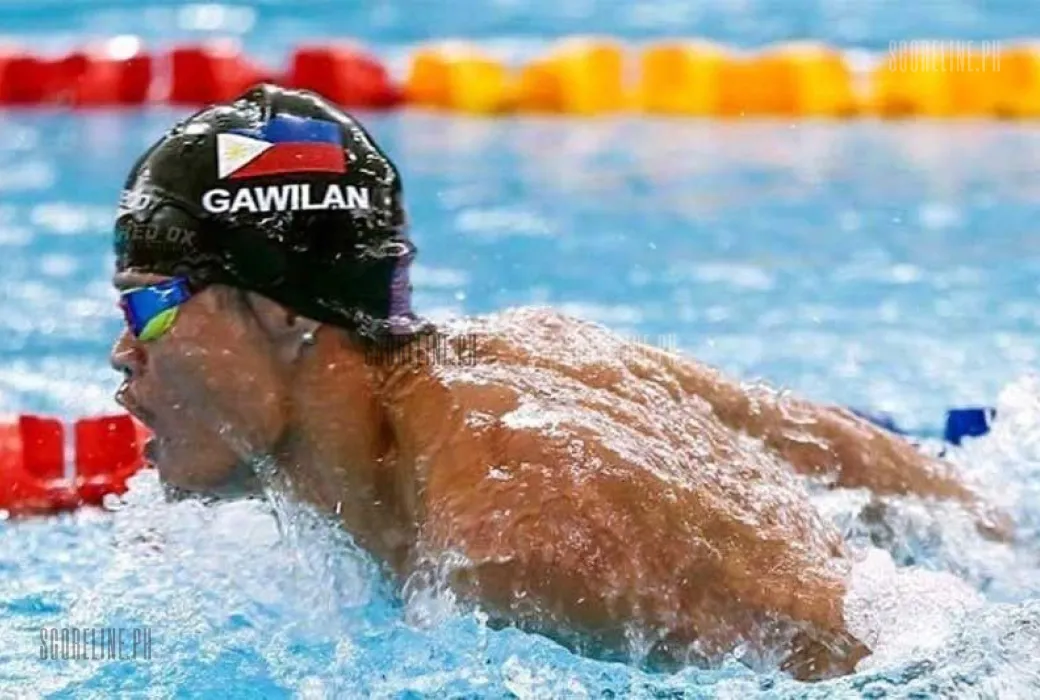
In a world where athletes are often measured by physical strength, speed and perfection, Ernie Gawilan has built an extraordinary career by challenging conventional perceptions of what a champion should look like.
Born with physical differences and raised by his grandmother in Davao, Gawilan grew up facing circumstances that could have shaped how others viewed his future.
But he refused to allow those perceptions to determine his destiny.
Instead, he discovered something remarkable in the swimming pool — an opportunity to develop his abilities, pursue excellence, and eventually represent the Philippines against some of Asia's finest para athletes.
Today, Gawilan stands among the country's most accomplished para swimmers, with multiple Asian Para Games gold medals highlighting a career defined by perseverance, discipline, and competitive excellence.
His journey is not simply a story about overcoming adversity.
It is a story about discovering potential where others might have seen limitations.
Growing up in Davao under the care of his grandmother, Gawilan experienced a childhood far removed from the bright lights of international sporting competitions.
His physical differences were part of his life from birth, but they never defined the full extent of his abilities.
What eventually changed his direction was swimming.
In the water, Gawilan discovered a sporting environment where he could develop his strengths and challenge himself through training and competition.
The swimming pool became more than a place for recreation. It became a pathway toward independence, personal growth, and athletic achievement.
And with every training session, he moved closer to a future that would eventually take him beyond Davao and onto the international stage.
Perhaps the most powerful reflection on Gawilan's journey comes from the swimmer himself.
"Even though I was born like this, I realized I could do something that not all people can do."
Those words capture the philosophy behind his success.
Rather than viewing his physical condition solely through the challenges it presented, Gawilan recognized his ability to excel in a demanding sport.
But his accomplishments were not built on positive thinking alone.
Competitive swimming requires years of disciplined preparation, technical development, physical conditioning, and mental toughness.
For para swimmers, the demands of international competition are equally unforgiving.
Every fraction of a second matters. Every stroke must be executed with precision. Every race requires focus, preparation, and the ability to perform under pressure.
Gawilan embraced those demands and transformed his potential into results.
The defining proof of Gawilan's sporting excellence came through his performances at the Asian Para Games.
Competing against elite para swimmers from across the continent, the Filipino standout established himself as a formidable competitor, capturing multiple gold medals and bringing international recognition to Philippine para swimming.
His victories represented more than personal milestones.
They demonstrated that Filipino para athletes could compete successfully against Asia's strongest sporting programs.
For a country where basketball, boxing and volleyball frequently dominate public attention, Gawilan's achievements offered another compelling reason to celebrate Philippine sporting excellence.
He was not winning because opponents underestimated him.
He was winning because he possessed the training, technique, determination and competitive ability required to succeed at the highest level.
His medals were earned through athletic performance — not sympathy.
There is a tendency in sports coverage to describe para athletes primarily through the difficulties they have experienced.
While those experiences deserve recognition, focusing exclusively on adversity risks overlooking what makes these competitors exceptional: their athletic accomplishments.
Gawilan's career deserves to be celebrated for the same reasons any elite athlete's career would be celebrated.
He trained to improve. He competed to win. He represented his country with pride.
His achievements deserve serious attention not merely because he was born with physical differences, but because he developed himself into an outstanding international competitor.
That distinction matters.
Para athletes should not have to rely on inspirational narratives to receive recognition for their sporting achievements.
Their performances, records, medals and dedication already provide compelling reasons for national admiration.
Gawilan's success also raises a broader question about the place of para sports in Philippine athletics.
While major victories in mainstream sports frequently dominate headlines and social media discussions, the accomplishments of para athletes do not always command comparable public attention.
Yet the sacrifices involved in pursuing international success remain substantial.
Para athletes dedicate countless hours to training, endure demanding competitive schedules and carry the same Philippine flag into international arenas.
Their achievements deserve sustained media coverage, meaningful institutional support and opportunities to inspire future generations of athletes with disabilities.
Gawilan's story demonstrates what can happen when athletic talent is recognized, developed and given an opportunity to flourish.
It also highlights why investing in accessible sports programs and athlete development is essential to strengthening the country's sporting future.
For Ernie Gawilan, the journey from Davao to international swimming success has never been about proving that his life should be viewed as a tragedy transformed into triumph.
His own words reveal a different perspective.
He recognized that he possessed abilities worth developing — and he worked to make the most of them.
That determination eventually carried him to the podium, where the Philippine flag became part of his greatest sporting moments.
His story is a reminder that excellence does not follow a single physical standard.
Champions emerge from different backgrounds, possess different abilities and travel different paths toward success.
What unites them is the pursuit of greatness.
And Gawilan has earned his place among them.
The medals will remain an important part of Ernie Gawilan's legacy.
But his influence reaches beyond podium finishes and championship results.
For young Filipinos with disabilities who dream of participating in sports, his career offers a powerful example of what dedicated training and meaningful opportunities can achieve.
For the Philippine sporting community, his success reinforces the importance of recognizing athletes for their abilities rather than defining them by perceived limitations.
And for the nation, he represents the excellence, resilience, and competitive spirit that deserve celebration in every sporting arena.
Ernie Gawilan did not become a champion because the world lowered its expectations. He became a champion because he developed the skills to compete with the best.
The water never judged his appearance or questioned his potential.
It simply offered a place to compete.
And Ernie Gawilan made that place his own — one stroke, one race, and one gold medal at a time.