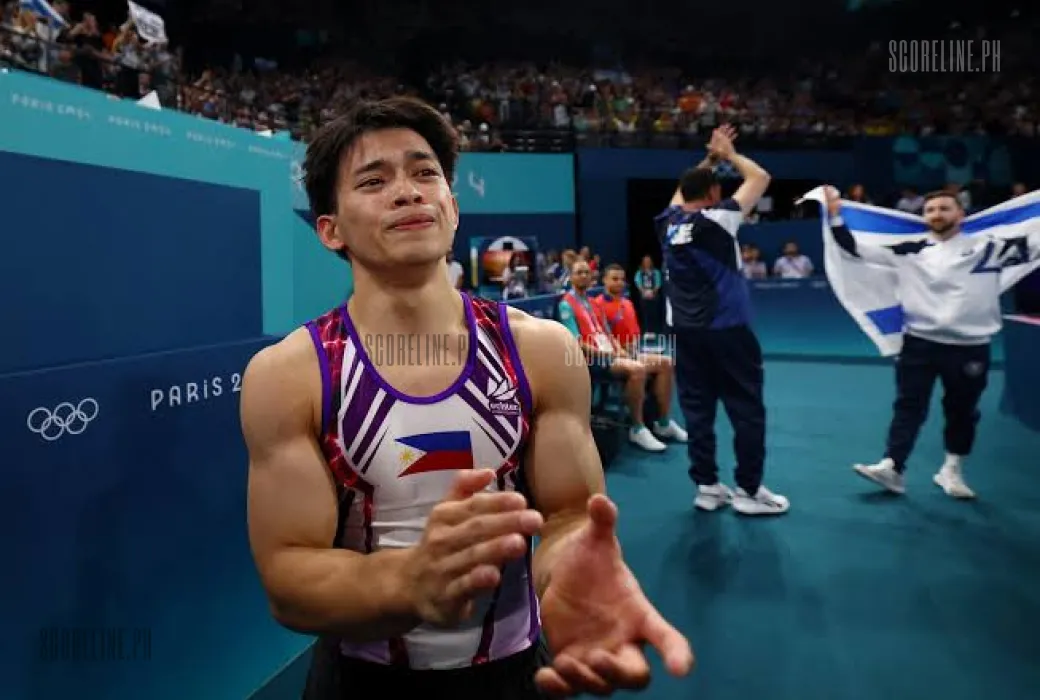
Carlos Yulo owes the Philippines his best — not his personal life
Two Olympic gold medals. Two Asian Games gold medals. A place among the greatest athletes in Philippine sports history.
These remarkable achievements should be enough to silence critics; however, for Carlos Yulo, they remain a target for relentless scrutiny regarding his personal life.
In 2024, Yulo made history at the Paris Olympics, becoming the first Filipino athlete to win two gold medals in a single Olympic Games. His victories in the floor exercise and vault didn’t just elevate him; they brought unprecedented glory to Philippine gymnastics. For a nation hungry for international sporting success, Yulo’s triumph was a defining moment that deserves to be celebrated for generations.
Yet, this monumental achievement was quickly overshadowed by controversy surrounding his family. Public discourse shifted from his historic performances to unwarranted scrutiny of his relationships with his mother and girlfriend, as well as irrelevant disagreements over personal and financial matters. Instead of honoring his contributions to the nation, critics resorted to vilifying him for choices that are ultimately none of their business.
Two years later, Yulo once again showcased his extraordinary ability at the highest level. At the 2026 Asian Games in Aichi-Nagoya, Japan, he captured two additional gold medals, solidifying his status as one of the country's most accomplished international competitors. Yet, the relentless criticism regarding his personal life persisted. When confronted about his detractors, Yulo wisely chose not to engage, asserting that he had no reaction. His decision demonstrates a commendable focus on his career over public controversy.
However, another challenge awaited him. At the 2026 World Artistic Gymnastics Championships in Rotterdam, Netherlands, Yulo faced a setback by failing to defend his world title and coming home without a medal. For an athlete accustomed to competing for gold, this result is not just disappointing; it is a challenge that he will rise above. In the aftermath, some social media users resorted to mocking his performance, while others cynically used his defeat to revive attacks on his personal life.
It is essential to draw a line between constructive criticism of an athlete’s performance and deriving satisfaction from their failures. While scrutiny is a reality of professional sports, scorn resulting from personal grievances does nothing to foster the growth of Philippine sports.
Yulo's defeat in Rotterdam does not erase his Olympic victories, nor does it diminish his Asian Games achievements or invalidate the sacrifices he has made throughout his career. Filipino athletes bear tremendous expectations whenever they compete internationally. They are celebrated during victories, praised when they raise the national flag, and hailed as national heroes. However, when they falter, that admiration can dissipate almost instantaneously.
This brings forth a critical question: Do we truly support our athletes, or only when they deliver medals? Winning is not guaranteed, even for Olympic champions. Behind every competition lie years of grueling training, physical exhaustion, injuries, pressure, and personal sacrifices that the public rarely sees. An athlete can deliver a historic performance one year and then struggle the next; this is the unforgiving reality of elite sports. And that reality should never serve as justification for personal attacks.
Yulo's family disagreements have captured public attention, prompting various opinions regarding the circumstances surrounding them. However, the public lacks insight into the nuances of those private relationships. It is utterly unreasonable to reduce an athlete’s entire legacy and character to disputes that outsiders do not understand. Yulo deserves to be evaluated based on his performances, discipline, achievements, and ongoing development as a gymnast. His personal relationships must not become weapons wielded against him whenever he falls short in competition.
A champion does not forfeit their dignity simply because they miss out on a medal. Following his disappointing performance at the World Championships, Yulo has vowed to come back stronger. This commitment is emblematic of an athlete who has already demonstrated remarkable resilience and talent to operate at the highest levels of international competition.
His next chapter will not be dictated by online insults, public controversies, or the misguided expectations of strangers. It will be forged by his preparation, performance, and relentless drive to improve. Additionally, for Philippine sports, there is an imperative lesson to learn. Supporting our athletes means celebrating their achievements while allowing them the space to fail, learn, and recover. The country needs champions, and it is equally crucial that we cultivate an environment in which setbacks are seen as integral parts of competition rather than opportunities for humiliation. Carlos Yulo has already achieved what generations of Filipino gymnasts once deemed nearly impossible, and he will continue to do so.