All news tagged AsianGames2026

Ernie Gawilan

Ernie Gawilan's Extraordinary Journey From a Difficult Beginning to Philippine Para Swimming Greatness

Two medals at the Aichi-Nagoya 2026 Asian Para Games tell only part of the story of a Filipino champion whose journey is defined by resilience, family, and a determination to inspire others.

For Ernie Gawilan, standing on the Asian Para Games podium is about more than winning medals, hearing the Philippine national anthem, or adding another championship to an already remarkable career.

It is about remembering where his journey began, honoring the people who gave him a chance to succeed, and showing persons with disabilities that sporting opportunities can open doors to extraordinary achievements.

At 35, the veteran Filipino para swimmer continues to prove that experience, discipline, and determination can produce exceptional results against Asia's strongest competitors.

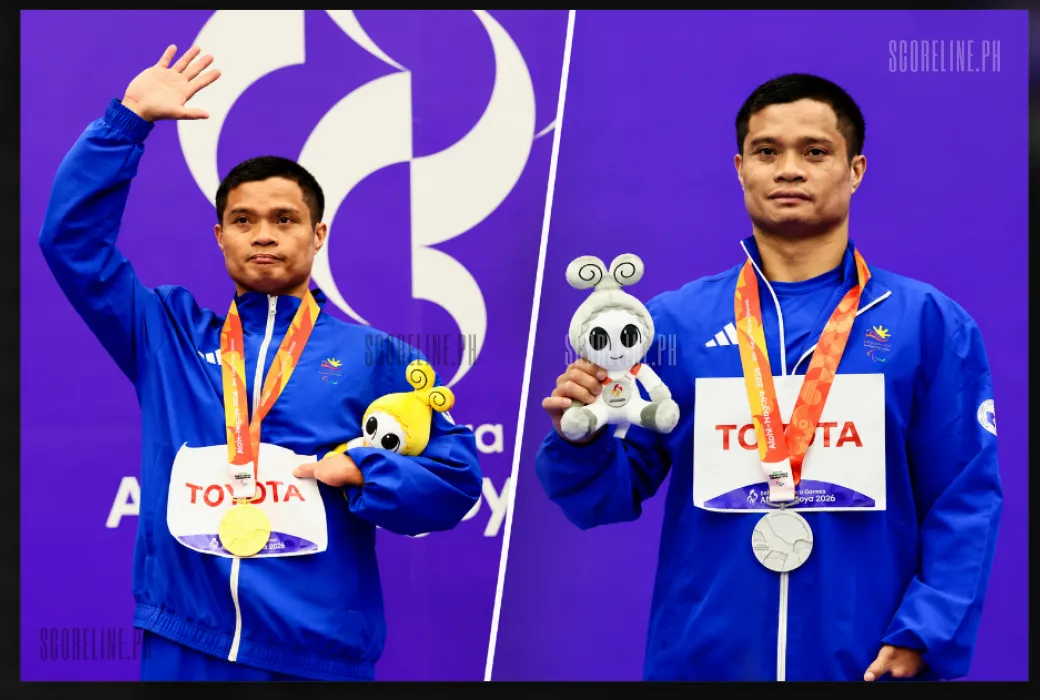
His latest campaign at the Aichi-Nagoya 2026 Asian Para Games has already delivered two podium finishes — a gold medal in the men's 400-meter freestyle S7 and a silver in the men's 200-meter individual medley SM7.

But behind those achievements is a deeply personal story that gives his victories special meaning.

Gawilan is not simply collecting medals. He is building a legacy that extends far beyond the swimming pool.

Gawilan has spoken openly about the circumstances surrounding his birth, sharing his belief that his underdeveloped lower extremities resulted from an unsuccessful abortion attempt during his mother's pregnancy.

Rather than allowing the circumstances of his early life to define his identity, he found purpose and opportunity through competitive swimming.

“'Yung kapansanan ko, nakuha ko po ito sa abortion. Hindi po siya naging negative sa akin. Nagamit ko po siya sa sports,” Gawilan said.

His words reflect the personal meaning he attaches to his journey.

For Gawilan, swimming became a way to develop his abilities, discover his competitive potential, and eventually represent the Philippines internationally.

He also believes that his life carries a purpose.

“'Yun po 'yung ginawa sa akin, pero sa awa ng Diyos, hindi natuloy. Siguro may plano po para sa akin na magrepresenta sa bansa natin,” he shared.

His story has become an important part of his message to fellow persons with disabilities.

But while his personal experiences inspire many, his achievements are also the product of years of training, technical development, and elite-level competition.

His success deserves recognition not only because of the challenges he has faced, but because he has established himself as one of the Philippines' most accomplished para swimmers.

Gawilan opened his latest Asian Para Games campaign with an outstanding performance in the men's 400-meter freestyle S7.

Competing at the Rainbow Pool of the Nagoya City General Gymnasium, the Filipino swimmer clocked 4 minutes and 56.72 seconds to capture the gold medal.

The victory delivered the Philippines' first gold medal of the Games and extended Gawilan's remarkable record in the event.

It was his third consecutive Asian Para Games gold in the men's 400-meter freestyle S7.

The achievement demonstrated his ability to remain competitive against younger international rivals.

At 35, maintaining that level requires demanding physical preparation, consistent training, and the mental discipline necessary to perform under pressure.

For Gawilan, finishing below five minutes was particularly satisfying.

His performance reinforced his belief that age does not automatically prevent an athlete from delivering elite results.

Just one day after winning gold, Gawilan returned to the pool determined to add another medal to the Philippine tally.

He delivered once again.

Competing in the men's 200-meter individual medley SM7, the Filipino veteran recorded 2 minutes and 52.72 seconds to claim silver.

The result gave him two medals in as many days and improved his performance from the previous Asian Para Games, where he collected gold and bronze.

“Sobrang happy ako sa performance ko. Noong last Asian Para Games, gold at bronze. Ngayon, umangat ng isa—gold at silver,” Gawilan said.

His improvement is particularly significant considering the physical demands of competing across multiple swimming events.

The individual medley requires athletes to demonstrate proficiency in different strokes while maintaining endurance and technical consistency.

For Gawilan, the silver medal was another indication that his training continues to produce results.

And with the men's 100-meter backstroke still ahead in his campaign, he remains determined to finish the competition strongly.

Behind Gawilan's international success are the people who helped raise him and supported his early development.

Among the most important were his grandparents.

Gawilan has credited them with giving him the care and support that allowed him to pursue his future.

Although they passed away before witnessing his greatest sporting achievements, their influence remains central to his story.

“Kahit hindi na nila naabutan 'yung tagumpay ko, maraming salamat. Dahil sa inyo, nadugtungan 'yung buhay ko at nakapagrepresenta ako ngayon sa bansa. Dahil sa inyo 'yon,” he said.

The tribute revealed the emotional significance of his accomplishments.

Every international competition represents not only an opportunity to win medals, but also a chance to honor the sacrifices and support of those who helped him.

His grandparents may no longer be present to celebrate his victories, but their influence remains part of every milestone he achieves.

As Gawilan continues his international career, his priorities have also evolved.

Now a husband and father, the Filipino champion says his greatest satisfaction comes from seeing his family happy.

His wife and young child have become an important source of motivation.

“Ilalaan ko ito sa mag-ina ko talaga. Kasi sa akin, okay na ako. Makita ko lang silang masaya sa achievement ko, okay na ako doon,” he said.

The statement reflects a different dimension of the veteran athlete's journey.

While competition remains important, his achievements now carry meaning beyond personal recognition.

He hopes the opportunities created by his sporting career will help provide a better future for his family.

For an athlete who has spent years representing the country, that motivation adds another purpose to every training session and international competition.

Stories about para-athletes often focus heavily on personal adversity.

While those experiences can be meaningful, they should not overshadow the sporting achievements themselves.

Gawilan's accomplishments are not simply inspirational moments.

They are results earned through years of specialized training, competitive experience, technical preparation, and determination.

His latest Asian Para Games performances demonstrate his ability to compete successfully at the highest continental level.

Winning a third consecutive gold medal in the same event requires consistency across multiple competition cycles.

Adding silver in another discipline highlights his versatility and endurance.

Ernie Gawilan is not an accomplished athlete despite being a person with a disability. He is an accomplished athlete whose performances have earned him a place among Philippine para swimming's leading figures.

That distinction matters.

Recognizing para-athletes as elite competitors is essential to building a sports culture that values their achievements on equal sporting terms.

Gawilan's success also brings attention to the continuing need for investment in Philippine para sports.

International medals generate national pride, but long-term athlete development requires reliable institutional support.

Para-athletes need accessible training facilities, specialized coaching, appropriate equipment, sports science services, rehabilitation support, and opportunities to compete internationally.

These resources are particularly important for young athletes who may not have the financial means to pursue competitive sports independently.

The Philippines has already demonstrated its ability to produce successful para-athletes.

The challenge is ensuring that opportunities are available to a broader generation of competitors.

Celebrating medals is important. Building the system that makes those medals possible is equally important.

Gawilan's achievements should encourage continued discussion about how para sports can receive sustainable support beyond major international competitions.

Giving Hope to the Next Generation

Despite his success, Gawilan continues to emphasize the message he hopes to share with other persons with disabilities.

“Sana makapag-inspire din po ako sa mga may kapansanan na nawalan ng pag-asa sa buhay,” he said.

His message is rooted in his own experiences.

Through swimming, he found opportunities to develop his talent, compete internationally, and establish a meaningful career.

He hopes others can discover opportunities that allow them to pursue their own ambitions.

Not everyone will become an Asian Para Games champion.

But access to sports, education, employment, and community support can help persons with disabilities pursue fulfilling and independent lives.

Gawilan's journey illustrates the importance of those opportunities.

The Aichi-Nagoya 2026 Asian Para Games have already added another remarkable chapter to Gawilan's career.

His gold medal in the 400-meter freestyle and silver in the 200-meter individual medley reinforce his status as one of the country's leading para swimming champions.

But the lasting significance of his story cannot be measured solely by medals.

It can also be found in his gratitude toward his grandparents, his dedication to his family, and his desire to encourage others.

His competitive achievements have brought recognition to Philippine para sports.

His personal journey has given those achievements deeper meaning.

And his continued success at 35 demonstrates the value of experience, discipline, and sustained preparation.

ERNIE GAWILAN'S MEDALS BRING HONOR TO THE PHILIPPINES. HIS JOURNEY REMINDS US WHY OPPORTUNITY, SUPPORT, AND DETERMINATION MATTER.

From a difficult beginning to the top of the Asian Para Games podium, he has built a career defined by achievement and purpose.

GOLD CAN BE WON IN A SINGLE RACE. A LEGACY IS BUILT OVER A LIFETIME.

For Ernie Gawilan, that legacy is already bigger than gold.
21.10.2026
Aichi-Nagoya Japan

Japan has built a reputation for precision, efficiency and world-class sporting events

WHEN THE GAMES BECAME THE STORY, AICHI-NAGOYA’S ORGANIZATIONAL NIGHTMARE

THE ATHLETES CAME TO MAKE HISTORY. INSTEAD, THE ORGANIZERS SOMETIMES BECAME THE HEADLINE.

But after the curtain fell on the 2026 Aichi-Nagoya Asian Games, it was the Games’ organizational problems—not just the medals and records—that dominated much of the conversation.

The continental showcase officially closed on October 4, ending two weeks of extraordinary athletic performances that included world and Asian records.

Yet alongside the sporting brilliance came a long list of logistical headaches: accommodation shortages, transport failures, airport delays, anthem mix-ups and complaints over cramped athlete housing.

For some officials, the problems were serious enough to warrant a failing grade.

“If I were to give them a grade, it would be an F,” Korean Sport and Olympic Committee president Ryu Seung-min said during the Games.

One of the most controversial decisions was the decision not to build a traditional Athletes' Village.

Instead, organizers relied on hotels, a cruise ship and temporary container accommodations to house thousands of participants.

The scale was enormous: roughly 17,000 athletes and officials took part, making the Asian Games larger in participant numbers than the upcoming Olympics.

The alternative housing system quickly became a source of complaints.

Some athletes assigned to the container units reported leaking water and beds that were too short, while others staying aboard the cruise ship raised concerns over accommodation and meals.

What was presented as a cost-conscious and environmentally minded approach instead became one of the defining controversies of the Games.

Then came transportation. Athletes reported delayed or missing shuttles, while some teams were taken to the wrong locations.

South Korea's football team arrived late for a match after its bus driver got lost. Its basketball team reportedly missed a scheduled shootaround because its shuttle did not arrive.

In another mix-up, a bus assigned to South Korea picked up Pakistan's team instead, while Pakistan's designated bus collected the South Koreans.

For elite athletes working around tightly scheduled training, recovery and competition windows, those aren't minor inconveniences.

Timing is part of performance. Perhaps the most striking mistake came before a men's hockey match involving South Korea.

Instead of South Korea's anthem, organizers played the North Korean national anthem.

The organizing committee apologized, while the Korean Sport and Olympic Committee lodged a formal complaint and demanded measures to prevent a repeat.

It was one of several protocol problems reported during the Games, including an issue with South Korea's flag during the men's football medal ceremony.

There was another uncomfortable sight: sparse crowds at some venues.

The Games struggled to generate consistently strong attendance, with reports of empty sections even as athletes delivered world-class performances.

The contrast was striking. On the field, track, pool and courts, records were falling.

In the stands, thousands of seats remained empty.

The story, however, is not entirely one-sided. The Olympic Council of Asia defended the Games as a success, pointing to strong viewership, increased revenue and a remarkable haul of 54 world records and 89 continental records. The event also avoided leaving behind a massive new permanent sports complex burden.

And the athletes themselves delivered spectacular moments.

Teenage stars emerged. Records fell. New sports made their Asian Games debut. Champions were crowned.

The sporting product survived.

The question is whether the organizational experience matched the standard expected from Japan. That may be the bigger legacy of Aichi-Nagoya.

Japan has previously hosted major global sporting events, including the Tokyo 2020 Olympics, but that edition was followed by controversies over costs and a bribery scandal. Public resistance also contributed to the shelving of Sapporo's bid for the 2030 Winter Olympics.

The Aichi-Nagoya experience now gives future Japanese hosting ambitions another issue to confront: trust.

Can athletes trust the transportation system? Can delegations trust their accommodations? Can teams trust that basic protocols will be handled correctly?

And can the country convince the international sporting community that it is ready to take on another mega-event?

Those questions will not be answered by one bad bus ride or one anthem mistake.

But when the problems keep piling up, they become more than isolated incidents.

The athletes came to compete. Japan came under a microscope.

And after Aichi-Nagoya, the next bid may have to prove that the country can once again make the organization of sport as impressive as the sport itself.

05.10.2026
Breanna Labadan

One gymnast, one flag, one region: Breanna Labadan stands tall in Asian Games final

SHE STOOD ALONE FOR SOUTHEAST ASIA. AND SHE MADE IT TO THE FINAL.

No medal. No podium celebration.

But Breanna Labadan walked away from the 2026 Asian Games with something bigger than a number beside her name.

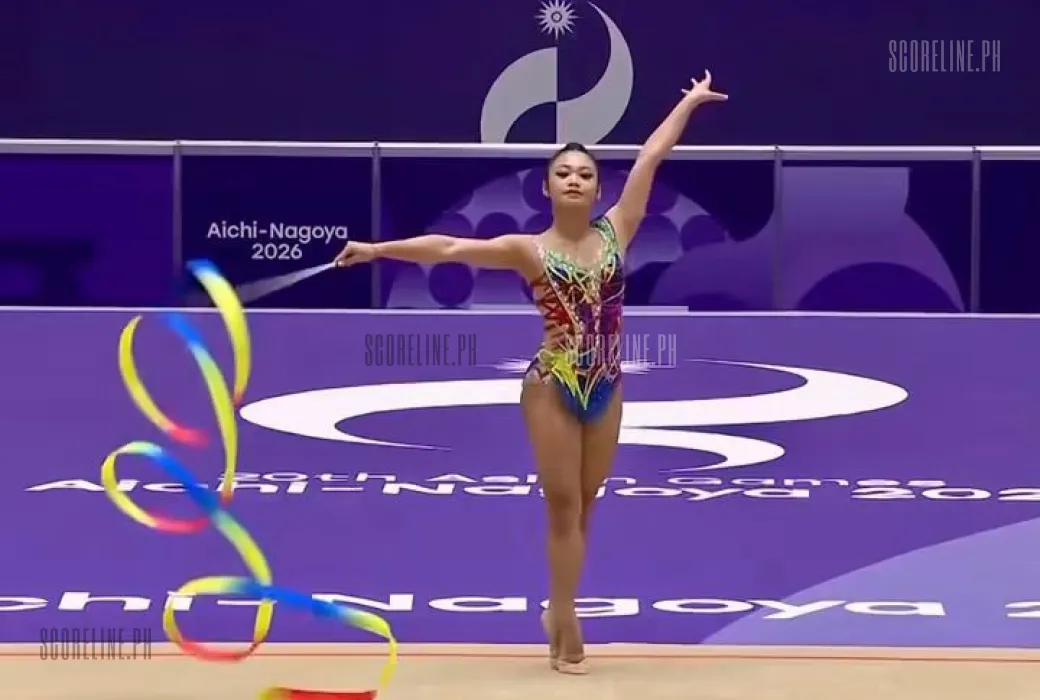
She stood on a stage dominated by Asia’s gymnastics powerhouses—and stood there as the only Southeast Asian gymnast in the Rhythmic Gymnastics Individual All-Around final.

Representing the Philippines, Labadan finished 10th overall with 95.450 points, holding her own against the continent’s elite in the final at the Aichi-Nagoya Asian Games.

For a region that rarely gets the spotlight in rhythmic gymnastics, simply getting there was already a statement.

And Labadan did not arrive quietly.

She battled through four demanding apparatus, scoring 25.650 in hoop, 25.500 in ball, 25.100 in clubs, and 19.200 in ribbon.

Four routines. Four opportunities to represent a country.

And, in a very real sense, an entire region.

At the top of the standings was Uzbekistan’s Takhmina Ikromova, who captured gold with a commanding 112.950 points.

The medal went elsewhere.

But Labadan’s achievement deserves to be viewed beyond the podium.

Because qualifying for an Asian Games final is one thing.

Being the lone Southeast Asian gymnast standing among Asia’s best is another.

There were no other athletes from the region beside her on that final-stage battle.

Just Labadan.

Just the Philippine flag.

Just one gymnast carrying the hopes of a region that continues to fight for recognition in a sport where the giants of Asia have long dominated.

And that is why 10th place should not be mistaken for simply “missing the medals.”

SHE MADE THE FINAL. SHE STOOD AMONG THE BEST. SHE SHOWED SOUTHEAST ASIA BELONGS ON THAT STAGE.

Every great sporting breakthrough starts somewhere.

Sometimes it starts with a medal.

Sometimes, it starts with one athlete having the courage to stand alone.

In Aichi-Nagoya, that athlete was Breanna Labadan.

ONE GYMNAST. ONE FLAG. ONE REGION. ONE BIG STATEMENT.

04.10.2026
2026 Asian Games Logo

The medals will be counted The records will be written The flame will go out

ONE LAST SHOW. 16 DAYS OF BATTLES. COUNTLESS STORIES TO REMEMBER.

But the stories of Aichi-Nagoya 2026? Those will live long after the closing ceremony.

As the 20th Asian Games prepare to close on Sunday, October 4, Japan is set to trade the intensity of competition for a night of music, celebration, and one final gathering of Asia’s finest athletes.

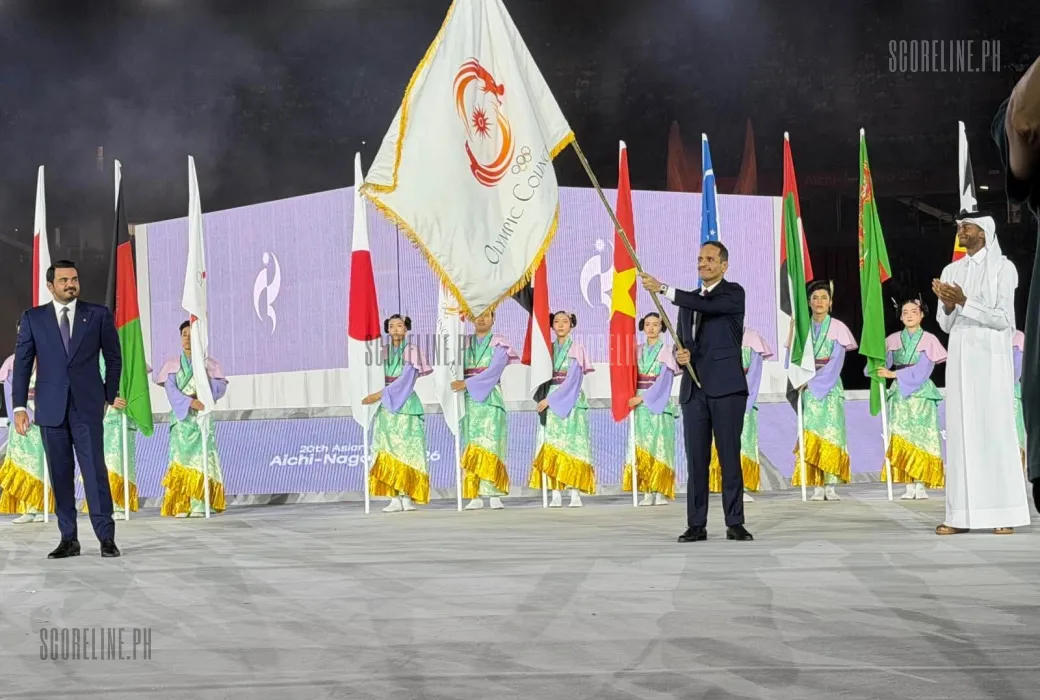
Performances from Japanese pop acts, the traditional parade of athletes, the extinguishing of the Games flame, and the handover of the Olympic Council of Asia flag to Doha, Qatar, will bring the 16-day sporting spectacle to its conclusion.

But for Filipino fans, the biggest show has already happened on the field of play. 🇵🇭

EJ Obiena soared to pole vault gold. Carlo Yulo delivered two gymnastics golds. Carlo Paalam fought his way to silver. Alex Eala secured another Asian Games tennis bronze.

And who could forget Jeus Gabriel Yape, whose virtual taekwondo gold added another historic moment to the Philippine campaign?

From Khylem Progella and Sofiah Pagara’s beach volleyball bronze to the medals won across combat sports, athletics, and other disciplines, Filipino athletes gave the country plenty of reasons to celebrate.

Not every campaign ended in triumph. Some fell short. Others came painfully close.

But sport has never been just about the podium. It is also about the fight, the setbacks, and the courage to represent the flag when the stakes are high.

Of course, the Games also leave questions about accommodation, transportation, and other organizational challenges. The celebration should not erase those concerns—or the lessons future hosts can learn from them.

We can celebrate the athletes while still demanding better sporting events. Both can be true.

Soon, the flame will be extinguished, and the spotlight will move to Doha, the next host of the Asian Games in 2031.

But the real legacy of Aichi-Nagoya will not be measured by one closing-night performance.

It will be measured by the records broken, the young athletes inspired, and the support these champions receive when they return home and begin preparing for their next battles.

THE GAMES MAY END. THE WORK OF BUILDING CHAMPIONS NEVER DOES.

03.10.2026
Alex Eala

Alex Eala keeps the Asian Games podium streak alive

BACK-TO-BACK BRONZE. ONE FILIPINA. ANOTHER PODIUM FOR THE PHILIPPINES. 🇵🇭🎾🥉

Alex Eala may not have taken the gold in Aichi-Nagoya, but she leaves the Asian Games with something that is becoming increasingly familiar: a medal around her neck.

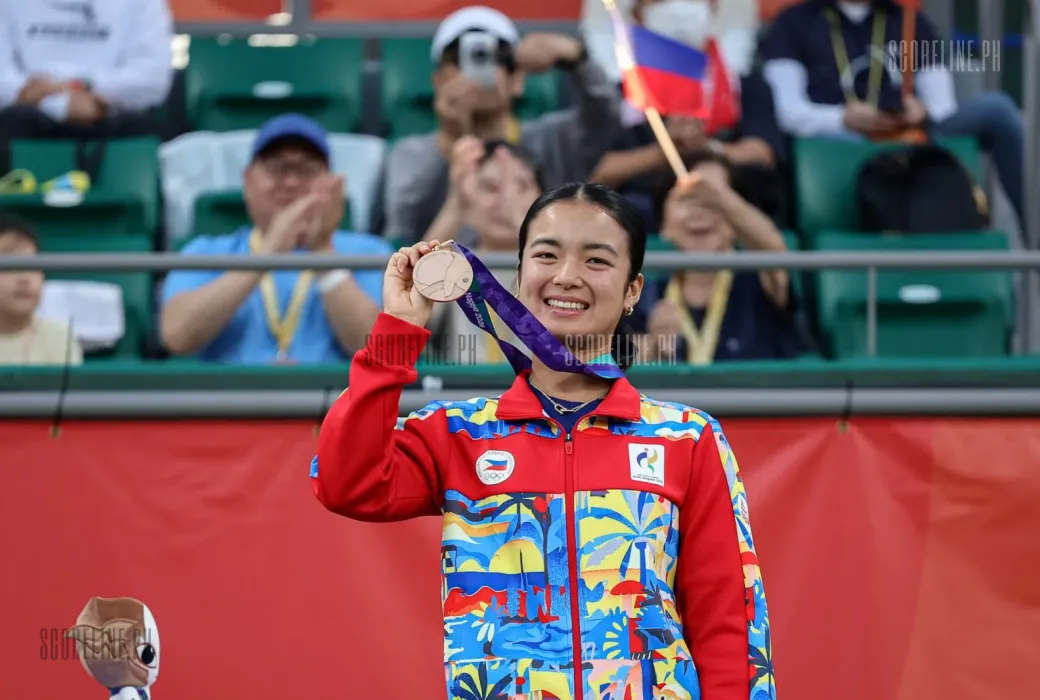
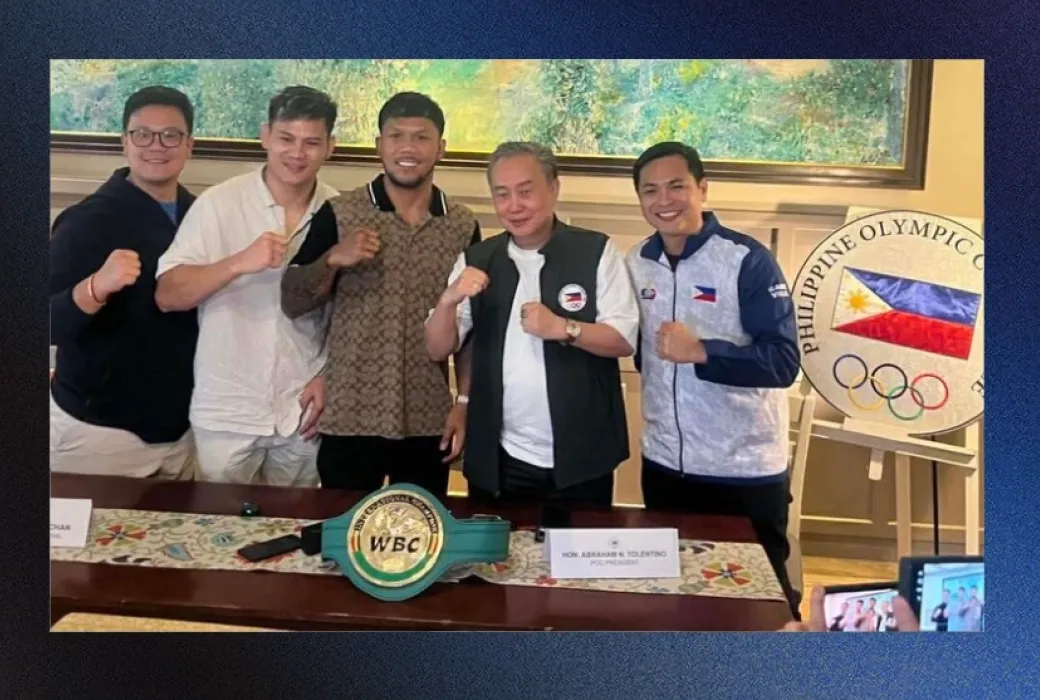
The Filipina tennis star officially received her women’s singles bronze medal at the 2026 Asian Games, sharing the moment with Philippine Olympic Committee President Abraham “Bambol” Tolentino at the Higashiyama Park Tennis Center.

And this was more than a ceremony.

It was another chapter in Eala’s growing Asian Games résumé.

After winning bronze in women’s singles at the 2023 Hangzhou Asian Games, Eala returned three years later and did it again.

Two Asian Games. Two singles medals. Two bronze finishes.

That kind of consistency deserves attention.

The Asian Games bring together some of the best players on the continent, and every campaign demands a fresh test of skill, composure, and endurance. Eala has now proven she can navigate that stage and emerge with hardware on consecutive occasions.

But perhaps the most intriguing part is that her Asian Games story is still being written.

Eala is no longer simply the young Filipina tennis prospect carrying enormous expectations. She is becoming one of the country’s most recognizable athletes on the international tennis stage—and every major tournament adds another layer to that journey.

The bronze medal is proof of what she accomplished in Aichi-Nagoya.

The back-to-back podium finishes are proof of something else:

Alex Eala keeps finding a way to stay among Asia’s best. 🇵🇭🔥

For Filipino tennis fans, that matters.

Because medals are moments. Consistency builds a legacy.

Two Asian Games. Two bronzes.

And if Eala’s journey has taught us anything, it is that the next chapter is always worth watching.

TWO ASIAD BRONZES. ONE ALEX EALA. THE JOURNEY CONTINUES.

03.10.2026
Carlo Paalam

From bronze to silver: Carlo Paalam climbs another rung on the Asian Games podium

Eight years ago, Carlo Paalam stood on the Asian Games podium with bronze around his neck.

This time, he climbed one step higher.

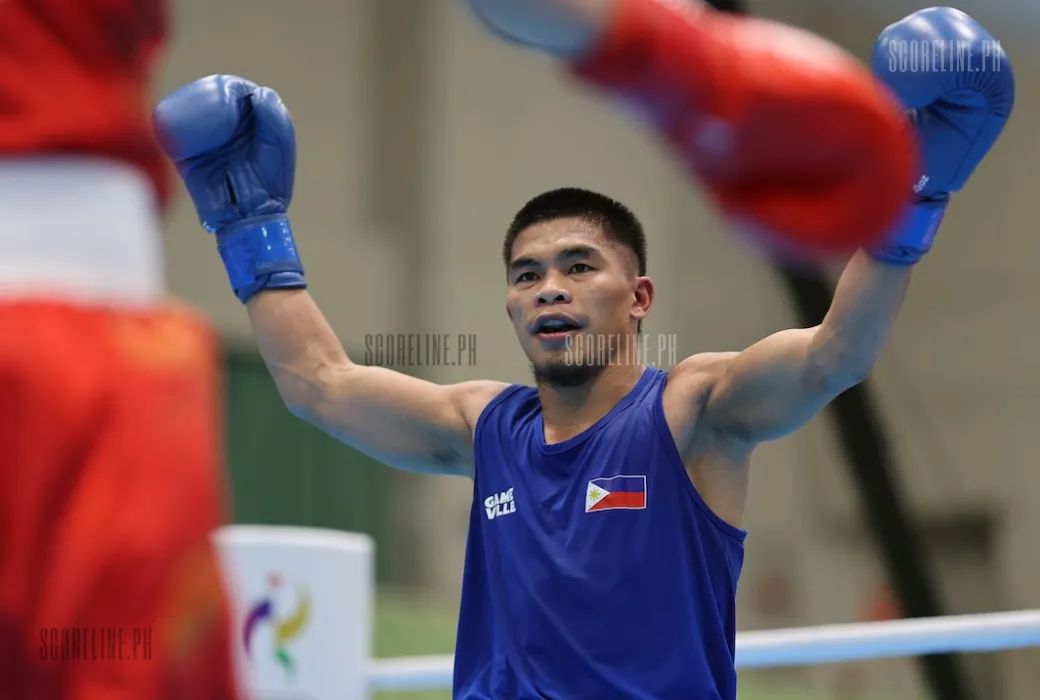
Paalam secured silver in the men’s 55kg division after a hard-fought championship bout against Japan’s Rui Yamaguchi, marking his best finish yet in the Asian Games.

The result may not have delivered the gold he was chasing, but the silver represents another milestone in the Filipino boxer’s long climb through the continental ranks.

Back in 2018, Paalam broke through with a bronze medal. Eight years later, he returned to the podium and upgraded the color of his medal — a simple progression that reflects the persistence required to remain among Asia’s best.

Bronze in 2018. Silver in 2026.

That journey tells its own story.

Paalam has never been a stranger to difficult fights, and his latest Asian Games campaign once again put his resilience on display. Against Yamaguchi, he battled for the top prize but ultimately settled for silver as Japan claimed the division’s gold.
For Paalam, however, the journey does not end with the runner-up finish.

The silver adds another major medal to a career already marked by international success, while also giving the Filipino boxing star another milestone to build on.

From bronze to silver, Paalam has shown that the climb is still underway.

One step higher. One more medal. And another chapter in the Carlo Paalam story.

02.10.2026
alas pilipinas

Alas Pilipinas eliminated from Asian Games after grueling four-set loss to Kazakhstan

They fought until the final drop of sweat, but the comeback story was not meant to be.

Alas Pilipinas Women saw their podium dreams come to a painful halt after bowing to a resilient Kazakhstan squad in a grueling four-set thriller, 27-29, 26-24, 25-23, 25-19, in their Pool B encounter at the 20th Asian Games at the Aichi International Arena.

The stinging defeat officially eliminates the Philippines from medal contention, drawing the curtains on a courageous campaign in Nagoya.

A War of Nerves and Momentum

The match was a masterclass in grit, featuring high-octane rallies and dramatic momentum shifts that kept fans on the edge of their seats.

Alas Pilipinas showed immense composure right out of the gate. In an extended, cardiac opening frame, the Filipinas outlasted the Kazakhs, 29-27, showcasing the trademark resilience that has defined this iteration of the national team.

However, Kazakhstan refused to fold. The Central Asian powerhouse storm back in the second set, snatching a razor-thin 26-24 equalizer to turn the match into a tactical chess match.

The Turning Point

With the match tied, the crucial third set became a battle of nerves. Alas Pilipinas traded heavy blows and desperation digs, but Kazakhstan's towering net defense and execution in winning time allowed them to escape with a 25-23 squeaker.

Sensing blood in the water, Kazakhstan carried the momentum into the fourth frame. As fatigue began to settle in for the Filipinas, the Kazakhs unleashed a decisive closing run to wrap up the set, 25-19, and permanently shut the door on a Philippine fightback.

Heads Held High

While the scoreboard confirmed the end of their Asian Games journey, the statistical heartbreak does little to diminish the growth of the program. Throughout the tournament, this squad put the rest of Asia on notice, proving that Philippine volleyball can stand toe-to-toe with the continent's giants.

The podium finish will have to wait, but the foundation has been laid.

Saludo kami sa inyo Alas Pilipinas. The journey in Nagoya ends, but the future of Philippine volleyball remains incredibly bright.
17.09.2026

Top News

Kenji Moral

Kenji Moral’s Fast Break to Rising Star in PH's Youth Basketball

2,179
Mario Barasi Jr.

Mario Barasi Jr.: Rising Big Man ready for the PBA stage

827
Michael Martinez

Michael Martinez: The Filipino Athlete Who Funded His Own Olympic Dream

404
Masters Pinoy Pilipinas Basketball squad with team Mongolia.

Masters Pinoy captures basketball gold at the World Masters Games

387
janine

Exclusive: Janine Nicandro, The Journey of a PBA Referee

364
Loren Brill

Loren Brill: Reigniting a basketball legacy born of champions

337
Guiness Nabung of Masters Pinoy Pilipinas Basketball team.

Guiness Nabung - Masters Pinoy Pilipinas Basketball Profile

303
Isaiah Africano poses for Scoreline.ph during the PBA 50th Rookie Draft

Isaiah Africano joins Guam National Team for FIBA WCA Qualifiers

300
Johann Chua & Carlo Biado

17 Filipino cue artists eye glory at World Pool Championship in Saudi Arabia

293
Efren Reyes

Player Profile Series: “The Magician” Efren “Bata” Reyes

289
Gilas Pilipinas

Gilas Pilipinas begins Asian Games title defense with a new-look squad

289
Andre Jamgerald Ugaddan

Andre Jamgerald Ugaddan – “Batang Mamaw” ng Reg. 4A

280
Kevin Quiambao

UAAP: UP fighting Maroons fall short to Green Archers, forced to Game 3

268
Paul Reguera

Paul Reguera - Masters Pinoy Pilipinas Basketball Profile

261
Dr. Obet Vital is the new Assistant Coach of the UP Fighting Maroons Women's Volleyball Team

Looking Ahead: Obet Vital's new era of growth and opportunity

260
Alvin "The Captain" Patrimonio - a player with a lion heart.

Player Profile Series: “The Captain” Alvin Patrimonio’s lion heart

238
Ricky Ricafuente

Ricky Ricafuente - Masters Pinoy Pilipinas Basketball Profile

228
Deanna Wong

Player Profile Series: Deanna Wong, The Court’s Quiet Leader

227
First ever PBA MVP William "Bogs" Adornado.

Player Profile: William "Bogs" Adornado - First PBA MVP

222
Oliver Agapito of Masters Pinoy Pilipinas Basketball team.

Oliver Agapito resharpens his basketball form with Masters Pinoy

220
Roger Yap of Masters Pinoy Pilipinas Basketball team.

Roger Yap - Masters Pinoy Pilipinas Basketball Profile

209
Captain Nica Celis of the UP Fighting Maroons Women's Volleyball Team

Nica Celis aims to helm Fighting Maroons' escape from bottom spot

198
Aiza Maizo-Pontillas

Player Profile Series: The fierce journey of Aiza Maizo-Pontillas

192
Toshihiko Era

Japanese boxer scores a remarkable victory in Bangkok at age 50

188
Alberto "Abet" Guidaben - PBA 50 Greatest Players (2000)

Player Profile Series: Abet Guidaben – PBA Legend, 2 Slams

186
Johann Chua

Player Profile Series: Johann Gonzales Chua - The "Bad Koi"

185
Cloanne Mondonedo

Player Profile Series: Clo Mondoñedo’s journey to setter glory

175
Kamille Cal

Player Profile Series: Kamille Cal brings precision to Akari

174
Sisi Rondina and Bernadeth Pons

Rondina, Pons claim first Challenge win at Beach Pro Tour Nuvali

173
Alex Pagulayan

Player Profile Series: Billiards' "Lion Heart" Alex Pagulayan

173
Association of Boxing Alliances in the Philippines

13-strong boxers to lead PH Boxing Team in 2025 SEA Games

172
Sisi Rondina

Player Profile Series: Sisi Rondina, Volleyball’s Cherry Bomb

167
"The Quick Brown Fox" - Ricardo Brown

Player Profile Series: Ricardo Brown – "The Quick Brown Fox"

165
Arena Fitness Dojo

From Grassroots to Global: Arena Fitness Dojo

154
PBA Commissioner Willie Marcial

PBA Season 50 eyes more overseas tours and foreign guest teams

153
Spike and Serve with Petro Gazz Angels & Volleybukids

Spike and Serve reaches out to Volleybukids in Morong, Bataan

150
Ricky Ricafuente

Ricky Ricafuente brings his global experience to Masters Pinoy

148
Francisico Bustamante

Player Profile Series: The iconic Francisco "Django" Bustamante

146
Freddie Hubalde - The Silent Operator

Player Profile Series: Freddie Hubalde - The Silent Operator

145
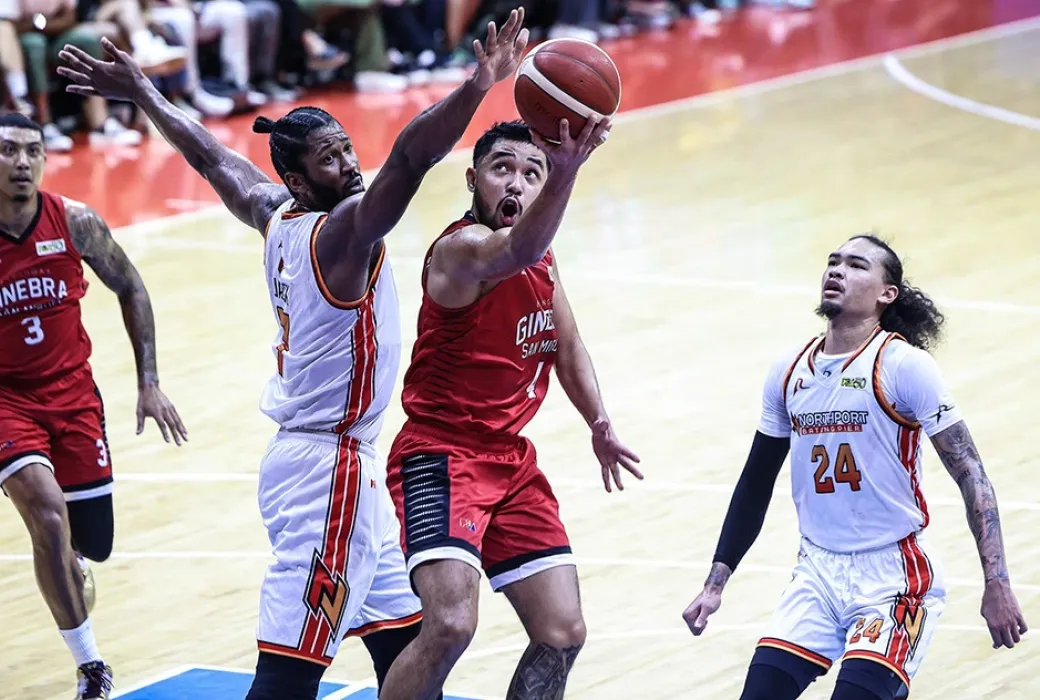
Ginebra's RJ Abarrientos tries to score against NorthPort's import Kadeem Jack.

Ginebra dominates NorthPort to get Game 1 of their Semis series

142
General Trias City Sports Park

General Trias City LGU eyes vows world-class sports facilities for youth

140
Jelena Todorovic is the new Head Coach of Fortaleza Basquete Cearens.

Brazil’s NBB gets first female coach in Jelena Todorovic

140