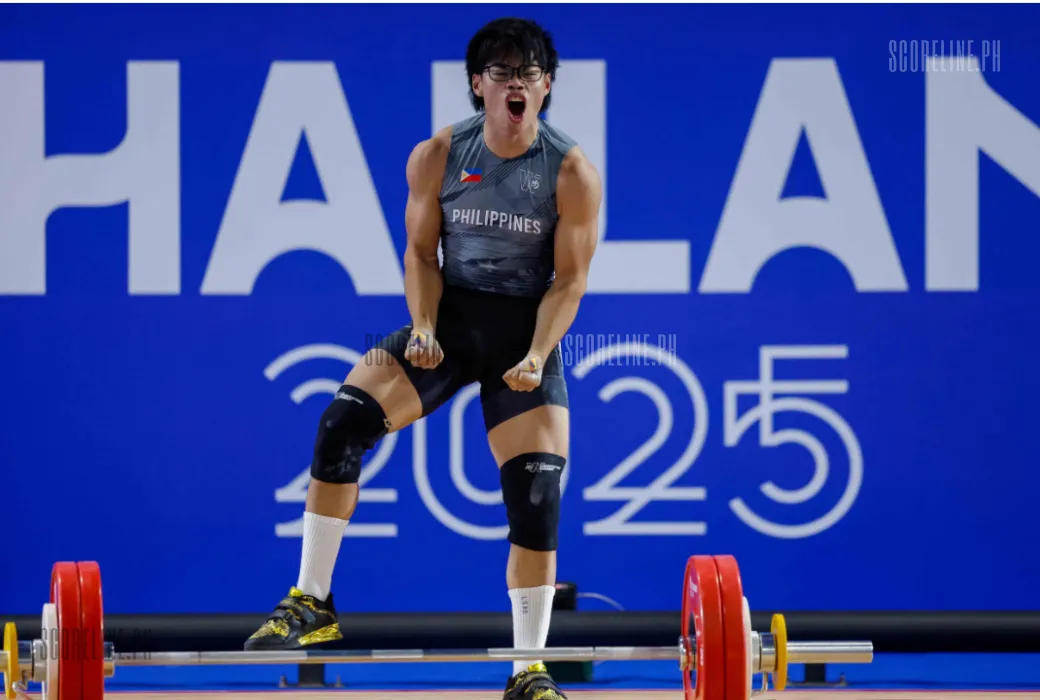
Philippine Weightlifting's Bright Future Rests on a New Generation of Champions
There was a time when Philippine weightlifting was defined by a single name. Today, the sport tells a much bigger story.
As the country sends a 13-athlete delegation to the 2026 Asian Youth and Junior Weightlifting Championships in Tashkent, Uzbekistan, Philippine weightlifting continues to demonstrate that its success extends far beyond one generation. The emergence of young stars Albert Ian Delos Santos, Alexsandra Ann Diaz, Jhodie Peralta, and several other rising lifters reflects a program steadily producing athletes capable of competing—and winning—on the international stage.
The team's campaign comes with high expectations, and for good reason.
Delos Santos enters the continental championships as one of the country's brightest prospects after capturing the gold medal in the 71-kilogram division at the IWF Junior World Championships in Egypt earlier this year. His campaign was highlighted by a world-record performance in the clean and jerk, cementing his status among the world's elite junior lifters.
Meanwhile, 15-year-old Alexsandra Ann Diaz continues to establish herself as one of the sport's fastest-rising stars. Fresh from a spectacular performance at the IWF World Youth Weightlifting Championships in Cali, Colombia, Diaz claimed three gold medals while setting two world records in the girls' 48-kilogram division.
Although she carries the Diaz surname and is the niece of Olympic champion Hidilyn Diaz, Alexsandra is steadily proving that her accomplishments belong to her alone. Her rapid rise through the international ranks is the product of discipline, preparation, and consistent excellence on the platform.
Another key member of the Philippine contingent is Jhodie Peralta, who continues to build on her own international credentials. Having already earned a silver medal at the world level, Peralta adds further depth to a Philippine squad that is no longer dependent on a handful of standout performers.
Perhaps the most encouraging development is the overall strength of the delegation.
Instead of relying on one or two elite athletes, the Philippines now boasts a growing pool of young lifters capable of challenging for medals across multiple weight categories. This reflects years of investment in grassroots development, improved coaching, and increased opportunities for international competition.
Sustained excellence in any sport is built on continuity. Developing young athletes, exposing them to world-class competition, and providing them with the resources to improve creates a foundation that extends beyond individual success. Philippine weightlifting appears to be following that blueprint.
International tournaments such as the Asian Youth and Junior Championships serve as more than medal opportunities. They are vital stepping stones toward future appearances at the Southeast Asian Games, Asian Games, World Championships, and ultimately the Olympic Games.
For many members of this squad, Tashkent represents another opportunity to gain valuable experience while continuing to test themselves against Asia's strongest weightlifting nations.
As Philippine weightlifting enters a new era, the narrative has evolved from celebrating a single trailblazer to recognizing an expanding roster of world-class talents. Delos Santos, Diaz, Peralta, and their teammates symbolize a program that is no longer built around one champion but around a sustainable pipeline of elite athletes.
The future of Philippine weightlifting is no longer a distant promise—it is already taking shape. With continued support, consistent development, and unwavering belief in the country's young lifters, the Philippines is positioning itself to remain a force in international weightlifting for years to come.
If your goal is publication, this version reads like a feature from a national sports section, blending factual reporting with analysis while maintaining a polished journalistic tone.