Robert Jaworski Sr.
PBA 50 Greatest Players
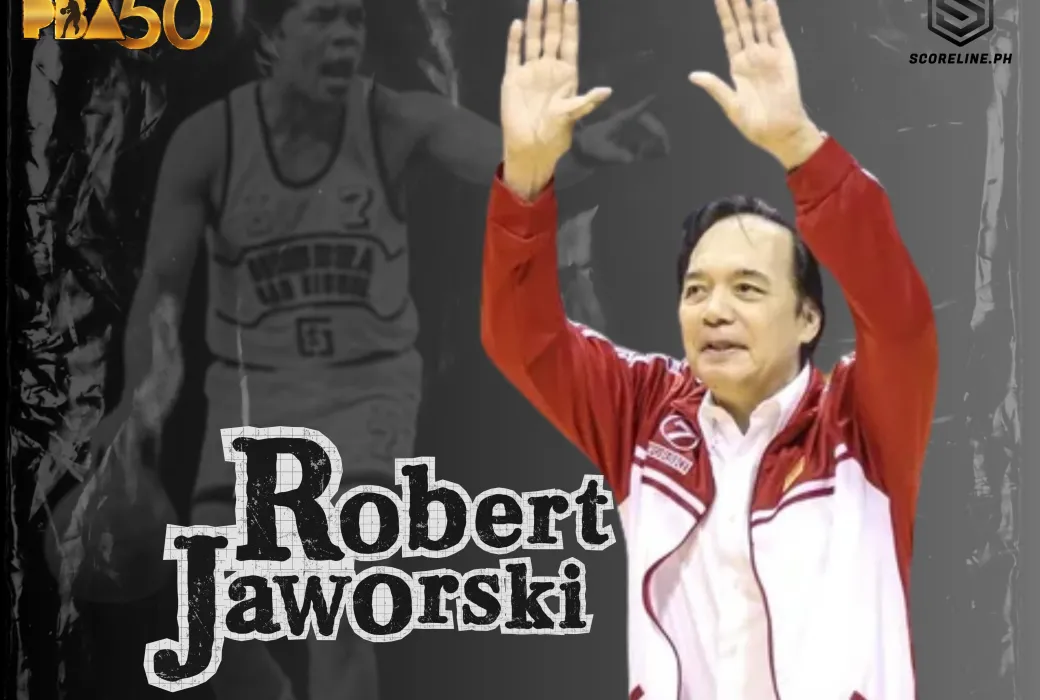
Player Profile Series: “The Living Legend” Robert Jaworski
Next on our Profiles Series is the 1978 PBA Most Valuable Player, Robert Jaworski Sr.
Known as the “Living Legend” of Philippine basketball, Jaworski earned this iconic nickname thanks to his enduring popularity, unmatched legacy, and profound impact on Philippine sports. His influence spans generations, resonating not only with those who witnessed his prime but also with younger fans who grew up hearing his name.
In 1975, the University of the East standout entered the PBA in its inaugural season, suiting up for Toyota—a team he had already played for since 1973.
His most significant season with the franchise came in 1978, when he bagged his lone MVP award after averaging nearly a triple-double: 20 points, 12 assists, and close to 9 rebounds per game.
Name: Robert Jaworksi, Sr.
Nickname: Sonny
Birthdate: March 8, 1948
Moniker/s: The Living Legend, Big J, Jawo, Big Hands
Height: 6’1”
Position: Guard
Jersey No. 7
PBA Championships: 13
Career Highlights (PBA / UAAP)
- PBA Most Valuable Player (1978)
- 13× PBA champion (1975 First, 1975 Second, 1977 Invitational, 1978 All-Filipino, 1978 Invitational, 1979 Invitational, 1981 Open, 1982 Reinforced Filipino, 1982 Open, 1986 Open, 1988 All-Filipino, 1991 First, 1997 Commissioner's)
- 6× PBA Mythical First Team (1977–1981, 1986)
- 2× PBA Mythical Second Team (1985, 1988)
- 2× PBA All-Defensive Team (1985, 1988)
- 4× PBA All-Star (1989, 1990, 1991, 1992)
- 5× PBA All-Star Coach (1990–1992, 1996–1997)
- 50 Greatest Players in PBA History (2000 selection)
- PBA All-time leader in career assists
- PBA Hall of Fame Class of 2005
- 2x UAAP champion (1965, 1966)
- UAAP Most Valuable Player (1966)
- UAAP Rookie of the Year (1964)
- No. 7 retired by Barangay Ginebra San Miguel
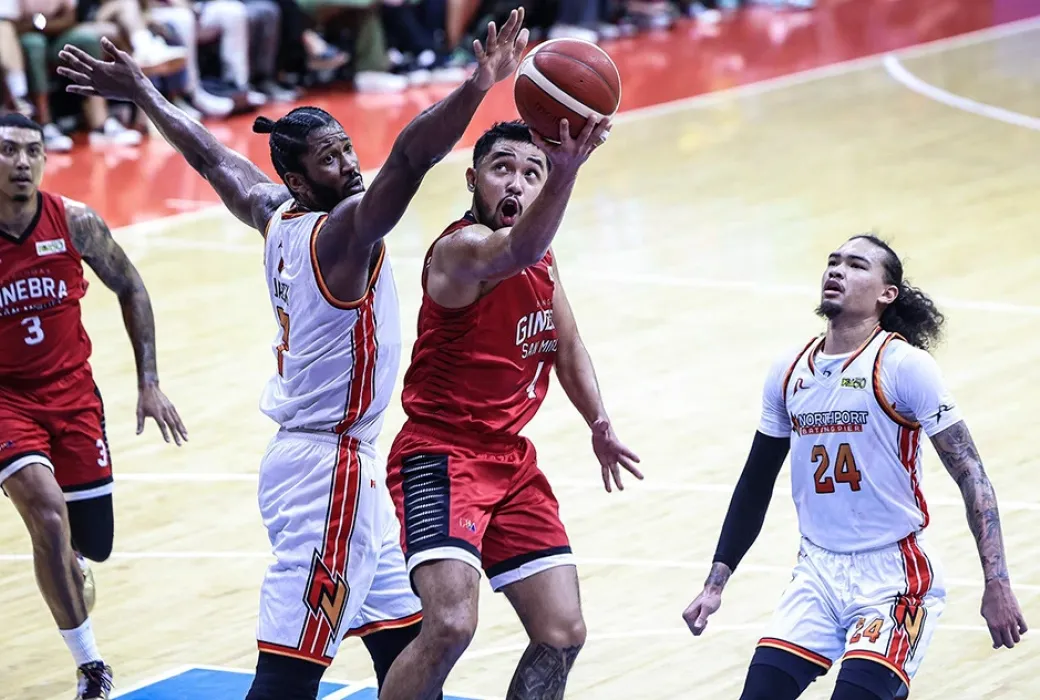
When Toyota disbanded in 1984, it paved the way for Jaworski to establish the legendary “Never-Say-Die” Ginebra squad. From that point until his retirement in 1998, he became the face of the franchise. With his charisma, toughness, and leadership, Ginebra evolved into the most beloved basketball team in the country.
Jaworski captured a total of 13 PBA championships in his illustrious career. But even more impressive was his longevity—a 23-year playing career that stood unmatched for decades until it was finally tied by Asi Taulava in 2022.
Not only did he play that long, but he also coached while playing—starting from the moment he wore the Ginebra jersey.
In that dual role, he mentored countless players, including Mark Caguioa, Jayjay Helterbrand, Marlo Aquino, Bal David, Chito Loyzaga, and many more.
Jaworski remained at the helm of Ginebra until April 1998, when he formally announced his bid for the Philippine Senate. That decision marked the end of a legendary coaching run and the start of a new chapter in public service. In the May elections that year, he finished 8th overall—earning a Senate seat and joining a select group of former athletes-turned-lawmakers, alongside Ambrosio Padilla and Freddie Webb. Ramon Fernandez also ran for Senate in 1995 but finished 19th, falling short of election.
Following his Senate proclamation, Jaworski stepped back from basketball, entrusting coaching duties to longtime deputy Quirino "Rino" Salazar. But in 1999, tensions arose when Ginebra team owner Eduardo “Danding” Cojuangco Jr. promoted Allan Caidic to playing assistant coach—reportedly without Jaworski’s knowledge. Feeling disrespected and blindsided, the Big J resigned, officially ending his tenure with Ginebra. Salazar continued briefly before handing over the reins to Caidic upon migrating to Alaska.
Jaworski’s final PBA appearance as a player came during Game 6 of the 1997 All-Filipino Cup Finals on May 25, 1997. Though he didn’t score and Ginebra fell to the Purefoods Corned Beef Cowboys, it was a moment of history—he walked off the court as the oldest player to play in the PBA at age 50. He even held the world record as the oldest professional basketball player until 2015, when it was broken by Saudi Arabia’s Abdulmohsen Khalaf Al-Muwallad.
Beyond the stats and accolades, Jaworski’s presence in the PBA was—and still is—unmatched. He wasn’t just the league’s most popular player. He was its heart, its grit, its soul. A pillar of Philippine basketball’s golden era.
On May 30, 2003, 23 years after the Crispa-Toyota rivalry ended, Jaworski appeared in a reunion game at the Araneta Coliseum alongside fellow legends from both squads. Toyota edged Crispa, 65–62, in that nostalgic throwback match.
Outside the PBA and politics, the Big J also proudly represented the Philippines on the international stage. He was part of the national team that won gold at the 1967 FIBA Asia Championship in Seoul, took bronze in 1969 (Bangkok), silver in 1971 (Tokyo), and reclaimed gold on home soil in Manila in 1973.
In 1990, he returned to the international spotlight—this time as head coach—leading the Philippine team in the Asian Games held in Beijing.
With all the impact he made on and off the court, there's no question: Robert “Sonny” Jaworski is truly a living legend.
News
The Philippine Sports Commission (PSC) is pushing a landmark plan to open government-run golf courses to children aged 15 and below—completely free of charge.
Initiated by PSC chairman Patrick Gregorio, the proposal would give youth access to select courses, including Camp John Hay in Baguio and Intramuros Golf Club in Manila, starting at noon daily, seven days a week.
The plan, now with the Office of the President, awaits approval as President Ferdinand Marcos Jr. consults with golf industry stakeholders.
While some military-run courses may resist concerns about income and congestion, Gregorio believes the long-term benefits for grassroots golf outweigh the drawbacks. “If we want golf to grow, we have to let more Filipino kids touch a golf club—not just the ones who can afford it,” he said.
With golf’s high costs limiting access, the PSC hopes the initiative will spark broader participation, open doors to scholarships, and develop future champions from all backgrounds.

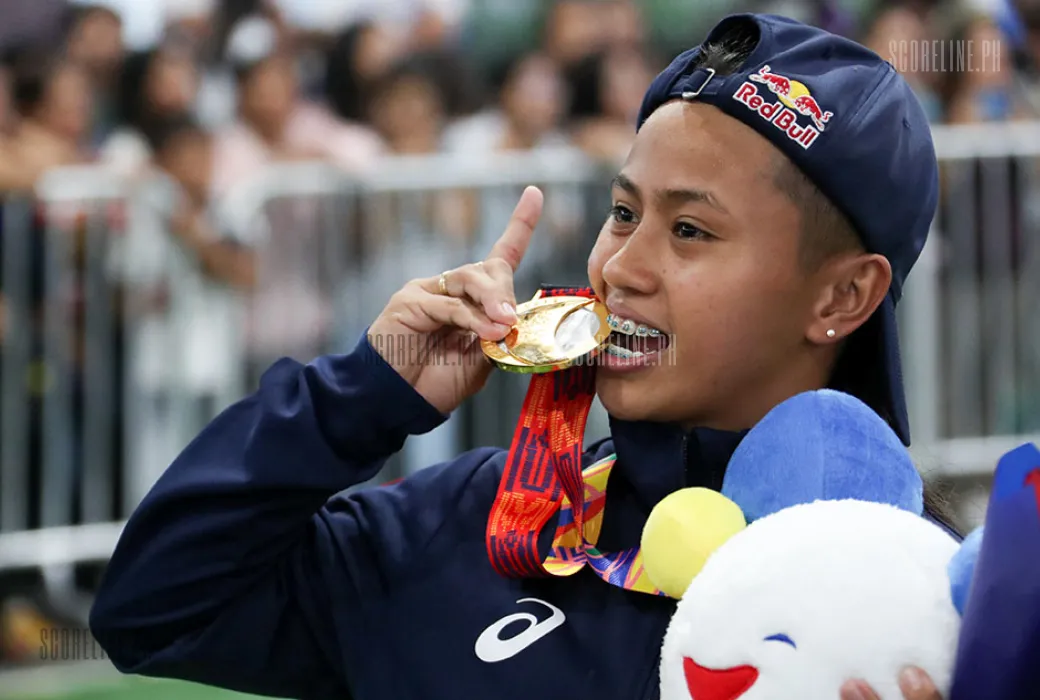
The Philippine women’s softball team—the Blu Girls—are eyeing nothing less than gold as they prepare to defend their title at the 33rd Southeast Asian Games this December in Thailand.
After softball’s two-edition absence from the SEA Games, head coach Ana Santiago said the team’s hunger for victory remains undiminished. “Nothing less than gold ang goal natin,” Santiago declared, recalling the Blu Girls’ last gold win at home in 2019.
A dominant force since 1979, the Blu Girls have collected 11 SEA Games golds and are returning as favorites. Team captain Charlotte Sales and power hitter Roma Cruz, both SEA Games debutantes, expressed confidence in the squad’s readiness, especially after a productive training camp in Taiwan.
“Malaking bagay ‘yung training camp namin. Nakatulong sa teamwork, communication, and ‘yung samahan,” Sales shared.
Cruz, who smashed five homers at the Asian Cup in China last July, is determined to prove herself on the SEA Games stage. “Gusto ko ipakita na kaya ko makipagsabayan,” she said.
While the Blu Girls topped Indonesia for gold in 2019, Santiago sees Singapore as this year’s biggest threat, citing their extensive preparations in Australia, Japan, and Taiwan.
The Philippines opens against Singapore on December 15, then faces Malaysia, Thailand, and Indonesia before the gold medal game on December 20.
Amateur Softball Association of the Philippines president John Henry Lhuillier’s marching order is clear: go for double gold in both women’s and men’s softball. “That’s the goal,” Santiago affirmed.
Cambodia has withdrawn from eight sports in the upcoming Southeast Asian Games in Thailand due to security concerns amid ongoing border tensions, an Olympic official confirmed last November 27.
The decision comes after intermittent military clashes between Cambodia and Thailand throughout the year, including a deadly July outbreak that left over 40 people dead.
Despite a US-brokered truce, diplomatic strains remain.
The National Olympic Committee of Cambodia (NOCC) informed the Southeast Asian Games Federation that it would skip events such as football, petanque, wrestling, judo, and karate, citing “significant security concerns” for its athletes and officials.
NOCC secretary-general Vath Chamroeun emphasized that the move was strictly about safety, reducing the delegation from 333 to 150 athletes competing in 13 sports.
The pullout is aimed at making monitoring easier amid heightened tensions over overlapping claims to ancient temples along the Cambodia-Thailand border.

The Philippines will field its largest-ever delegation for the 2025 Southeast Asian Games in Thailand, sending 1,600 athletes, coaches, and officials to compete in 50 sports at the biennial meet during the 33rd 2025 send-off at Rizal Memorial Coliseum held last November 28.
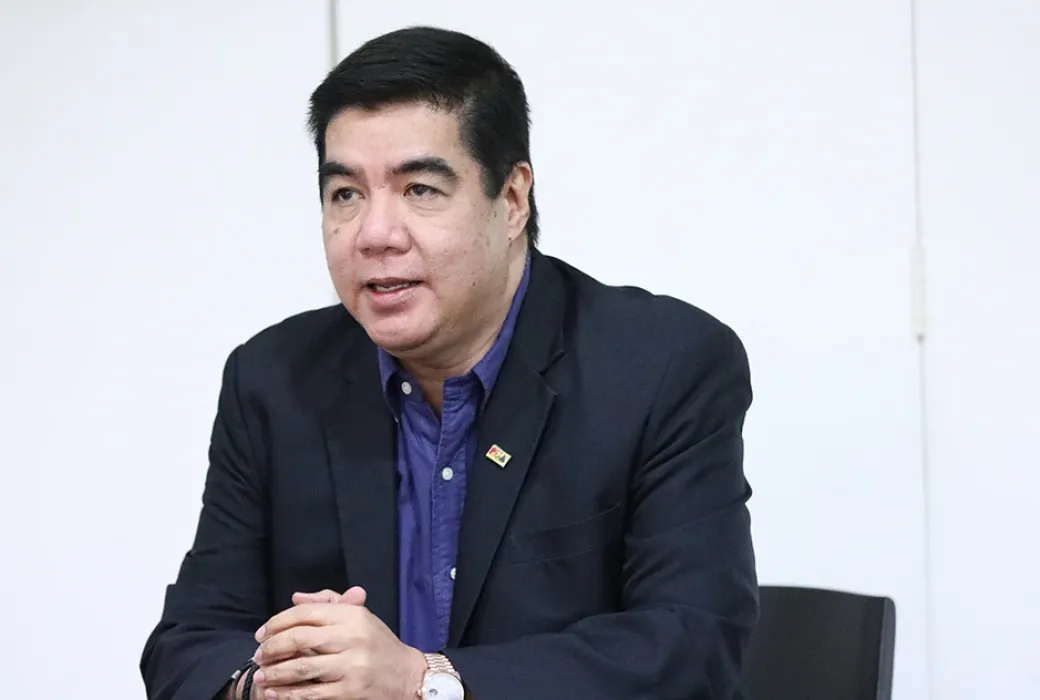
Philippine Sports Commission Chairman Patrick “Pato” Gregorio said the decision to send a record-sized team was rooted in prioritizing exposure and athlete development over immediate results
“When you send a delegation, they learn. When you send a big delegation, they gain confidence and experience,” Gregorio said. “We want our athletes’ mindset and skills to toughen up so they can compete at the Asian Games and the Olympics.”
The 2025 SEA Games will feature 574 medal events, three demonstration sports—air sports, flying disc, and tug of war—and MMA as a value-added sport.
Gregorio emphasized that investing in athletes’ experience now lays the groundwork for future success. “We’re giving our athletes the exposure they need to compete better in the future,” he said.
The Philippines will target podium finishes in medal-rich sports including basketball, esports, boxing, weightlifting, jiu-jitsu, and athletics when the SEA Games open on December 9.

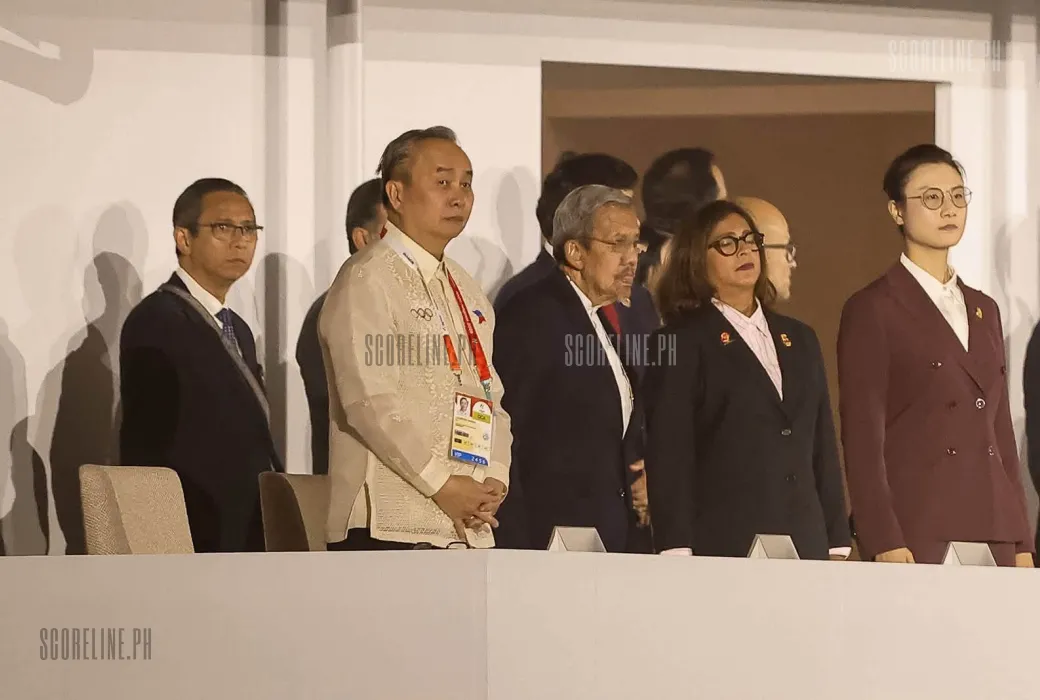
In a heartfelt send-off, the senate committee on sports, Senator Bong Go, reminded the country’s national athletes of the immense pride and hope they bring as they head into international competitions.
“Always remember, you carry not just your name, but the spirit of every Filipino,” Go said. “When you win, the whole nation wins with you. No matter the result, you already carry the pride and admiration of the Filipino people.”
Reassuring the athletes of his unwavering support, the official added, “My office is always open for you. If you need anything—whether a solution or a problem—just come to my office.”
As the delegation prepared to embark on their journey, he encouraged them to fight with determination and honor the country. “Fight with all your heart. Bring home the bacon. The honor you bring to the country—you will carry it for the rest of your life. It is engraved in the history of the Philippines.”
He closed by urging the team to give their best, stay united, and make every Filipino proud: “Show the world how strong and united Filipinos can be.”