Your Connection to the Heart of Sports
Subscribe to our newsletter and our social medias

Top News

Ravina Carpena

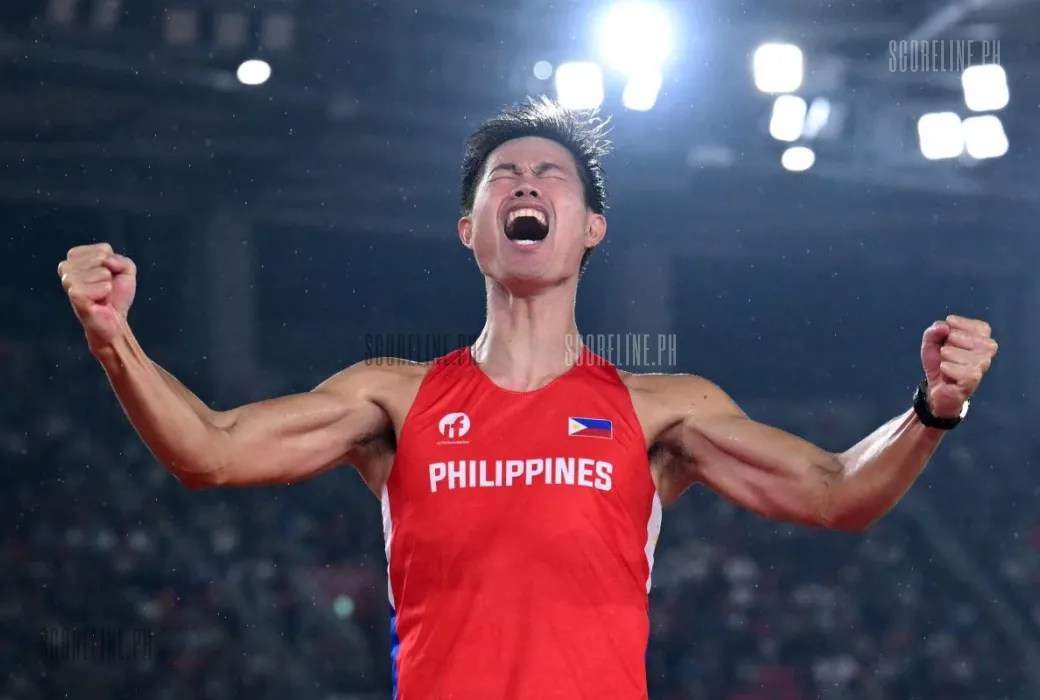
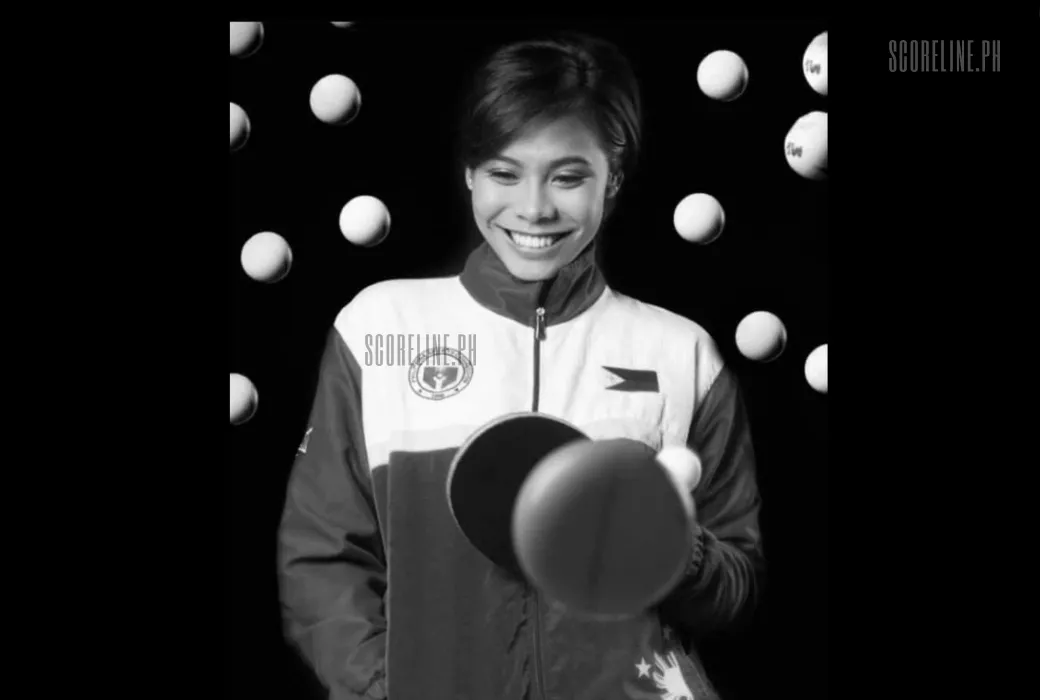
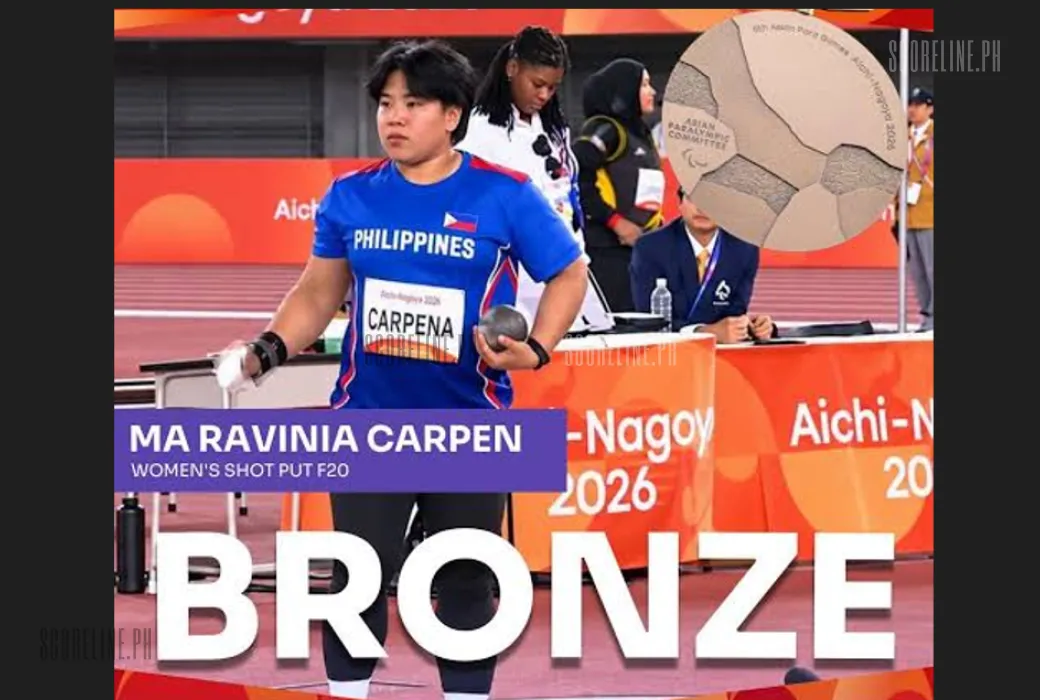
Ma. Ravinia Carpena Wins Asian Para Games Bronze With Career-Best Throw

Making her Asian Para Games debut, the Filipina shot put standout delivered a personal record of 11.39 meters, securing another medal for the Philippines and proving she belongs among Asia's elite para-athletes.Two centimeters.That was all that separated Filipina para-athlete Ma—Ravinia Carpena from a silver medal at the 2026 Asian Para Games.But while the narrow margin may have left her wondering what could have been, the 5th Asian Para Games became the stage for one of the most memorable performances of her career.Competing in the women's shot put F20 event on Friday, Carpena delivered a personal-best throw of 11.39 meters, securing the bronze medal and adding another podium finish to the Philippine delegation's campaign in Aichi-Nagoya, Japan.For an athlete making her Asian Para Games debut, it was a remarkable achievement against some of the continent's strongest competitors.A new personal record. An international podium finish. And another proud moment for Philippine para sports.A Career-Best Throw When It Mattered MostCarpena entered the competition determined to deliver her strongest performance.Standing against experienced international rivals, the Filipina needed to produce a throw capable of challenging for a podium position.She responded with the best mark of her career.Her 11.39-meter effort placed her third overall, just 0.02 meters behind Malaysia's Siti Noraidah Sherman, who captured silver with a throw of 11.41 meters.Japan's Reina Hori dominated the event, winning gold with an Asian-record throw of 13.57 meters.The final results highlighted both the strength of the competition and how closely contested the battle for silver and bronze had become.
10
Learn more
The Premier Volleyball League (PVL) has announced that all games scheduled for Thursday, July 25, have been canceled due to the inclement weather brought by Typhoon Carina

PVL matches on July 25 canceled due to Typhoon Carina

The Premier Volleyball League (PVL) has announced that all games scheduled for Thursday, July 25, have been canceled due to the inclement weather brought by Typhoon Carina.The league made the announcement on Wednesday, prioritizing the safety and well-being of players, staff, and fans.In a statement, the league said, “Due to the inclement weather brought by Typhoon Carina, all Premier Volleyball League games scheduled for Thursday, July 25, have been postponed and will be moved to a later date. Stay safe and dry.”PLDT was supposed to face Farm Fresh at 1:00 pm at the PhilSports Arena with the High Speed Hitters looking to continue their unbeaten start that saw them clinch two wins. Meanwhile, the Foxies would have been looking to get their breakthrough after falling 0-2 in Pool A.Creamline and Nxled were also scheduled for their 3:00 pm encounter with Cool Smashers eyeing for back-to-back wins while the Chameleons were vying for their second win in three games.Chery Tiggo, who are also undefeated in Pool A with a 2-0 slate, were originally set to slug it out against Galeries Tower at 5:00 pm.The league will announce the rescheduled dates for these matches at a later time.
9
Learn more
pba

TNT assumes solo lead in Group A after defeating Meralco

Calvin Oftana scored a team-high 25 points, while Kelly Williams and Jayson Castro provided veteran-smarts in TNT Tropang Giga’s 108-99 win over Meralco on Thursday night in the PBA Season 49 Governors’ Cup held at the Ninoy Aquino Stadium.The trio powered the Tropang Giga from a mere 100-97 lead into a more comfortable 106-97 cushion with 50 seconds of play remaining.Oftana’s 25 points (eight in the fourth quarter) included sinking six three-pointers, grabbing 7 rebounds and dishing off three assists.TNT import Rondae Hollis-Jefferson also helped out by producing 22 points, seven rebounds, and nine assists.Jayson Castro contributed 12 markers, four boards and four dimes, while Kelly Williams scored nine points in his 15:45 playing time, and did his usual job in the defensive end.
9
Learn more
PH BluGirls Softball Team

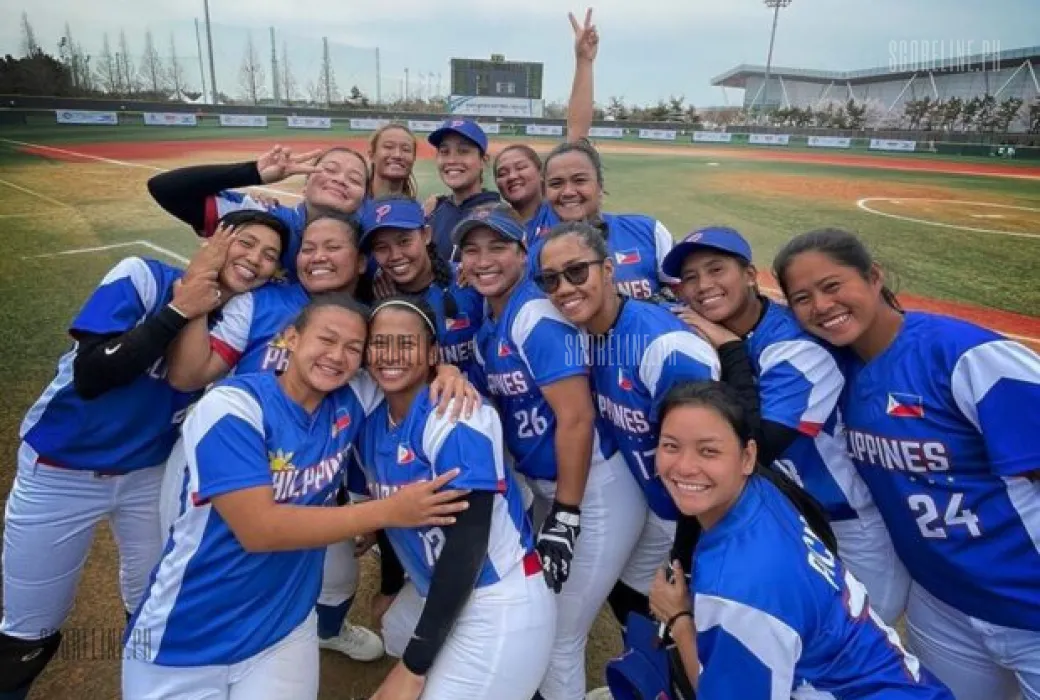
Four innings. Ten runs. Zero mercy

𝗕𝗟𝗨 𝗚𝗜𝗥𝗟𝗦 𝗥𝗢𝗔𝗥!  The Philippine Blu Girls continued their impressive turnaround in the 2026 Asian Games women’s softball tournament, shutting out Singapore, 10-0, in just four innings Wednesday at Anjo Softball Ground.The victory kept the Philippines firmly in fourth place and improved the Blu Girls to a 3-2 record, keeping their hopes alive of reaching at least the bronze-medal match on Saturday.Powering the rout were Mylia Isabel Perez and Nicole Hammoude, who each launched a two-run homer as the Philippines erupted for six runs in the opening inning before finishing the job under the tournament’s 10-run mercy rule.In the circle, Glory Alonzo and Mary Joy Alpitche split pitching duties, with Alpitche striking out three as the Blu Girls completely shut down Singapore.But the celebration will be short.Waiting next is unbeaten China, which enters Thursday’s showdown with a perfect 5-0 record. The game is scheduled for 10 a.m. Manila time.It is the kind of matchup that can define a tournament run.The Blu Girls have found their rhythm.Now they face the team that hasn’t lost.CHINA VS. THE BLU GIRLS. LET THE ROAR BEGIN. 
9
Learn more
Asian Games Closing

Small steps. One giant leap

THE MEDALS TELL ONE STORY. THE FIGHT BEHIND THEM TELLS ANOTHER.29 Medal, A haul of hard-earned bronzes.At the 20th Asian Games in Aichi-Nagoya, Team Pilipinas stood against Asia’s finest in a competition where 50 world records and 11 junior world records fell.The bar was higher than ever. The competition was relentless. Yet Filipino athletes kept fighting, proving that the Philippine flag belongs on the biggest sporting stages.From the track to the ring.From the pool to the mats.From the court to the field.Every medal carried sacrifice. Every victory carried pride. And every athlete who wore the national colors carried the hopes of a nation.NOT EVERY HERO CAME HOME WITH GOLD. NOT EVERY BATTLE ENDED IN VICTORY. BUT EVERY ATHLETE WHO GAVE EVERYTHING FOR THE FLAG DESERVES OUR RESPECT.Behind these performances were coaches, families, sports officials, and supporters who helped make the journey possible.Now, the Asian Games flame has gone out. But the fire of Philippine sports must burn brighter.The SEA Games are next. AIMAG awaits. And beyond them lies the enormous challenge of LA 2028.The mission is bigger than medals. It is about building stronger programs, giving athletes the support they deserve, and turning today's breakthroughs into tomorrow's Olympic dreams.Because national pride should not end when the closing ceremony does. It should fuel the work that follows.SMALL STEPS TODAY. ONE GIANT LEAP TOMORROW.To every Filipino athlete who fought in Aichi-Nagoya: maraming salamat for carrying our flag with courage, heart, and pride.You represented more than a country. You reminded us what Filipinos can achieve when given the chance to compete.MABUHAY ANG ATLETANG PILIPINO! LABAN PILIPINAS!
9
Learn more
Gerry Peñalosa

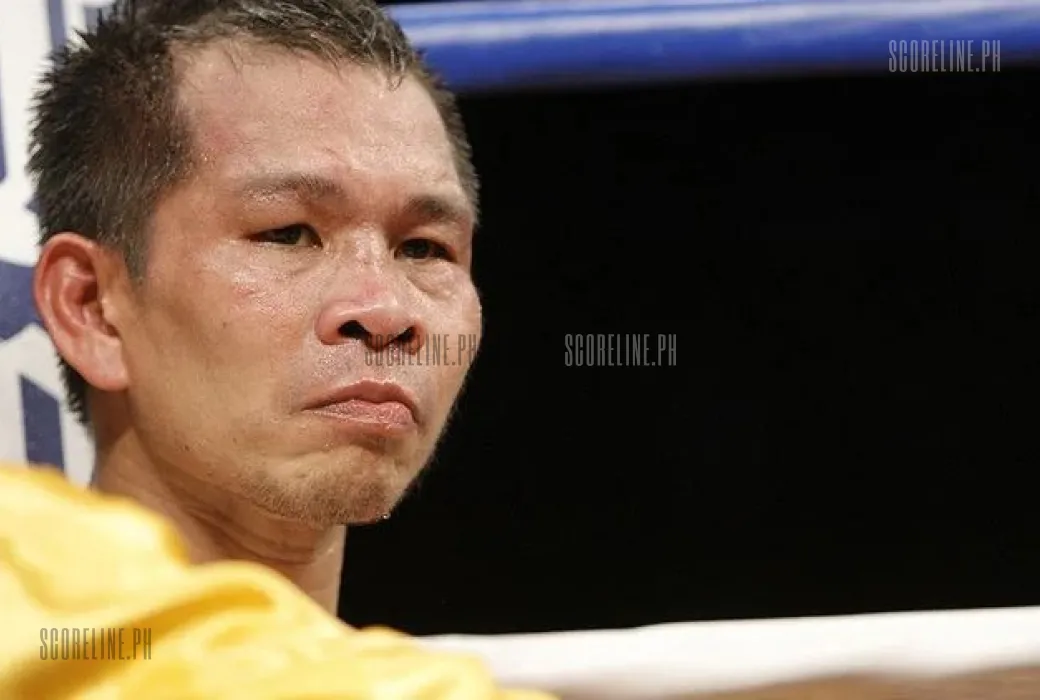
He once conquered two weight divisions. Now, he’s fighting for the next generation

World titles made Gerry Peñalosa a champion. But what he does today could help create the next one.A two-division world champion, Peñalosa earned his place among the Philippines’ boxing greats by proving himself against the best inside the ring.Now, he’s trading his fighter’s role for that of a trainer and promoter, helping young Filipino boxers chase the same dream that once drove him: to become a world champion.The gloves may serve a different purpose now. The mission remains the same.Because boxing greatness isn’t measured only by the belts you win or the opponents you defeat. It’s also measured by the knowledge you pass on, the careers you help build, and the young fighters you inspire to believe they belong on the world stage.Peñalosa has already conquered two divisions.NOW, HIS NEXT LEGACY COULD BE THE CHAMPIONS HE HELPS CREATE. 🥊🔥The champion’s next fight? Building the next champion.Now you know.Every league. Every athlete. Every story.
9
Learn more
DJ Fenner

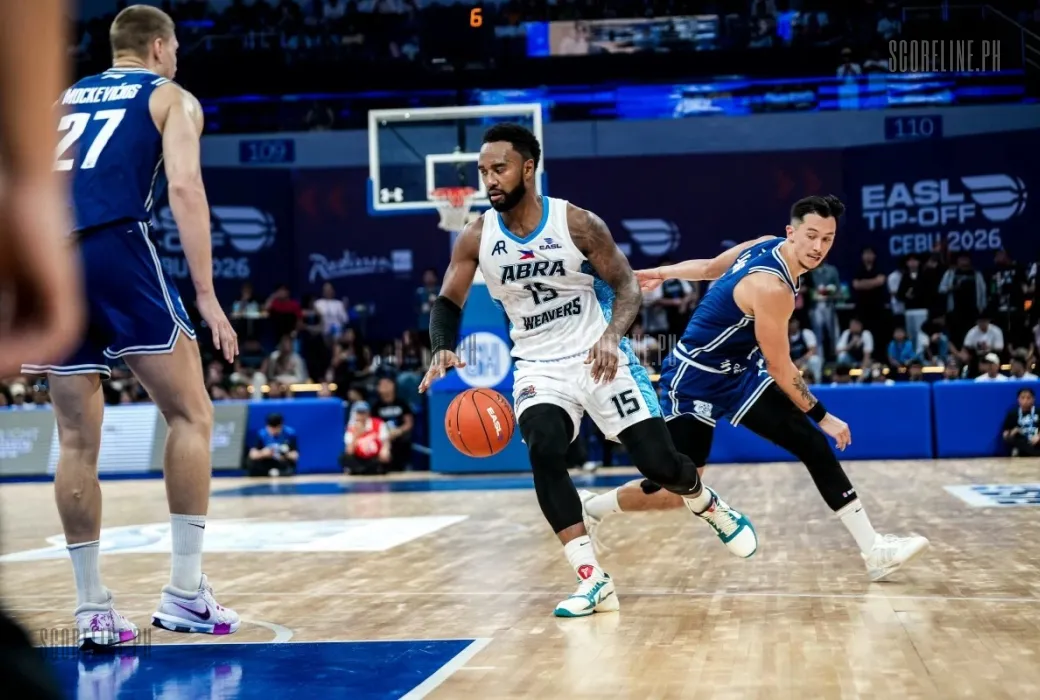
Abra Makes a Statement in EASL Debut With Character Win Over Hong Kong Eastern

Abra knew its character would be tested the moment it stepped onto the East Asia Super League stage.The Weavers answered that test with composure, grit and a statement victory.Making their EASL debut before a good-sized crowd at the newly inaugurated SM Seaside Cebu Arena, Abra held its nerve against Hong Kong Eastern to carve out a hard-earned 79-72 victory and announce that it belongs on the regional stage.For a team often viewed as the replacement for the usual PBA representatives in the tournament, the Weavers had something to prove—and they played like a squad determined to make the most of its opportunity.“It’s a character win for us,” said Abra star Dave Ildefonso after the game.For Ildefonso, the victory was about more than simply opening the EASL campaign with a win. It was about a group of players carrying something to prove stepping up when the pressure was highest.“If you look at our guys, if you look at our lineup, there’s a bunch of players who just want to prove themselves,” he said.Ildefonso pointed to the personal journeys of several teammates as part of what fueled Abra's performance.His own stint in Korea did not go as planned. Jake Figueroa experienced a similar setback, while veteran DJ Fenner continues to show that he can still perform at a high level despite his age.Mike Eric, meanwhile, is also determined to prove that he remains among the best players of his generation.“I’m still trying to prove that at my age I am still a high-level player,” Fenner said in Ildefonso’s account of the team's mindset.That collective hunger translated on the court.Ildefonso contributed nine points, four rebounds and a block, while Fenner finished with 13 points, five rebounds, three assists and three steals.Eric added 10 points and five rebounds, while Figueroa delivered a crucial three-pointer before his night ended after he was ejected for two technical fouls.Imports Jaylen Johnson and Freddy Ibrahim led the Weavers with 14 points apiece, providing the offensive punch Abra needed to keep Hong Kong Eastern at bay.For Ildefonso, however, the numbers only tell part of the story.The bigger accomplishment was proving that Abra could withstand the pressure of its first international assignment.“If you look at us, the team we’re really here to prove something to ourselves and to other people,” he said.“Siguro after this win, siyempre first game pa lang, but it is a step towards the right direction for most of us.”The Weavers now return their attention to another important mission—the MPBL playoffs, where they are the defending champions.Their EASL campaign will resume on November 4, when Abra faces the Ryukyu Golden Kings, the Japan B.League runner-up led by Filipino guard Kieffer Ravena.One game is in the books.But for Abra, the message from its international debut is already clear:The Weavers did not come to the EASL simply to fill a slot. They came to prove they belong.
9
Learn more
Justin Brownlee

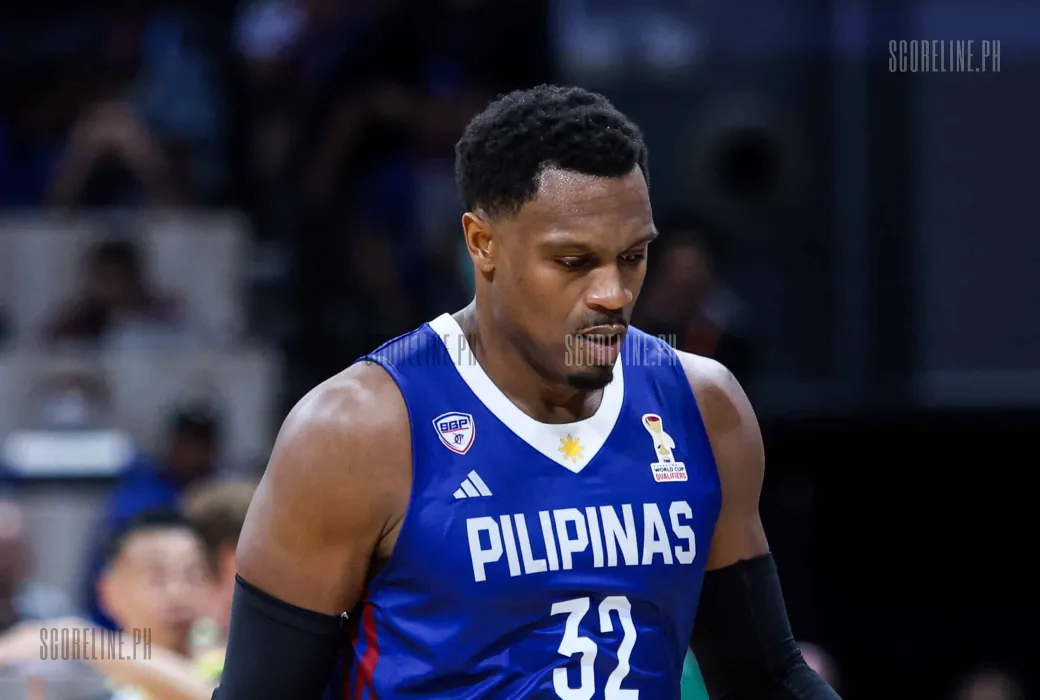
Gilas Pilipinas did not just lose a star. It lost the heart of its championship identity.

Justin Brownlee’s absence from the Philippines’ disastrous 2026 Asian Games campaign was not simply a matter of injury or basketball availability. It was a health issue involving blood pressure and the heart, according to national team coach Tim Cone.Speaking at a Senate hearing Thursday, Cone revealed why the naturalized Filipino star has been unable to play for both Gilas Pilipinas and Barangay Ginebra in the PBA.“Because he’s had health concerns regarding blood pressure and heart issues. So he is not able to play at this point,” Cone said.The revelation puts Brownlee’s prolonged absence into a more serious perspective. This is not just about missing a tournament or a key player being unavailable for a crucial stretch. It is about an athlete dealing with a potentially serious health concern—and the need to put his well-being ahead of basketball.For a player who has carried the Philippines through some of its biggest recent triumphs, that reality deserves understanding, not pressure.THE ABSENCE THAT GILAS COULD NOT OVERCOMEBrownlee was instrumental in the Philippines’ historic gold medal run at the 2023 Asian Games in Hangzhou, helping end a 61-year wait for the country’s men’s basketball team to reclaim the continental crown.His value went beyond scoring. He provided experience, composure, versatility, and the kind of big-game presence that can steady a team when everything starts falling apart.In Aichi-Nagoya, Gilas had none of that from its naturalized star.The national team entered the competition with an all-PBA roster but failed to reach the knockout stage, settling for ninth place in one of its worst Asian Games campaigns in men's 5-on-5 basketball. Its preliminary-round schedule included a crushing 105-61 defeat to China.Brownlee had also missed the Philippines’ two home games in the fourth window of the FIBA World Cup Asian Qualifiers in August and remained unavailable for Ginebra throughout the PBA Governors’ Cup.His absence was a significant setback. But it would be too simplistic to blame the entire Asian Games collapse on one player’s unavailability.A championship team must have contingency plans. It must develop alternatives, establish a system that can survive personnel changes, and prepare for the possibility that even its best players will not always be available.Gilas struggled badly without Brownlee. That should prompt difficult questions about roster construction, preparation, and the team's ability to adapt—not criticism of a player whose health must come first.A WARNING FOR PHILIPPINE BASKETBALLBrownlee’s situation also highlights a broader truth: national team planning cannot depend indefinitely on one irreplaceable figure.His contributions have been enormous, but the Philippines needs a deeper pool of players capable of delivering under pressure. It needs a reliable structure that does not unravel when a key star is sidelined.That responsibility falls on the people building and managing the program.The Asian Games campaign exposed the consequences of entering a major tournament without a naturalized player of Brownlee’s caliber. The challenge now is to learn from that experience instead of treating his return as the only solution.And while fans understandably want to see him back on the court, the priority must remain clear.Heart-related health concerns are not something to rush through for a tournament, a club, or a national team. Brownlee's recovery and medical clearance must take precedence over the demands of competition.LET THE MAN HEALBrownlee has already given Philippine basketball unforgettable moments. He helped deliver an Asian Games gold medal and earned the trust of Filipino fans through his performances for Gilas and Ginebra.He does not owe anyone a premature return.The country can hope to see him play again, but that hope must come with patience. Until he is medically cleared, his absence should be understood for what it is: a health matter, not a failure of commitment.Gilas must now confront its own shortcomings and build a team capable of competing even when its biggest weapon is unavailable.Justin Brownlee needs to focus on his health. Gilas needs to focus on fixing its problems. Neither responsibility should be sacrificed for the other.The Philippines needs its basketball heroes—but first, it needs them healthy.
9
Learn more
USA

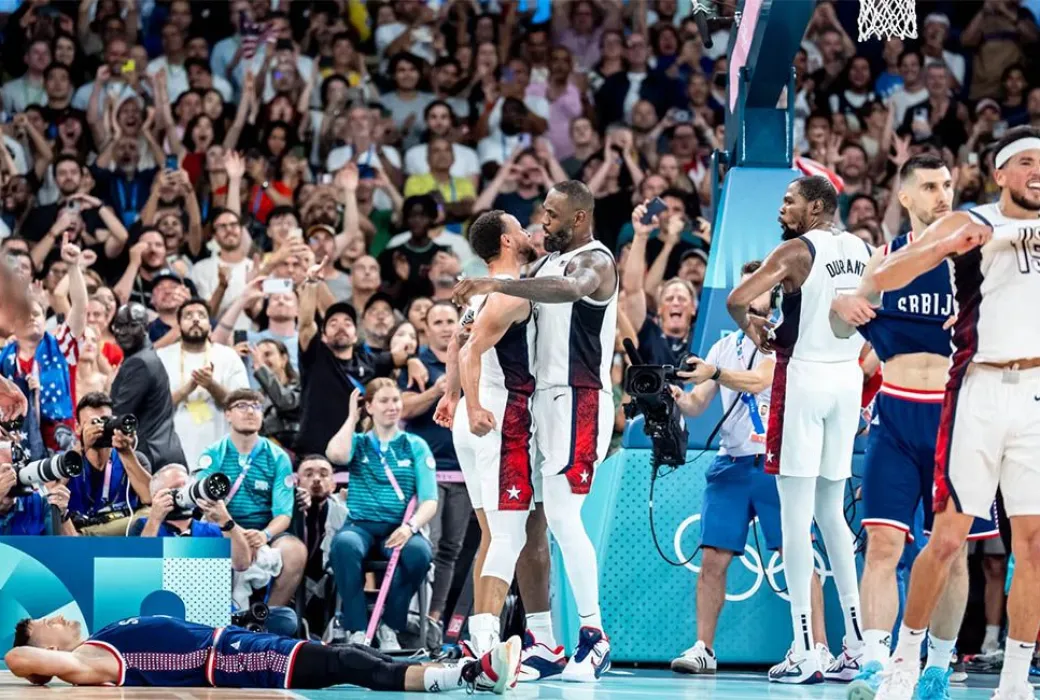
Team USA survives Serbia, returns to Olympics finals

Team USA stormed back from a potential upset against Serbia to return to the gold medal game in the Olympics men’s basketball tournament.The Americans defeated the Serbians 95-91 at the Bercy Arena on Friday, August 9 (PH time), after bouncing back from a 17-point deficit.Stephen Curry showcased his best of the tournament by producing 36 points on 9 of 14 shooting behind the arc while LeBron James recorded his second triple double in the Olympics (first player to do it in history) by scoring 16 points, grabbing 12 boards and dishing off 10 assists.Entering the fourth period, the Serbians still have a 13-point cushion but Curry and James together with Joel Embiid and Kevin Durant showed their poise in the final canto where they went on a 14-2 run which turned an 84-77 deficit to a comfortable 91-86 lead with 1:41 remaining in the game.A three-point play from Bogdan Bogdanovic and a short stab by Nikola Jokic got Serbia to within two, the last time at 93-91 with 8.2 seconds remaining but Curry iced the game with his two free throws to finally put the Serbians away.Team USA will now have a finals rematch against host country France whom they also beat in the 2020 Tokyo Olympics to win their fourth straight gold in the Summer Games.The gold medal game will be scheduled at 3:30 a.m on August 11, Sunday (PH time).On the other hand, Serbia will battle Germany for the bronze medal at 5:00 p.m on August 10, Saturday (PH time).
8
Learn more
Philippine Olympic Committee and UAE Jiu-Jitsu Federation, Asian Jiu-Jitsu Union

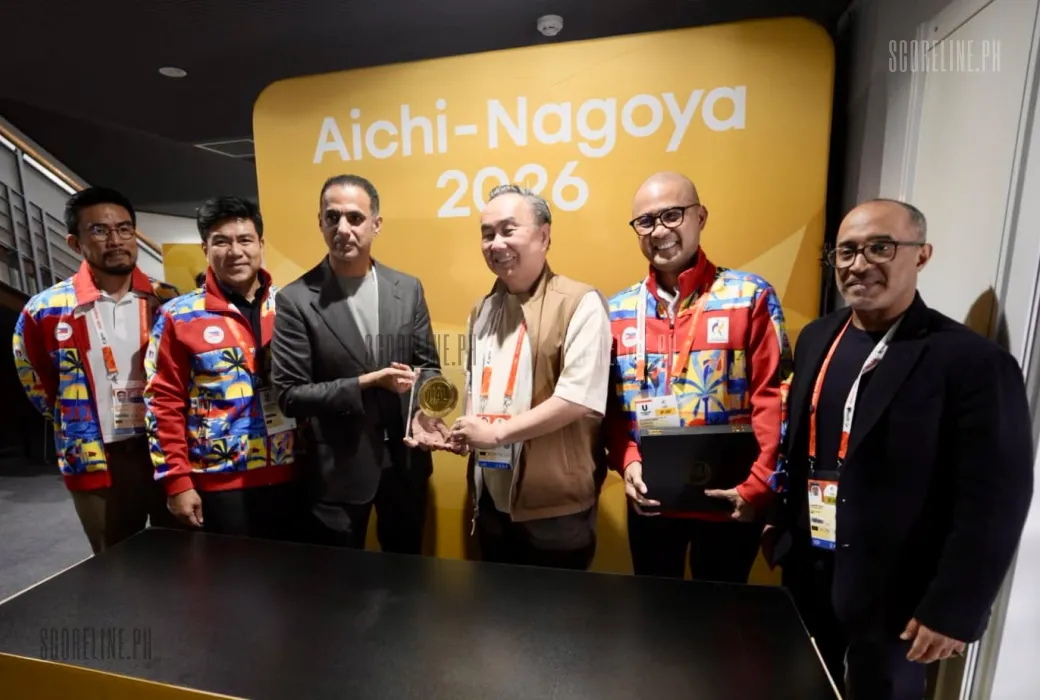
Beyond the mat: The real fight is building jiu-jitsu’s future

MEDALS ARE WON ON THE MAT. BUT THE FUTURE OF THE SPORT IS BUILT BEHIND THE SCENES. In sports, not every game-changing move happens in competition. Some happen across the table, where partnerships are forged and the groundwork for future opportunities begins.That was the message behind the meeting between Philippine Olympic Committee (POC) President Abraham “Bambol” Tolentino and Fahad Ali Al Shamsi, general secretary of both the UAE Jiu-Jitsu Federation and the Asian Jiu-Jitsu Union, on the sidelines of the Aichi-Nagoya 2026 Asian Games.Tolentino presented Al Shamsi with an official POC token of appreciation—a gesture symbolizing friendship, cooperation, and a shared interest in advancing jiu-jitsu across Asia.But beyond the ceremonial exchange lies a bigger picture.For Filipino grapplers, international connections can open doors.Stronger ties among sports organizations can help create opportunities for athlete development, international competition, and greater exposure to the sport’s evolving standards. While these benefits depend on how partnerships translate into concrete programs, building relationships is part of the work required to strengthen a sport beyond a single tournament.For the Philippines, where athletes continue to test themselves against the continent’s best, that work matters. Medals celebrate what athletes achieve today; sustained development helps prepare the next generation for tomorrow.The meeting in Nagoya may not have produced a score or a podium finish, but it highlighted another side of international sports: the people working to create opportunities beyond the competition floor.Because the mission is bigger than one match, one medal, or one Asian Games campaign.The fight is not just to win medals. It is to build a stronger future for Filipino jiu-jitsu—and that fight takes more than one team.
8
Learn more
Philippine Taekwondo Team

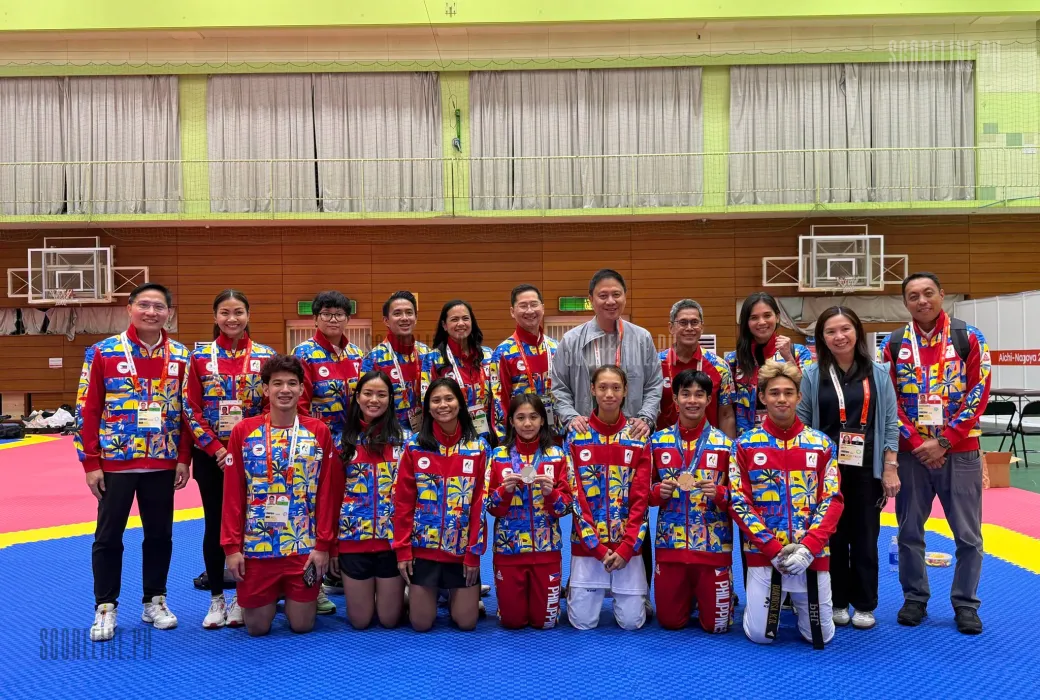
Philippine taekwondo leaves its mark in Aichi-Nagoya

ONE GOLD. THREE SILVERS. ONE BRONZE. FIVE MEDALS—AND A STATEMENT FROM PHILIPPINE TAEKWONDO.Philippine taekwondo did not come to Aichi-Nagoya simply to participate.The Filipino jins came to make noise—and they did.When the campaign ended, the scoreboard showed a remarkable haul: one gold, three silvers, and one bronze.Five medals.Four athletes.One Philippine flag.And behind those numbers is a campaign that deserves more than a passing mention in the final medal tally.At the center of it was Jeus Gabriel Yape, who made history by capturing the inaugural individual virtual taekwondo gold. He wasn't finished there, adding a bronze in individual poomsae to become one of the Philippines’ multi-medal performers in the Games.Then came three more podium finishes.Tachiana Mangin delivered silver in the women’s -49kg.Kurt Barbosa followed with silver in the men’s -58kg.And Juliana Candelaria added another silver in individual poomsae.Different disciplines. Different opponents. Different routes to the podium.Same mission. Same flag. Same fight. 🇵🇭What makes the campaign particularly striking is the range of events in which Filipino taekwondo athletes found success. From poomsae to combat competition and the emerging virtual format, the Philippine contingent showed that its presence extends beyond a single discipline.The medal haul also contributed to a historic overall Asian Games campaign for the Philippines, which recorded its biggest medal tally in more than six decades, according to the Philippine Sports Commission.But medals don't simply appear on a scoreboard.They come from years of repetition when nobody is watching, early mornings, painful sessions, technical adjustments, sacrifices, and the pressure of knowing that an entire country is watching when the moment finally arrives.That is the part the medal tally cannot measure.For Philippine taekwondo, Aichi-Nagoya was more than a collection of podium finishes.It was a reminder that Filipino athletes can compete, adapt, and deliver across different formats on one of Asia’s biggest sporting stages.Five medals later, the message is difficult to ignore:Philippine taekwondo belongs in the conversation.The Asian Games campaign is over.The medals will go into the record books.But for Yape, Mangin, Barbosa, Candelaria, and the athletes who will follow them, the next fight has already begun.
8
Learn more
POC President Abraham Tolentino

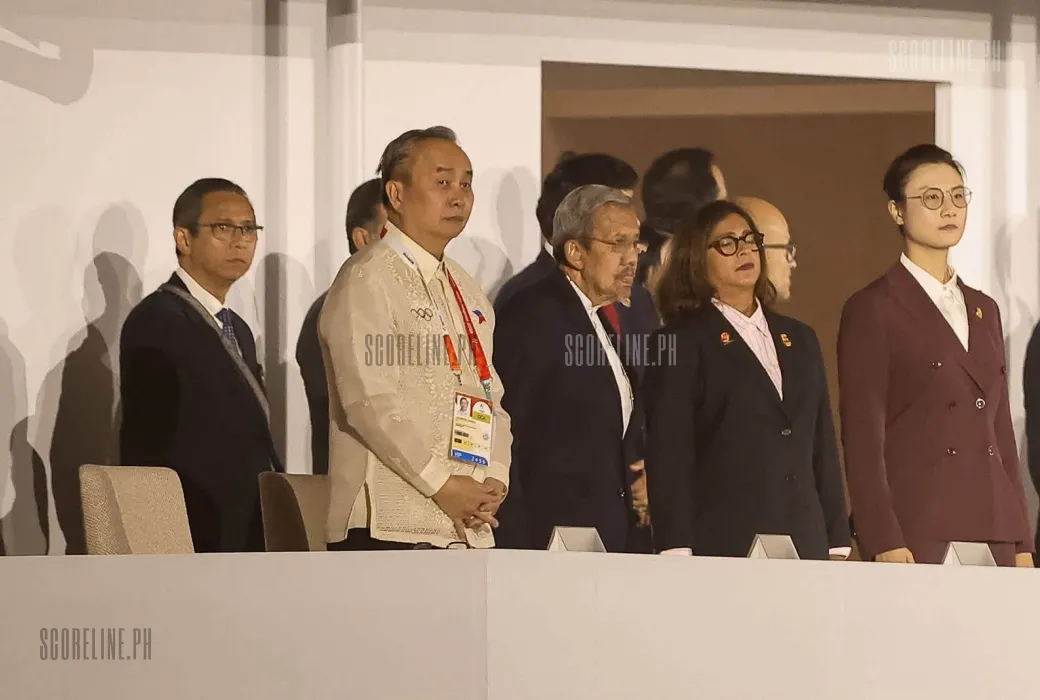
From the podium to the leadership table

The Philippines didn’t just leave Aichi-Nagoya with medals.IT ALSO LEFT ITS MARK IN ASIAN SPORTS LEADERSHIP.Philippine Olympic Committee President and Olympic Council of Asia Executive Board Member Abraham “Bambol” Tolentino attended the closing ceremony of the 20th Asian Games at the Nagoya City Mizuho Park Athletics Stadium on Sunday, October 4.Seated alongside fellow OCA Executive Board Member HRH Prince Sufri Bolkiah of Brunei, Tolentino represented the Philippines as the continent’s biggest multi-sport event came to a close.On the field, Team Pilipinas finished with 4 GOLD, 9 SILVER, AND 16 BRONZE MEDALS in Olympic disciplines.But beyond the medal count, the closing ceremony also underscored something else:THE PHILIPPINES HAS A SEAT AT THE TABLE OF ASIAN SPORTS GOVERNANCE.Athletes fight for medals.Leaders help shape the environment in which those athletes compete.And as the Asian Games flame goes out in Nagoya, the work continues—not just for the next medal, but for the next generation of Filipino athletes.THE GAMES MAY BE OVER.THE MISSION ISN’T.
8
Learn more
Carl Jammes Martin

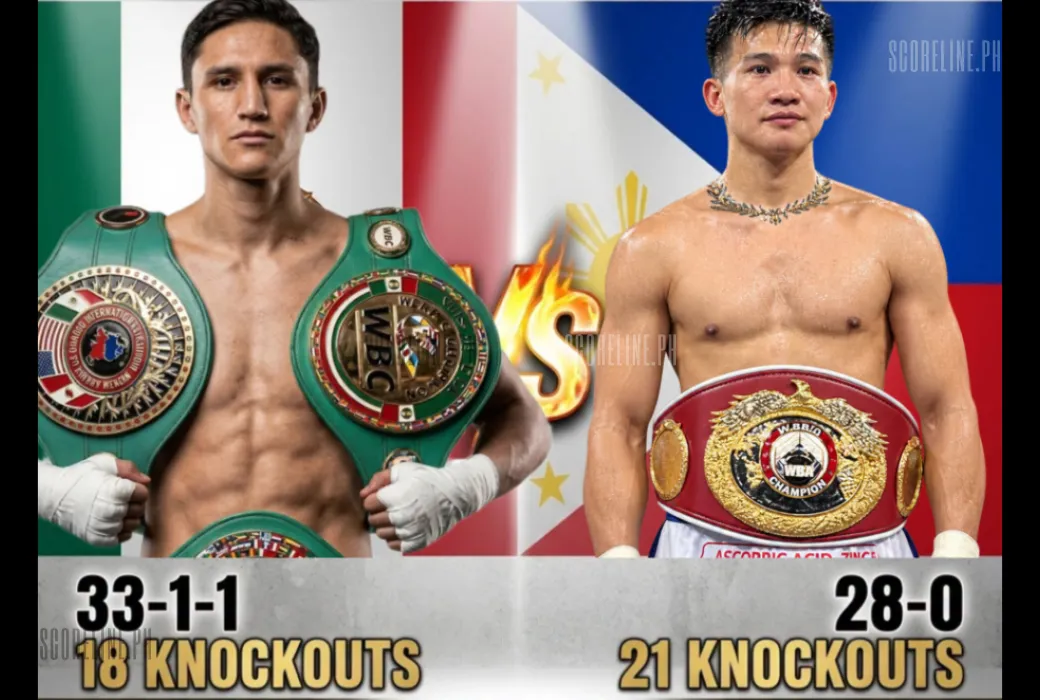
Carl Jammes Martin Faces Mexican Powerhouse Alan Picasso in Career-Defining Riyadh Showdown

The unbeaten record. The Filipino fighting spirit. The dream of becoming a world champion.Everything Carl Jammes “Wonderboy” Martin has worked for could face its biggest test on October 31, 2026, when the undefeated Filipino boxing sensation steps into the ring against Mexican powerhouse Alan David Picasso in one of the most intriguing matchups of the highly anticipated “Mexico vs. The World” boxing event.Set to take place on the undercard of the Canelo Alvarez vs. Christian Mbili showdown in Riyadh, the fight represents more than another entry in Martin's professional record.It could be the night that turns a promising Filipino contender into a legitimate world-championship threat.At 27, Martin enters the biggest fight of his career carrying an impressive 28-0 record with 21 knockouts.Known for his punching power, aggressive combinations, and determined fighting style, the pride of Ifugao has steadily built his reputation as one of the Philippines' most promising boxing talents.But this time, the challenge is different.Standing across the ring will be Mexico's Alan David Picasso, a former world title challenger with a formidable 33-1-1 record and 18 knockouts.Picasso brings experience, technical ability, and the kind of high-level opposition that could push Martin into unfamiliar territory.For Wonderboy, this is no ordinary assignment.This is the kind of fight that separates undefeated prospects from genuine world-class contenders.From Manny Pacquiao's legendary battles against Mexican champions to the rise of a new generation of Filipino fighters, encounters between the two boxing nations have consistently produced memorable contests.Now, Martin has an opportunity to write his own chapter. The Filipino enters with the advantage in knockout percentage, having stopped 21 of his 28 opponents. Picasso, meanwhile, possesses a deeper professional résumé in terms of total bouts.Martin's power could become a decisive weapon, but Picasso's experience could test his patience, defense, and ability to adjust under pressure.The contest may ultimately come down to who controls the distance, dictates the tempo, and executes his game plan when the pressure intensifies.Organizers are reportedly considering super bantamweight at 122 pounds, featherweight at 126 pounds, or an agreed catchweight.That decision could influence both fighters' preparation, conditioning, and fight-night strategy.A convincing victory over Picasso would significantly strengthen Martin's credentials and potentially move him closer to a major world title opportunity.A defeat, however, would force the Filipino to rebuild momentum after years of maintaining an unbeaten record.This is the risk every ambitious fighter must eventually take: stepping beyond comfortable opposition and proving he belongs among the elite.For years, Martin has carried the hopes of boxing fans from Ifugao and the Cordillera region.His rise has been built on discipline, sacrifice, and the determination to compete against increasingly dangerous opponents.Now comes the opportunity to showcase those qualities before a global audience.The spotlight will be brighter. The opponent will be tougher. The expectations will be higher.But the opportunity is equally significant.Martin does not need another routine victory to build his reputation. He needs the kind of performance that makes the boxing world take notice.And against Picasso, he has exactly that opportunity.October 31: No More Easy QuestionsThe unbeaten record has brought Carl Jammes Martin this far. But records alone do not make world champions.The greatest fighters eventually reach a moment when their ability, preparation, courage, and composure are tested against an opponent capable of changing everything.For Martin, that moment could arrive in Riyadh.A victory would not automatically guarantee a world championship fight, but it could become the defining breakthrough of his professional career.
8
Learn more
EJ Obiena

Winning Medals is not enough - EJ Obiena

From EJ Obiena’s record-breaking 5.91m pole vault gold to Carlos Yulo’s double-gold brilliance and Alex Eala’s historic tennis achievements, Filipino athletes continue to prove that WORLD-CLASS TALENT runs through our veins! 💪🇵🇭But for EJ Obiena, WINNING MEDALS IS NOT ENOUGH!“We’re not lacking raw skill. We just need the knowledge, coaching, and accessibility.” — EJ ObienaHis message is powerful: INVEST IN GRASSROOTS SPORTS NOW! Give young Filipino athletes better training, world-class coaching, proper facilities, and real opportunities to chase their dreams.Because somewhere in the Philippines, the next Hidilyn Diaz, Carlos Yulo, EJ Obiena, or Alex Eala is waiting for a chance to shine! The unbeaten record. The Filipino fighting spirit. The dream of becoming a world champion.
8
Learn more
Alyssa Solomon

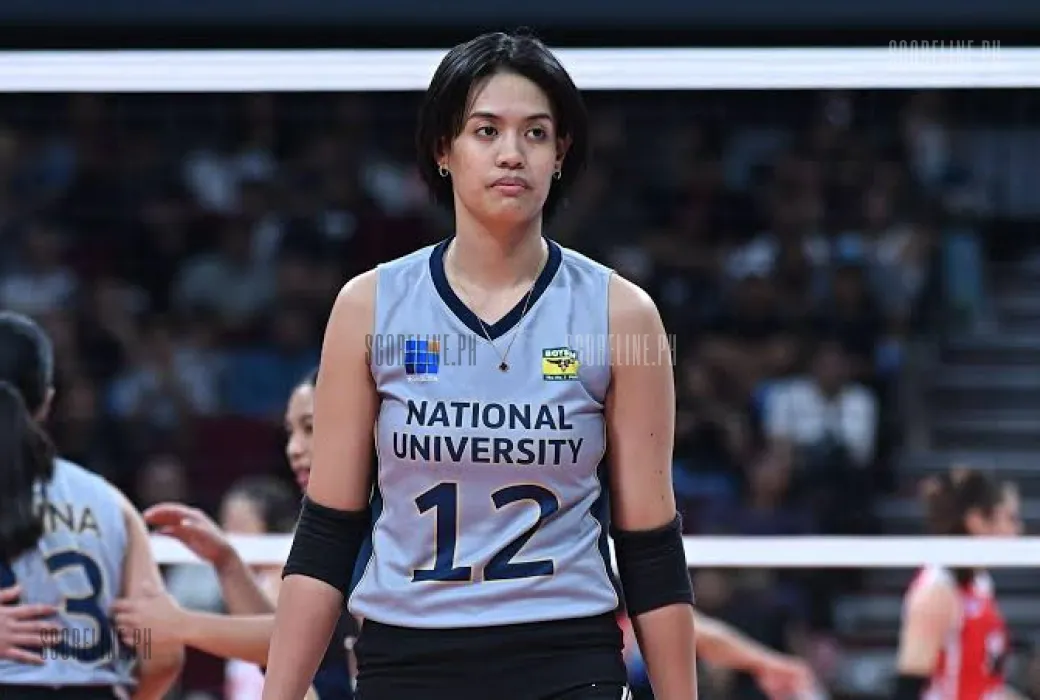
Alyssa Solomon Takes Another Bold Step in Her International Volleyball Journey

FILIPINA POWER GOES GLOBAL!The journey continues for one of Philippine volleyball's most promising stars as Alyssa Solomon takes her talents to Thailand, joining powerhouse club Nakhon Ratchasima 3M Films VC for the upcoming Thailand League season.At just 24 years old, the former National University standout is proving that her volleyball ambitions extend far beyond the Philippine volleyball scene.After experiencing the demanding competition of Japan's volleyball league with Osaka Marvelous and representing Alas Pilipinas at the Asian Games, Solomon is preparing for another challenge in her growing international career.From the UAAP to Japan, and now Thailand, Solomon is building her career one international opportunity at a time.While many Filipino volleyball fans were hoping to see Solomon bring her powerful attacks to the Premier Volleyball League (PVL), the towering opposite spiker has chosen to continue competing overseas.Instead of entering the PVL Draft, Solomon opted to pursue international opportunities, a decision that reflects her determination to challenge herself against different playing styles and higher levels of competition.Her move to Nakhon Ratchasima offers another opportunity to sharpen her offensive skills, improve her consistency, and gain valuable experience against established international players.For a young athlete with national team aspirations, those opportunities could prove important.Solomon isn't simply looking for another team to play for. She's investing in her development as a world-class volleyball player.Solomon's arrival at Nakhon Ratchasima adds another chapter to the growing connection between Philippine volleyball and the Thai club.She becomes the fourth Filipino player to suit up for the team, following:Mylene Paat — Former Alas Pilipinas standout known for her powerful attacking game.Dindin Santiago-Manabat — Veteran opposite hitter with extensive international experience.Ced Domingo — Middle blocker who brought her talent and defensive presence to Thailand.Now, Solomon has the opportunity to build on that Filipino legacy.Her combination of height, attacking power, and international exposure could make her an important addition to Nakhon Ratchasima's roster.But succeeding in Thailand will require more than physical ability.She will need to adapt to a new system, establish chemistry with her teammates, and demonstrate consistency against competitive opposition.The challenge is significant, but so is the opportunity.Solomon's decision also highlights an important development in Philippine volleyball: more Filipino players are seeking opportunities beyond the domestic league.For years, the PVL has served as a major platform for showcasing the country's top volleyball talents.But international exposure offers a different set of challenges.Competing overseas exposes athletes to unfamiliar systems, varying tactical approaches, and the pressure of adjusting to new teammates and coaching philosophies.Those experiences can help players develop greater versatility and confidence.And when those athletes return to represent the Philippines, their international experience can potentially strengthen the national team.For Alas Pilipinas, having players who regularly compete in different international leagues could become a valuable advantage.Solomon's stint in Japan provided an opportunity to experience a highly structured volleyball environment.Her upcoming campaign in Thailand offers another chance to grow, particularly in a region where volleyball competition continues to attract considerable attention.Solomon's career decision raises an important question about the future of Philippine volleyball development.Should the country's brightest young players prioritize domestic competition, or should they be encouraged to test themselves overseas?The answer does not have to be one or the other.The PVL remains important to the growth of Philippine volleyball, providing professional opportunities, exposure, and a strong domestic fan base.But international opportunities should also be supported.Philippine volleyball cannot measure its progress solely by the popularity of its domestic league. It must also develop athletes capable of competing consistently beyond the country's borders.Solomon's decision represents an opportunity to demonstrate what Filipino talent can accomplish when given access to different competitive environments.Of course, playing abroad does not automatically guarantee improvement.Success will depend on meaningful playing time, quality coaching, physical conditioning, and the ability to translate experience into better performances.But the willingness to embrace those challenges is an important part of an athlete's development.Solomon's rise began with her impressive performances for National University, where she established herself as one of the most dangerous young attackers in collegiate volleyball.Her combination of offensive power and competitive determination made her a standout in the UAAP.Now, the challenges are bigger.The opponents are more experienced.And the expectations are higher.But Solomon is no longer simply a promising collegiate star.She is an international professional athlete seeking to establish herself beyond the Philippine volleyball circuit.At 24, she still has considerable room to develop her skills and expand her career.Her journey from NU to Japan and Thailand illustrates the possibilities available to Filipino volleyball players willing to pursue opportunities outside their comfort zones.The upcoming Thailand League season will provide another important test of Solomon's growth.Can she become a reliable offensive weapon for Nakhon Ratchasima?Can she adapt quickly to the team's system?And can her international experience help her become an even more valuable player for Alas Pilipinas?Those questions will be answered on the court.For now, one thing is clear.Alyssa Solomon is choosing development over familiarity, international exposure over comfort, and long-term growth over the easier path of staying close to home.Her move should not be viewed as a rejection of Philippine volleyball, but as another opportunity for Filipino talent to gain recognition abroad.For Alyssa Solomon, the journey is far from finished.And for Philippine volleyball, her continued international career represents another opportunity to show that Filipino players can compete beyond their home courts.FROM THE PHILIPPINES TO THE WORLD — ALYSSA SOLOMON IS JUST GETTING STARTED! 
8
Learn more
tim cone and bennie boatwright

Can Bennie Boatwright Become the Missing Piece in Philippine Basketball's Comeback?

BROWNLEE'S STATUS UNCERTAIN. FAJARDO'S GILAS CHAPTER CLOSED. THE PRESSURE IS ON — AND BENNIE BOATWRIGHT COULD BE THE ANSWER.Philippine basketball is approaching another crucial crossroads, and Gilas Pilipinas may soon have a new weapon capable of transforming its international campaign.With veteran naturalized star Justin Brownlee's availability still uncertain, the spotlight is shifting toward 6-foot-11 scoring powerhouse Bennie Boatwright, whose potential inclusion could provide the national team with the size, offensive versatility, and scoring punch it needs against Asia's strongest basketball programs.But there is one major obstacle.Boatwright's naturalization and eligibility requirements are still being processed, and time is running out before the November FIBA World Cup Asian Qualifiers.For Gilas head coach Tim Cone, the hope is that the Samahang Basketbol ng Pilipinas (SBP) can complete the necessary requirements before the national team's scheduled games in Malaysia on November 27 and 29."They are being worked on," Cone said when asked about Boatwright's documents.The statement offers hope, but no guarantee.And for a national team seeking consistency after its disappointing Asian Games campaign, uncertainty is becoming an increasingly familiar challenge.A 6-Foot-11 Offensive Weapon Gilas Cannot IgnoreBoatwright is not simply another big man who can occupy space inside the paint.The American forward-center brings an offensive skill set that could significantly expand Gilas' attacking options.At 6-foot-11, Boatwright combines size with perimeter shooting, mobility, and the ability to score from multiple areas of the court.Currently playing in China for the Fujian Sturgeons, he has the potential to give the Philippines a different offensive dimension.His ability to stretch the floor could create additional driving lanes for Filipino guards, while his scoring threat could force opposing defenses to adjust their coverage.Against physically imposing Asian teams, that versatility could prove valuable.Gilas doesn't just need another tall player. It needs a big man who can create mismatches, score under pressure, and make the entire offense more difficult to defend.Boatwright could potentially provide those qualities.However, his effectiveness would depend on how quickly he adapts to Cone's system, develops chemistry with the local players, and adjusts to international competition.Talent alone will not guarantee success.The Brownlee Question: Why Gilas Needs Another OptionFor years, Justin Brownlee has been one of the most important figures in Philippine basketball's international campaigns.His leadership, clutch scoring, and familiarity with Cone's system have made him a trusted offensive centerpiece.But with his availability uncertain, Gilas cannot afford to build its entire preparation around a single naturalized player.The lesson is simple: A serious national team must have alternatives before a crisis happens — not after.Boatwright's potential addition should not automatically be viewed as replacing Brownlee.Instead, it could give the coaching staff greater flexibility when selecting the team's naturalized reinforcement.Under FIBA's standard eligibility rules, a national team may generally field only one player classified as naturalized on its game roster.That means Brownlee and Boatwright would not ordinarily be able to play together if both are classified as naturalized players.But having both eligible and available would allow Gilas to make strategic decisions based on player health, opponent matchups, and tournament requirements.The urgency surrounding Boatwright's possible arrival comes after Gilas finished ninth at the 2026 Asian Games in Japan, falling short of defending its historic gold medal.The disappointing campaign raised serious questions about player availability, roster preparation, and the national team's long-term direction.Cone previously revealed that several overseas-based Filipino stars were unable to join the Asian Games squad because their professional clubs did not release them.Among the notable absentees were Kai Sotto, Dwight Ramos, AJ Edu, Kevin Quiambao, and Carl Tamayo.Their absence exposed an uncomfortable reality.The Philippines may have the talent to assemble a formidable national team, but talent means little when the best players cannot be brought together at the right time.Boatwright's situation represents another test of that problem.If his documentation is not completed in time, Gilas could once again find itself preparing for major international competition without an important potential reinforcement.That is why the SBP must treat naturalization, player eligibility, overseas club coordination, and long-term roster planning as essential parts of national team development.Gilas Has Already Proven It Can Fight Without a Naturalized StarDespite the criticism surrounding its recent international performances, Gilas has shown that an all-local lineup can compete.Victories over Jordan and Iran in the Asian Qualifiers demonstrated the team's resilience and ability to execute under pressure.Those results should not be overlooked.They showed that Filipino players possess the talent and determination to challenge quality international opposition.But competing consistently against Asia's elite requires more than occasional impressive victories.It demands offensive balance, defensive discipline, rebounding, reliable shooting, and roster continuity.A naturalized reinforcement can help address specific weaknesses, but cannot solve every structural problem.Boatwright could strengthen Gilas. He cannot single-handedly fix Philippine basketball.The responsibility remains with the coaching staff and basketball leadership to establish a sustainable system capable of producing results regardless of which naturalized player is available.Another major challenge facing Gilas is the departure of June Mar Fajardo from international competition.The nine-time PBA MVP has confirmed that his national team career is over, closing an important chapter for Philippine basketball.His retirement leaves Gilas without one of its most experienced interior players.While younger talents such as Kai Sotto and AJ Edu represent the future of the national team's frontline, their availability and continued development remain important factors.Boatwright could provide additional size and offensive versatility during this transition.But the Philippines must avoid treating naturalization as a substitute for developing its homegrown big men.The long-term objective should be to develop a frontcourt capable of competing internationally for years, not merely finding short-term solutions before every qualifying window.The upcoming FIBA World Cup Asian Qualifiers in Malaysia will provide another opportunity for Gilas to demonstrate progress.But the immediate question remains unanswered.Will Boatwright's documents and eligibility be completed in time?And if they are, will he have sufficient preparation to contribute effectively to Cone's system?These are significant questions with no guaranteed answers.Even if his naturalization is completed, international eligibility requirements and tournament registration procedures must still be satisfied.The SBP cannot afford to confuse optimism with readiness. For a national team seeking to regain momentum, every available training session and every roster decision matters.Boatwright's potential arrival is exciting, but the conversation should not stop with his scoring ability or physical attributes.The Philippines needs a deeper and more reliable national basketball program.That means stronger coordination with overseas clubs, better long-term player development, early roster planning, and greater flexibility in preparing for international tournaments.Brownlee has already demonstrated the value of having a dependable naturalized player who understands the national team's system.Boatwright could offer a different set of strengths.Together, as alternative naturalized options, they could give Cone greater flexibility.But neither player should be expected to carry the entire burden of Philippine basketball's international ambitions.Boatwright may be an important piece of that system.He could provide the offensive firepower, size, and versatility Gilas needs against bigger and more physical opponents.But the real victory would be establishing a national team program that is prepared long before the opening tip.The Next Chapter Begins With PreparationFor Bennie Boatwright, the opportunity to represent the Philippines could become a defining moment in his basketball career.For Tim Cone, it could provide another valuable offensive option.And for Filipino basketball fans, it offers renewed hope that Gilas can strengthen its roster and compete more consistently on the international stage.But the countdown has already begun.The paperwork must be completed.The eligibility requirements must be satisfied.And the national team must be ready to compete, with or without its preferred reinforcement.THE PHILIPPINES HAS THE PASSION. IT HAS THE TALENT. IT HAS THE POTENTIAL.NOW IT NEEDS THE PREPARATION, DEPTH, AND ORGANIZATION TO TURN THAT POTENTIAL INTO RESULTS.BENNIE BOATWRIGHT COULD BE THE NEW WEAPON. BUT A STRONGER GILAS SYSTEM MUST BE THE REAL GAME-CHANGER. 
8
Learn more
sposts officials

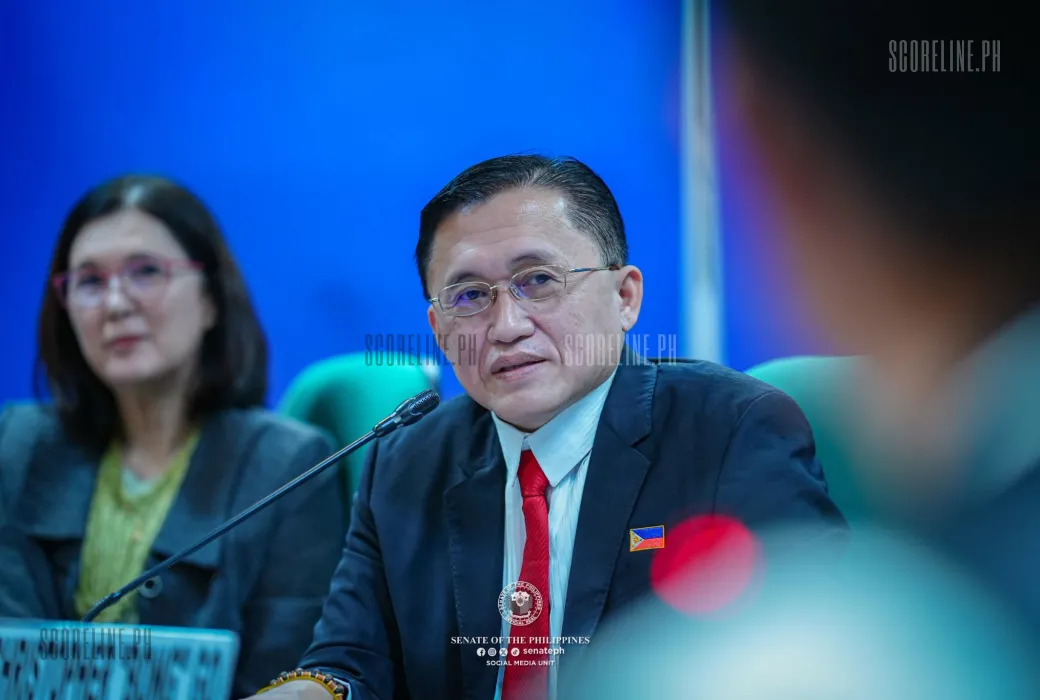
No allowance, but expected to win medals? Athletes deserve better

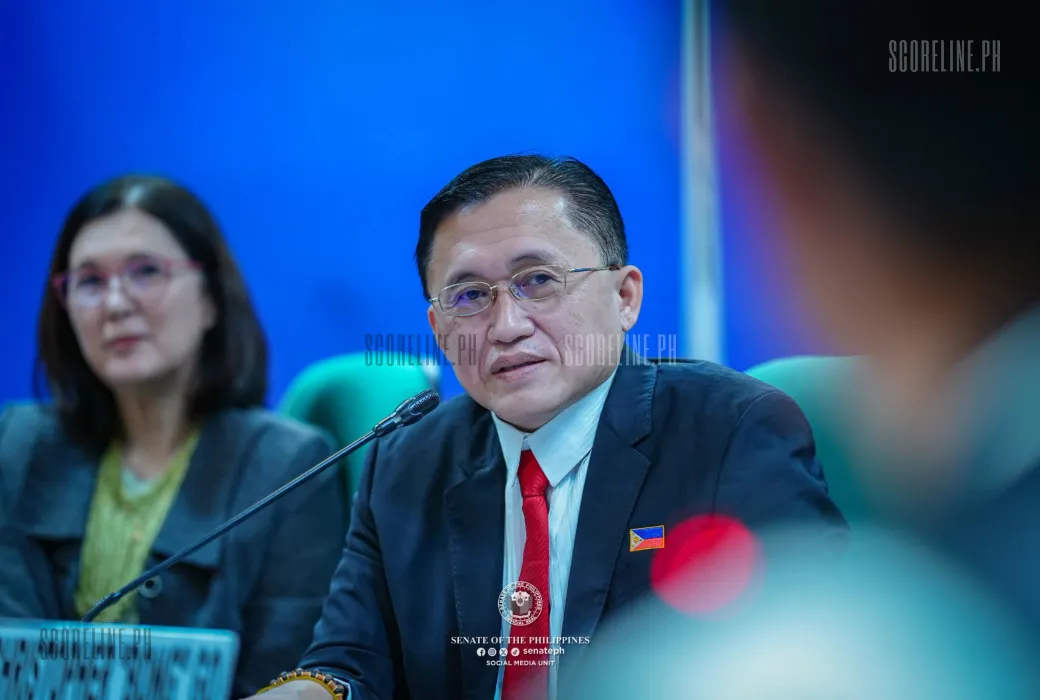
HOW CAN WE DEMAND WORLD-CLASS PERFORMANCES WHEN OUR NATIONAL ATHLETES ARE STILL WAITING FOR BASIC FINANCIAL SUPPORT?Serious questions have been raised during a Senate budget hearing over delayed training allowances for members of the Philippine women's national volleyball team.Senator Bong Go questioned reports that some athletes have not received their allowances for TWO MONTHS, emphasizing the importance of providing timely support to those representing the country.But the issue goes beyond delayed payments.₱270 MILLION IN UNLIQUIDATED PNVF FUNDS!According to Commission on Audit Supervising Auditor Jeorge Roman Lozano, the Philippine National Volleyball Federation (PNVF) has an outstanding ₱270 million in funds awaiting liquidation.PSC Chairman Patrick “Pato” Gregorio also pointed to administrative complications following three leadership changes within the federation since 2025.Meanwhile, Alas Pilipinas men's team captain Bryan Bagunas previously revealed that some players had to borrow money just to attend training sessions.LET THAT SINK IN.Athletes preparing to represent the Philippine flag reportedly had to borrow money simply to train!BUT HERE'S THE BIGGER QUESTION: WHY SHOULD ATHLETES CARRY THE BURDEN OF ADMINISTRATIVE PROBLEMS THEY DID NOT CREATE?Delayed allowances and unresolved financial documentation are separate issues that both require attention.The reported ₱270 million in unliquidated funds does not automatically establish misuse of public money, but it demands proper accounting, transparency, and timely resolution.ATHLETE WELFARE MUST NEVER BECOME COLLATERAL DAMAGE IN ORGANIZATIONAL DISPUTES OR BUREAUCRATIC DELAYS!National athletes already sacrifice time, energy, and personal resources to compete for the country.They should be focused on training, recovery, and competition — not repeatedly following up on financial assistance.Gregorio expressed hope that newly installed PNVF President Frank Lao could help resolve the situation.But moving forward, the priority must be clear:TIMELY ALLOWANCES. TRANSPARENT ACCOUNTING. CLEAR RESPONSIBILITIES. STRONGER ATHLETE PROTECTION.THE PHILIPPINE FLAG SHOULD REPRESENT PRIDE AND OPPORTUNITY — NOT FINANCIAL UNCERTAINTY FOR THOSE WHO WEAR IT!If we want better international results, we must also provide reliable support behind the scenes.ATHLETES SHOULD TRAIN TO WIN MEDALS — NOT STRUGGLE TO PAY FOR TRAINING! 
8
Learn more
FB Post of Michael Martinez

The ice king is back Michael Christian Martinez announces comeback at 30!

“I had many options for my 30th birthday. Somehow, I chose Philippine Nationals.” - Michael MartinezTWO WINTER OLYMPICS. YEARS AWAY FROM COMPETITION. ONE MORE CHANCE TO CHASE HIS PASSION! Philippine figure skating icon MICHAEL CHRISTIAN MARTINEZ is officially returning to competitive skating!The two-time Winter Olympian surprised Filipino sports fans with a birthday announcement confirming his plans to compete at the 2026 Philippine National Figure Skating Championships!And he delivered the news with his trademark humor! He added:“Anyway… I'm competing again. Good luck knees."Martinez admitted that he never imagined making another competitive comeback after spending years away from the ice.But after repeatedly being asked whether he would ever compete again, the Filipino Olympian eventually found himself asking one simple question:WHY NOT? THIS COMEBACK ISN'T JUST ABOUT MEDALS — IT'S ABOUT PASSION THAT REFUSES TO FADE!At 30, Martinez understands that competing again will bring different physical challenges.But greatness isn't always about being the youngest, fastest, or strongest.Sometimes, it's about having the courage to return to something you love!MICHAEL MARTINEZ HAS ALREADY MADE HISTORY FOR PHILIPPINE FIGURE SKATING. HE DOESN'T NEED ANOTHER OLYMPIC APPEARANCE TO PROVE HIS WORTH! 🇵🇭His comeback could also bring renewed attention to Philippine figure skating and inspire young Filipino athletes to pursue their dreams on the ice.THE OLYMPIC JOURNEY MADE HIM A TRAILBLAZER. HIS COMEBACK COULD INSPIRE ANOTHER GENERATION!WELCOME BACK, MICHAEL CHRISTIAN MARTINEZ! THE ICE IS YOURS AGAIN
8
Learn more
Sen. Bong Go
FLAG FIRST BILL: Can Philippine Law Force Foreign Clubs to Release Gilas Players?

Senator Bong Go's proposed legislation raises questions about national team duty, overseas player contracts, and the legal limits of compelling foreign basketball clubs to release Filipino athletes.Should representing the Philippine flag take priority over professional basketball commitments abroad?That question has become a major issue in Philippine basketball following Gilas Pilipinas' disappointing campaign at the 2026 Asian Games in Aichi-Nagoya, Japan.With several overseas-based Filipino players unavailable for national team duty, Senator Bong Go is studying a proposed measure known as the Flag First Bill, which seeks to establish a national policy giving greater priority to representing the Philippines in international competitions.But the proposal faces a complicated legal question.Can a law passed in the Philippines compel professional basketball clubs in Japan and South Korea to release Filipino players for national team assignments?The answer is not straightforward.While Philippine legislation can establish obligations for individuals and organizations under its jurisdiction, it cannot automatically impose requirements on foreign clubs operating under different national laws and professional league regulations.Tim Cone Raises Player Availability ConcernsThe issue gained renewed attention during the Senate Committee on Sports hearing on October 8, when Gilas Pilipinas head coach Tim Cone discussed the difficulties of assembling the national team's preferred roster for the Asian Games.Several Filipino basketball stars competing in overseas professional leagues were unable to join the national team because their clubs did not release them.Among the players whose availability became an issue were Kai Sotto, Dwight Ramos, AJ Edu, Kevin Quiambao, and Carl Tamayo.Their absence affected Gilas' preparations and limited Cone's roster options for the continental tournament.The Philippines eventually finished ninth among 12 teams, falling short in its attempt to defend the Asian Games basketball gold medal.Cone's remarks highlighted a longstanding problem for national teams that depend on professional players competing internationally.Even when athletes are willing to represent their country, their participation may depend on contractual obligations and the willingness of their clubs to release them.International basketball already has established player-release mechanisms under the regulations of the International Basketball Federation (FIBA).For competitions covered by mandatory release provisions, clubs are generally required to make eligible players available during designated national team windows, subject to the applicable rules.However, the Asian Games does not automatically fall under the same mandatory release framework.That distinction creates difficulties for countries whose national team players compete in professional leagues overseas.Japan's B.League and South Korea's Korean Basketball League operate according to their respective league schedules, contractual arrangements, and domestic regulations.Without an applicable mandatory international release requirement, clubs may decline requests that conflict with their professional commitments.For Gilas Pilipinas, the result can be an incomplete roster even when the national team has identified its preferred players.The problem is not necessarily a lack of willingness among Filipino athletes. It is the absence of an enforceable release arrangement covering certain international competitions.Senator Go has indicated that he is studying legislation intended to strengthen the country's ability to secure national team participation from Filipino athletes competing professionally.The proposal would explore establishing a national policy prioritizing representation of the Philippines during major international sporting events.However, the measure remains under development, and its final provisions have not been established.Consultations with athletes, professional leagues, sports organizations, and other stakeholders would be important in determining how such a policy could operate.One possible approach involves encouraging or requiring national team release provisions in overseas player contracts, subject to applicable laws and contractual arrangements.But implementing such a requirement could create complications.Foreign employers would still be subject to their own domestic laws, league regulations, and contractual rights.A Philippine law could influence certain agreements involving Filipino athletes, but it would not automatically override the legal obligations of foreign basketball clubs.The central limitation involves legal jurisdiction.A law enacted by the Philippine Congress generally operates within the country's jurisdiction and applies to persons or organizations legally subject to its authority.Professional basketball clubs based in Japan and South Korea operate under the laws of their respective countries.Their employment contracts and league obligations cannot automatically be rewritten by Philippine legislation.For example, if a Filipino player signs a contract with a Japanese professional team, the agreement may contain provisions governing national team participation, scheduling conflicts, compensation, and player availability.A Philippine law requiring national team participation would not necessarily invalidate conflicting contractual provisions enforceable under Japanese law.The same issue could arise with Filipino players competing in South Korea.This means the Flag First Bill would need to consider international legal limitations and practical enforcement mechanisms.Passing a law in Manila is one thing. Making it enforceable against a professional basketball club in Tokyo or Seoul is another.Could Mandatory Release Clauses Affect Overseas Opportunities?Another concern involves the possible consequences for Filipino athletes seeking professional careers abroad.Overseas basketball opportunities provide Filipino players with access to competitive leagues, higher salaries, international experience, and professional development.If Philippine legislation required extensive national team release commitments, foreign clubs might consider those obligations when deciding whether to sign Filipino players.For example, a club preparing for a crucial league game or championship series could face difficulties if a player were required to leave for an international tournament outside the recognized FIBA calendar.Such situations could create scheduling and contractual conflicts.The possibility raises an important question for policymakers.Could a law intended to strengthen the national team unintentionally make Filipino players less attractive to overseas professional clubs?That concern does not automatically mean the proposed legislation would produce such an outcome.Its actual effects would depend on the final provisions, applicable legal requirements, and how clubs and players respond.Nevertheless, the potential consequences deserve careful examination.Protecting National Duty Without Sacrificing Professional CareersFor Filipino basketball players, representing the national team is often a source of enormous pride.But professional basketball is also their livelihood.Players must consider contractual obligations, financial security, physical conditioning, injury risks, and long-term career opportunities.A policy requiring national team participation would therefore need to balance several interests.The national team needs reliable player availability.Professional clubs need predictable roster arrangements.Athletes need protection from unreasonable contractual or financial consequences.And sports organizations must coordinate international schedules effectively.One possible solution involves stronger cooperation between the Samahang Basketbol ng Pilipinas (SBP), overseas leagues, professional clubs, and international basketball authorities.Advance scheduling, negotiated release agreements, insurance arrangements, and clear communication could help reduce conflicts.Such mechanisms may provide practical alternatives or complementary measures to domestic legislation.The Flag First Bill discussion highlights a broader issue in Philippine basketball development.Gilas Pilipinas has increasingly relied on talented Filipino players competing in professional leagues abroad.That international exposure can strengthen the national team by providing athletes with valuable experience against high-level competition.However, overseas commitments can also complicate national team preparation.The challenge is developing a system that allows the Philippines to benefit from the professional growth of its players while maintaining reliable access to them during important international competitions.That requires long-term planning.National team schedules must be coordinated as early as possible.Sports officials must maintain strong relationships with professional clubs.Players must understand their potential national team commitments before signing contracts.And the coaching staff must prepare alternative roster options when certain athletes are unavailable.A competitive national team cannot depend entirely on last-minute negotiations for player releases.The debate surrounding the proposed Flag First Bill should not be reduced to a simple choice between patriotism and professional obligations.Filipino athletes can value national representation while also honoring legitimate commitments to their employers.Likewise, foreign clubs can respect the importance of international competition while protecting their contractual and competitive interests.The challenge for lawmakers is establishing a policy that recognizes these competing responsibilities.A workable framework would need to clarify when national team participation should receive priority, what obligations may legally be imposed, and how potential disputes should be resolved.It would also need to consider whether the proposed requirements apply only to basketball or to other Filipino athletes competing professionally overseas.The broader implications could extend across several sports.Senator Go's proposed legislation has brought renewed attention to an issue that has affected Philippine national teams for years.The difficulties experienced by Gilas Pilipinas at the Asian Games demonstrate why player availability deserves serious discussion.But solving the problem requires more than establishing a patriotic principle.The effectiveness of any future law would depend on its legal enforceability, compatibility with international regulations, and ability to protect the interests of Filipino athletes.It would also require meaningful cooperation with foreign professional leagues.For Gilas Pilipinas, the objective remains clear: assemble the strongest available team and provide sufficient preparation time to compete against Asia's basketball powers.Whether the Flag First Bill can help achieve that objective will depend on how the proposal is developed.THE PHILIPPINE FLAG DESERVES RESPECT. SO DO THE CONTRACTS, LIVELIHOODS, AND PROFESSIONAL FUTURES OF THE ATHLETES WHO REPRESENT IT.The challenge is finding a system that allows both responsibilities to coexist.
8
Learn more
Khy Progella and Sofiah Pagara

The gold-medal dream is gone, but the fight isn’t over

𝗢𝗡𝗘 𝗟𝗢𝗦𝗦. 𝗢𝗡𝗘 𝗠𝗢𝗥𝗘 𝗙𝗜𝗚𝗛𝗧. Alas Pilipinas’ Khy Progella and Sofiah Pagara suffered their first loss of the tournament Thursday, falling to Thailand’s Worapeerachayakorn Kongphopsarutawadee and Taravadee Naraphornrapat, 21-23, 18-21, in the women’s beach volleyball semifinals of the 20th Asian Games.The Filipinas came within striking distance in both sets but could not find the finishing touch against the Thai pair, who advanced to the gold-medal match.For Progella and Pagara, the defeat was especially painful.They entered the semifinal unbeaten and had already survived a tough quarterfinal battle against Japan to book their place in the final four.They also carried unfinished business after Sisi Rondina and Bernadeth Pons were beaten by the same Thai tandem just a day earlier.But Thailand once again had the final say.Still, there is no time to dwell on what slipped away.A medal is still within reach.Progella and Pagara will battle China’s Cao Shuting and Dong Jie on Friday with a bronze medal on the line.The road to gold may have ended.The road to the podium hasn’t.One more match. One more chance to finish this Asian Games campaign with a medal around their necks.𝗔𝗟𝗔𝗦, 𝗚𝗜𝗥𝗟𝗦. 𝗙𝗜𝗚𝗛𝗧 𝗙𝗢𝗥 𝗕𝗥𝗢𝗡𝗭𝗘.  
7
Learn more

Latest News

Coach Nicole Tiamzon

More than a volleyball star: Nicole Tiamzon's legacy goes beyond the court

5
RHJ

“Pinoy ako!” — Rondae Hollis-Jefferson sparks Gilas Pilipinas speculation

4
Jamie Lim

Beyond the Skywalker's shadow: How Jamie Lim built her own legacy of greatness

3
Sen. Bong Go

FLAG FIRST BILL: Can Philippine Law Force Foreign Clubs to Release Gilas Players?

8
Michael Martinez

Michael Martinez Launches Figure Skating Comeback at 30 With a Bigger Mission for Philippine Winter Sports

11
PLDT HighSpeedHitters

PLDT Overcomes Coaching Absence, Snaps Losing Streak With Statement Win Over Capital1

13
Ravina Carpena

Ma. Ravinia Carpena Wins Asian Para Games Bronze With Career-Best Throw

10
Alex Eala

Alex Eala Pushes World No. 13 Diana Shnaider but Falls Short in WTA 500 Battle

11
Inoue-Rodriguez

Boxing's Dream Superfight Faces Uncertain Future as Inoue Eyes Featherweight Move

10
Bennie Boatwright

Bennie Boatwright Takes Oath of Allegiance as Race Against FIBA Deadline Begins

12
photo comparison

Why Asian Para Games Champions Receive Half the Cash Incentives

15
YAN YAN LARIBA

The Filipina athlete Who Made Olympic History at 21 and Left a Legacy That Will Never Be Forgotten

13
June Mar Fajardo

June Mar Fajardo Reaches 10,000 Career Points, Cements Legacy Among Basketball Legends

11
Ernie Gawilan

Ernie Gawilan's Extraordinary Journey From a Difficult Beginning to Philippine Para Swimming Greatness

11
Contributed Photo

Philippine Sports Faces a Decade-Long Wait for Crucial PAGCOR Funding

12
City of Malolos

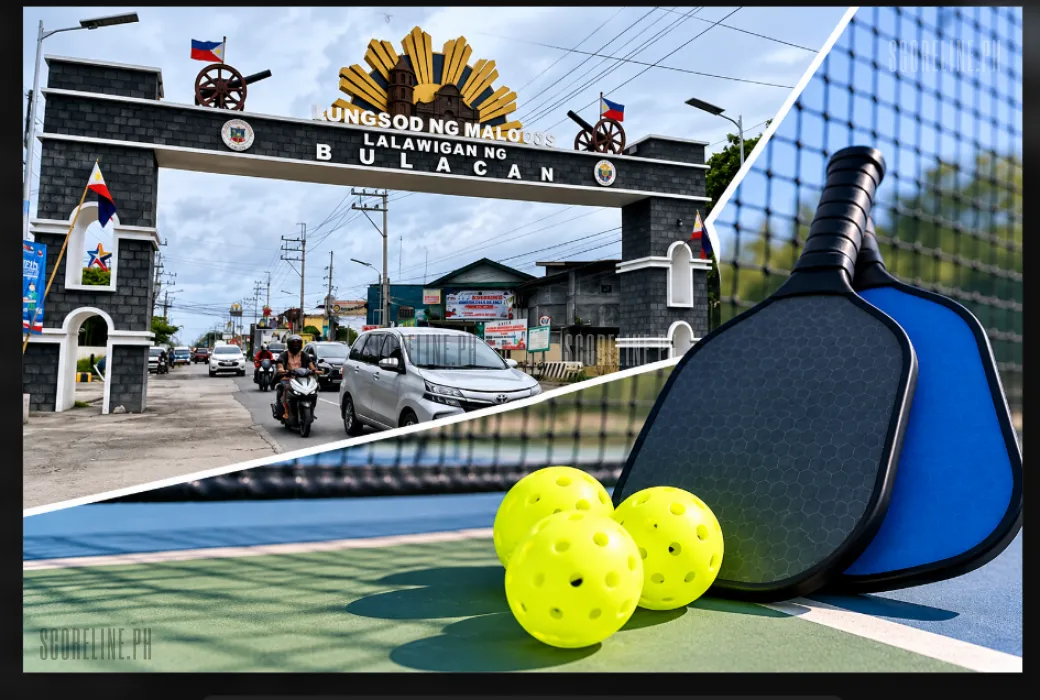
Over 80 Teams Join Historic League as Province of Bulacan Embraces New Sports Movement

6
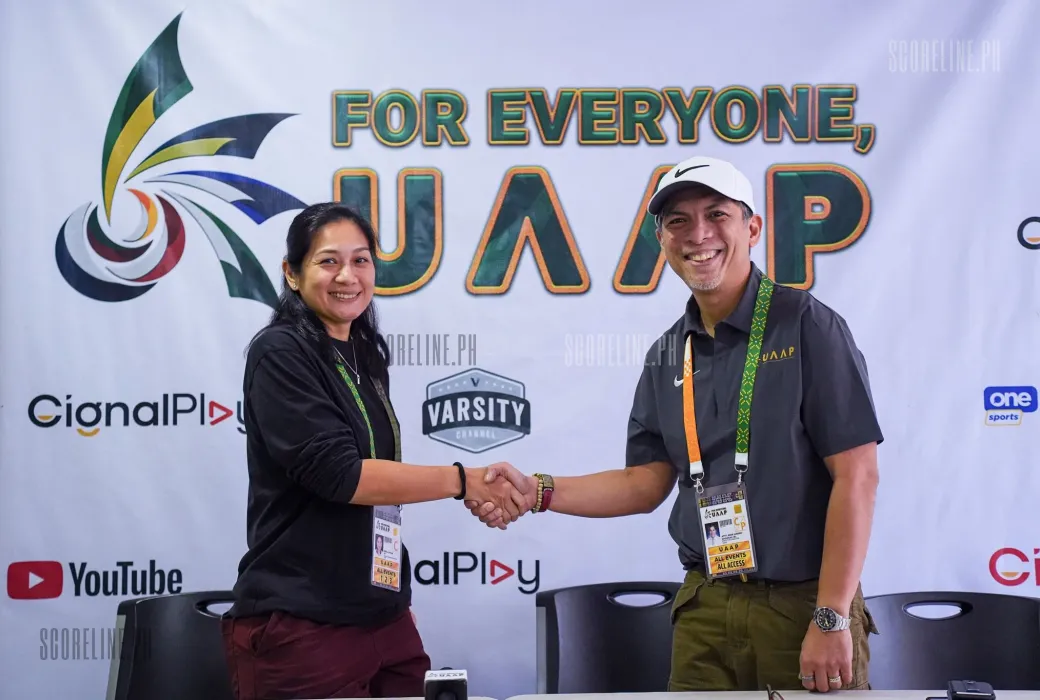
UAAP

SBP Taps NBA 2K Tournament to Discover Future eGilas Stars

11
FB Post of Michael Martinez

The ice king is back Michael Christian Martinez announces comeback at 30!

8
pnvf

New leadership structure. Bigger responsibilities. One mission: Build a stronger Alas Pilipinas

4
Senate Committee on Sports

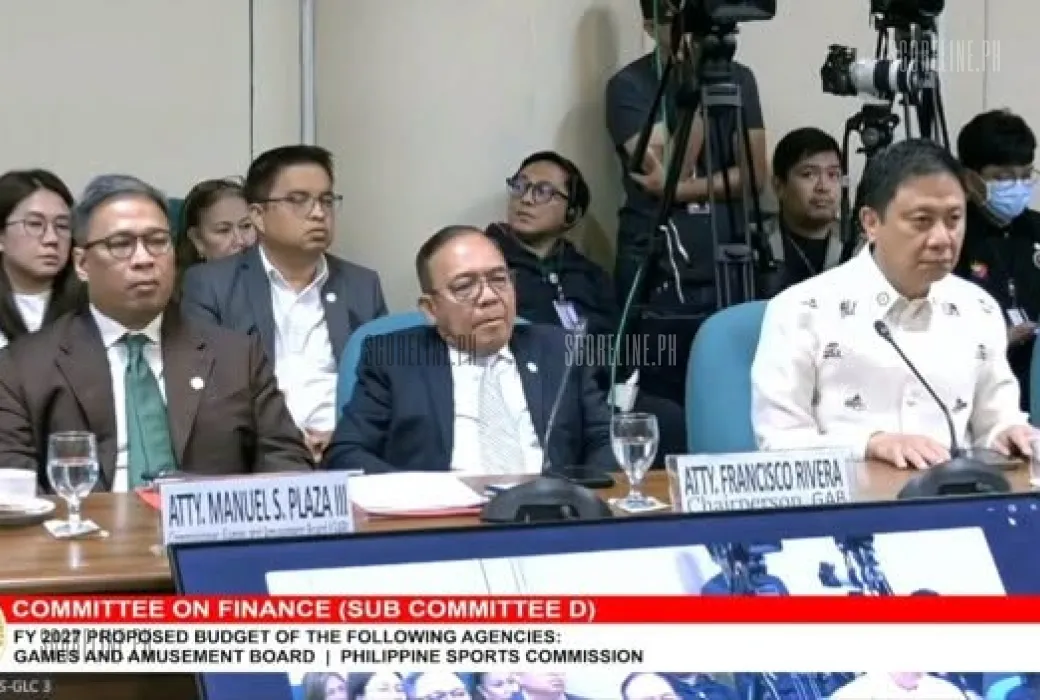
GAB's 2027 budget moves forward Athlete protection and illegal gambling under the spotlight

5
sposts officials

No allowance, but expected to win medals? Athletes deserve better

8
PSC Officials

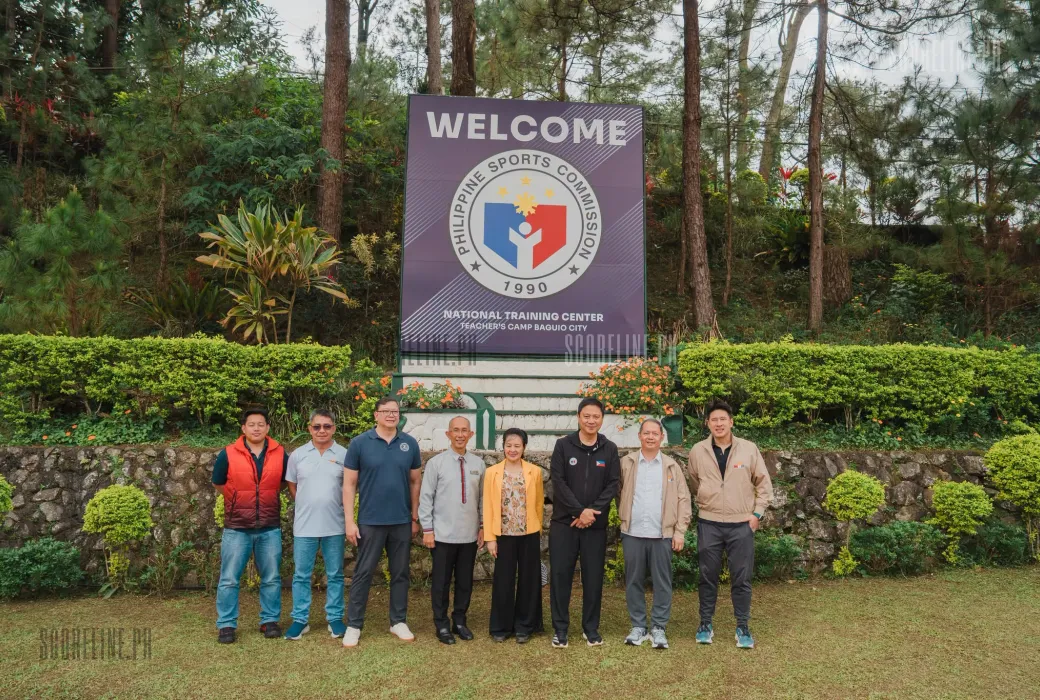
Baguio City Elevates Philippine Sports: World-Class Training Centers to Breed Future Champions

6
Efren Reyes

How Efren “Bata” Reyes Put Philippine Billiards on the World Map

12
Alex Eala & Snow Badua

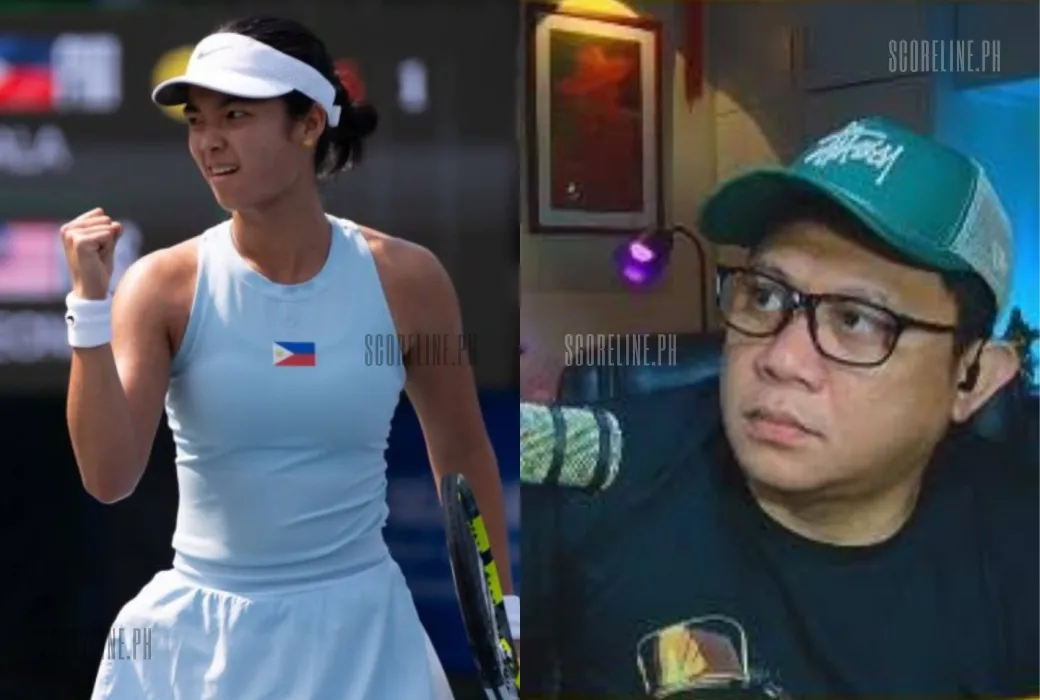
Snow Badua to Alex Eala: Fame is temporary. Your game is your foundation.

6
LA2028 Logo

Earn Your Way In: The Brutal Road to LA28

6
PICKLEBALL

PH to become Asia's next pickleball powerhouse?

7
tim cone and bennie boatwright

Can Bennie Boatwright Become the Missing Piece in Philippine Basketball's Comeback?

8
June Mar Fajardo

June Mar Fajardo confirmed that his retirement from Gilas Pilipinas is Final

5
Alyssa Solomon

Alyssa Solomon Takes Another Bold Step in Her International Volleyball Journey

8
Coach Tim Cone

Gilas Pilipinas Asian Games Gold Defense Crippled by Missing Stars - Tim Cone

7
Eya Laure

Eya Laure Powers Choco Mucho, Sends Championship Warning to PVL Rivals

6
Batang Pinoy Logo

Bacolod Ready to Welcome Future Champions as 200+ LGUs Join Batang Pinoy 2026

12
EJ Obiena

Winning Medals is not enough - EJ Obiena

8
Carl Jammes Martin

Carl Jammes Martin Faces Mexican Powerhouse Alan Picasso in Career-Defining Riyadh Showdown

8
Premier Volleyball League

PVL's 10th Season Ushers in New Era in Cebu City

93
Alex Eala

The True Cost of Patriotism: Alex Eala’s Silent Battle with the Rulebook

11
Philippine Team

The Pinoy Athlete’s Curse: Why is Funding Always Lighter Than the Praise?

25
Aleah Finnegan

Beyond the Olympics: Aleah Finnegan is Building the Next Generation of Philippine Gymnastics

14
Senator Bong Go

The future of athlete's must never become collateral damage in sports politics

11
Justin Brownlee

Gilas Pilipinas did not just lose a star. It lost the heart of its championship identity.

8
Maria Sharapova and Alex Eala

Alex Eala’s obsession with perfection: The mindset behind the rise of a Filipino tennis star

12
Monico Puentevella

Philippine Olympic Committee should stay out of NSA affairs - Puentevella

4