All news tagged AllAthletes

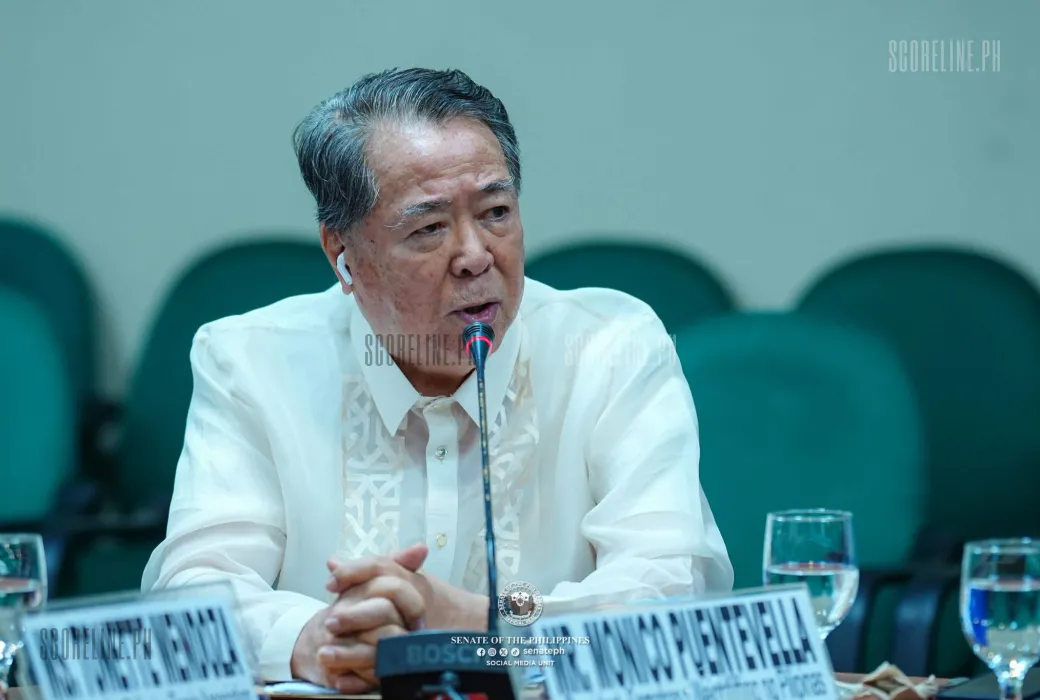
Monico Puentevella

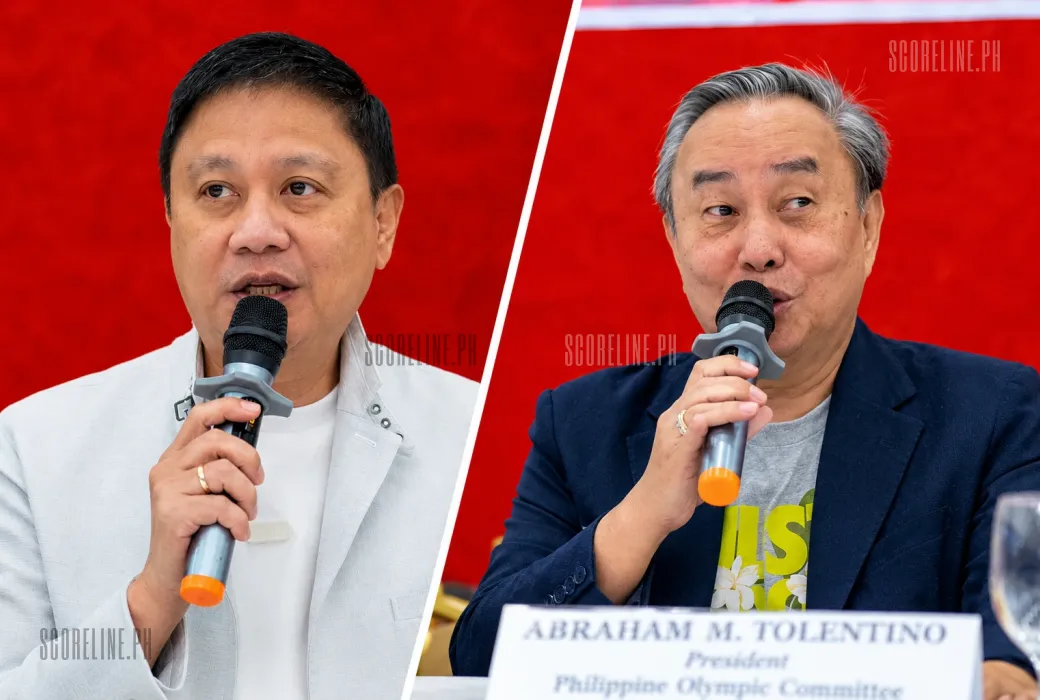
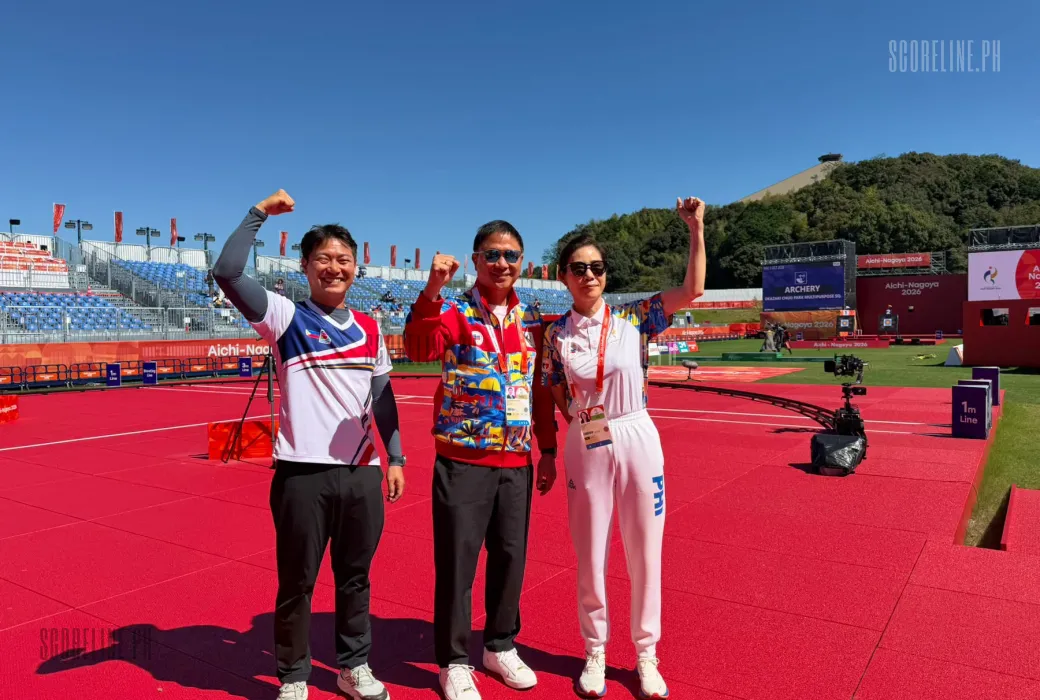
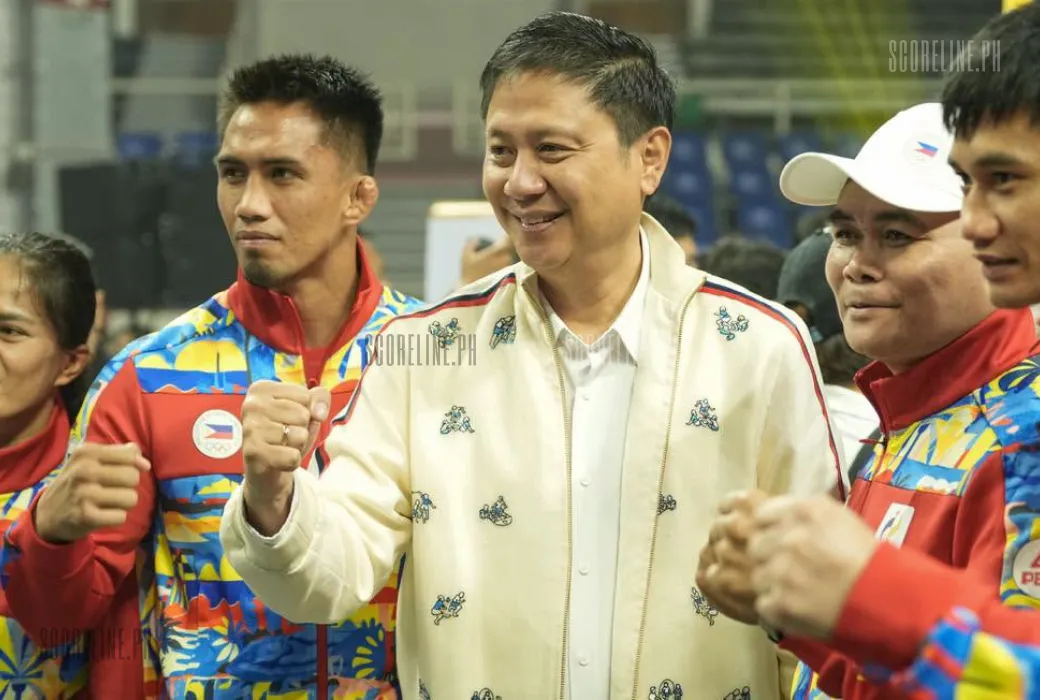
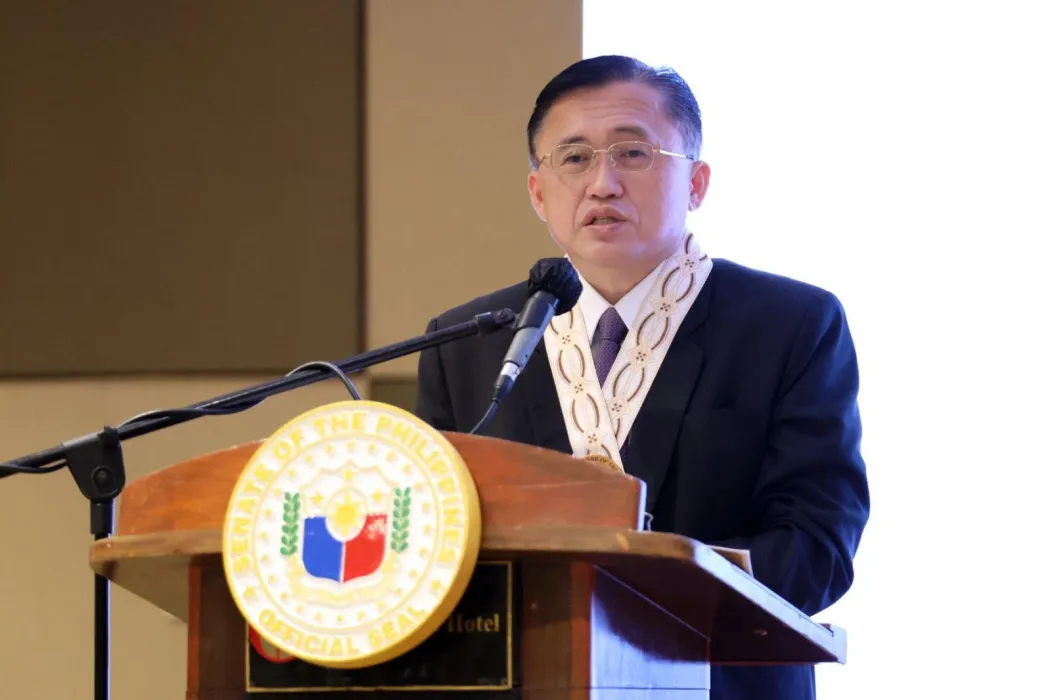
Philippine Olympic Committee should stay out of NSA affairs - Puentevella

When sports leaders clash over power, one question must never get lost: Who is making sure the athletes win?

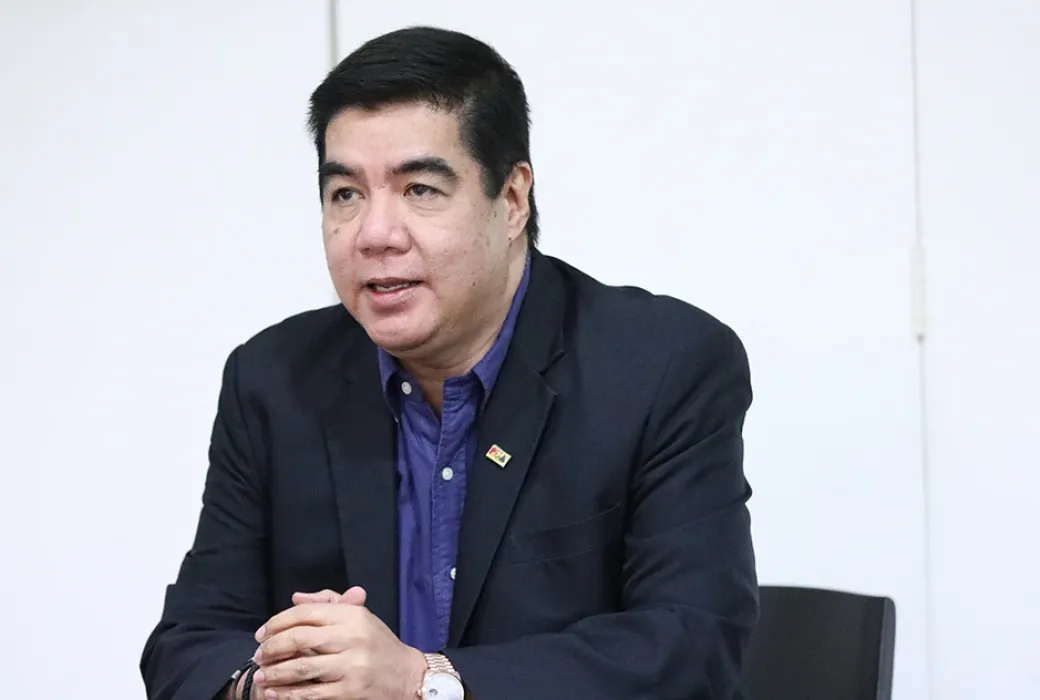
The battle lines are being drawn in Philippine sports, and weightlifting president Monico Puentevella has delivered a pointed message to the Philippine Olympic Committee, especially to its president, Abraham Tolentino, to stop interfering in the affairs of National Sports Associations or NSA's.

Speaking at a Senate sports hearing, Puentevella accused the POC of meddling in weightlifting and volleyball. He even linked alleged interference to the Philippines’ medal-less weightlifting campaign at the 2024 Paris Olympics, claiming that two potential medalists were affected.

Those are serious allegations—and they deserve serious scrutiny.

But beyond the accusations lies a bigger issue that Philippine sports can no longer afford to ignore: When sports leaders fight over authority, who ultimately pays the price?

The athletes do.

They are the ones who spend years training, sacrifice time with their families, endure injuries, and carry the country’s flag into international competition. They cannot afford to have their preparation and opportunities caught in the middle of leadership disputes.

Another is the volleyball controversy, which adds another layer to the debate. Puentevella also pointed to concerns surrounding Alas Pilipinas, following complaints from players about support during the 2026 Asian Games. 

Meanwhile, POC president Abraham “Bambol” Tolentino defended the organization, emphasizing its commitment to athletes and its role in shouldering expenses when government funding was delayed.

Both sides have made their positions clear. The next step should be to establish the facts, examine the decisions made, and determine whether the athletes received the support they needed.

Philippine sports does not need another power struggle disguised as a fight for its future. It needs accountability, coordination, and leadership that puts athletes ahead of organizational pride.

The Philippine Sports Commission, meanwhile, earned praise from Puentevella for its support of weightlifting. The weightlifting chief remains optimistic that the sport can deliver another Olympic medal at the 2028 Los Angeles Games.

That optimism is welcome. But Olympic medals are not built on confidence alone. They require long-term planning, quality coaching, scientific support, proper funding, and a stable environment where athletes can focus on competing—not on the politics surrounding their sport.

If the POC believes its interventions are necessary, it should be able to explain them transparently. If national sports associations believe their independence is being undermined, they should present evidence and pursue accountability through the proper channels.

Neither side should be above scrutiny.

The real measure of leadership is not who controls Philippine sports. It is whether Filipino athletes are given every fair opportunity to succeed.

With LA 2028 approaching, the country cannot afford to waste time and resources on disputes that leave athletes wondering who is truly in their corner.

The mission should be bigger than any president, federation, or committee.

Less politics. More preparation. Less infighting. More medals. And always, athletes first.

09.10.2026
PSC Chair Patrick Gregorio & POC Pres. Abraham Tolentino

The real story behind Team Philippines’ Aichi-Nagoya campaign

Four gold medals. Nine silvers. Sixteen bronzes. Twenty-nine medals in all.

For Philippine Olympic Committee President Abraham “Bambol” Tolentino, however, the nine silvers told another story.

They represented medals that, in his view, could have easily changed the color of the Philippines’ Aichi-Nagoya campaign.

The target was eight golds. The country won four. But Tolentino insists the eight-gold projection was never unrealistic.

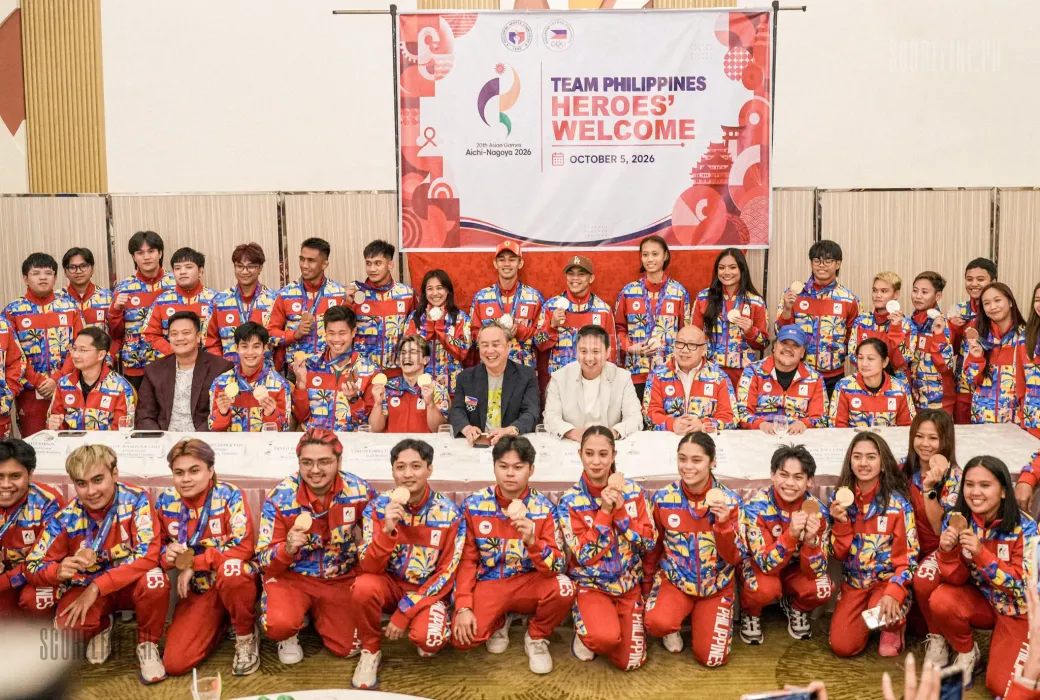
“I can say that hindi ko pwedeng ikahiya na kaya talaga yung eight [gold medals],” Tolentino said during the Team Philippines homecoming press conference in Manila yesterday.

And his explanation was simple. “Doon lang tayo pipitas sa silver.”

Team Philippines matched its four-gold haul from the 2018 Jakarta-Palembang and 2022 Hangzhou Asian Games, with Carlos Yulo winning two golds in gymnastics, EJ Obiena taking pole vault gold and Jeus Yape capturing the country's historic virtual taekwondo gold.

But the POC chief believes the tally could have been much higher.

He pointed to Carlo Paalam's silver medal, as well as silver-medal finishes in jiu-jitsu and taekwondo, where he questioned the impact of officiating and referee decisions.

“Kay Paalam, nakita niyo naman. 'Di ba? Kayo na humusga doon. That's a sure gold,” Tolentino said.

He also cited two jiu-jitsu and taekwondo silver medalists who, according to his account, received zero scores from referees in crucial moments.

Then there was MMA fighter Saclag.

Tolentino believed the young Filipino simply became too aggressive in the final, but still saw something more valuable beneath the silver medal.

“May nakatago yung silver niya,” he said.

In other words, Tolentino was not looking at nine silver medals as nine failures to win gold. He was looking at nine opportunities that came agonizingly close to becoming victories.

Tolentino went even further, pointing to Victoria Bossong's bronze in the women's 800 meters. Bossong topped the preliminary heats in 2:02 but clocked 2:04 in the final.

For Tolentino, the performance raised another “what if.”

“One bronze that should have been gold, with due respect to Victoria,” he said.

His point was clear: the eight-gold projection was not simply a number pulled from thin air.

Several Filipino athletes entered Aichi-Nagoya with legitimate medal chances.

Some delivered gold. Others came home with silver. Some narrowly missed the podium altogether. That is the brutal mathematics of elite sport.

Strip away the gold-medal argument for a moment and another number demands attention.

It was the Philippines' biggest Asian Games medal haul in six decades, dating back to the 1966 Bangkok Asiad.

That makes the conversation more complicated than simply asking why the country fell four golds short of its target.

The more revealing question may be. How many of those 25 non-gold medals can Philippine sports eventually turn into gold?

That is where the real work begins. Because silver means the athlete is already close.

Bronze means the athlete has already broken through the highest level of continental competition. The challenge now is converting proximity into dominance.

Meanwhile, PSC Chairman Patrick “Pato” Gregorio sees reason for optimism beyond the medal count.

He noted that several of the country's medalists are only 20 years old or younger.

For Gregorio, that is one of the most encouraging takeaways from the Games.

“Talagang mga bata. Talagang very promising,” he said, pointing to the development programs being built for the next generation.

The next steps include grassroots initiatives, regional training centers and the Southeast Asian Games Youth Plus scheduled in December.

That matters because medals at the senior level are rarely created overnight.

They are built years earlier—in school gyms, local training centers, provincial competitions and youth programs.

The athletes standing on the Asian Games podium today can become the foundation of the Philippine team of tomorrow.


PSC Chair, Gregorio also had a message for the athletes amid the social-media criticism surrounding the four-gold haul.

Don't let the noise become bigger than the achievement.

“Tuloy-tuloy po ang suporta namin sa inyo,” Gregorio said.

His message was particularly relevant in an era where every medal is immediately dissected online and every missed opportunity can become a target for criticism.

Athletes see those comments. They read them. But their job is still the same: train, compete and represent the Philippines.

Perhaps the biggest significance of Aichi-Nagoya is that many of the sports where the Philippines won medals are also part of the Olympic program.

For Tolentino, that makes the Asian Games performance an important indicator heading toward the 2028 Los Angeles Olympics.

The objective is no longer simply to collect medals at one continental Games.

It is to build athletes capable of competing—and winning—on the world's biggest sporting stage.

That requires sustained investment. It requires international exposure. It requires world-class coaching, sports science, facilities, recovery and competition opportunities. And it requires funding.

Gregorio said the next crucial battle for Philippine sports will not take place inside an arena. It will take place in the halls of Congress.

Sports officials are preparing to defend their budget before the Senate, with funding needed for the 2027 Southeast Asian Games, SEA Games Youth Plus, Asian Beach Games and the Los Angeles Olympics.

The message from the PSC is straightforward:

The athletes have shown what they can do. Now the system has to keep up.

Under Republic Act No. 10699, an Asian Games gold medal carries a P2-million incentive, while silver medalists receive P1 million and bronze medalists P400,000.

Those rewards recognize the athletes' achievements. But incentives alone cannot build an Olympic pipeline. That requires long-term investment.

So, did Philippine sports fall short in Aichi-Nagoya?

If the only measure is the eight-gold projection, then yes. But if the question is whether the country produced a competitive, medal-producing team capable of challenging Asia's best, the 29-medal haul paints a much broader picture.

Four golds matched the country's recent Asian Games high. Nine silvers showed how close several athletes came to the top.

Sixteen bronzes demonstrated the breadth of the country's medal-producing program. And the presence of young athletes on the podium suggests that this may not be the finished product. The goal should not be to celebrate four golds as though the work is done.

Nor should it be to dismiss 29 medals as though nothing was accomplished. Both can be true: Philippine sports made progress—and Philippine sports still has a lot more to prove. The silver medals are not excuses.

They are targets. The bronze medals are not consolation prizes. They are starting points. And the four golds are not the ceiling.

They are the standard that the next generation must be challenged to surpass. Aichi-Nagoya is over.

The road to Los Angeles has already begun.
06.10.2026
New Games in Asian Games

The Asian Games Just got wilder as Aichi-Nagoya,welcomes new generations of Sports

The Asian Games has changed—and Aichi-Nagoya 2026 already make that shift impossible to ignore.

For decades, the continent’s biggest multi-sport event has been built around established disciplines such as athletics, swimming, gymnastics, boxing and traditional team sports.

But at the 2026 edition, the definition of what belongs on the Asian Games stage is getting much broader.

Combat sports, digital technology, action sports and emerging racket disciplines are taking center stage, reflecting the changing interests of a younger generation of athletes and fans.

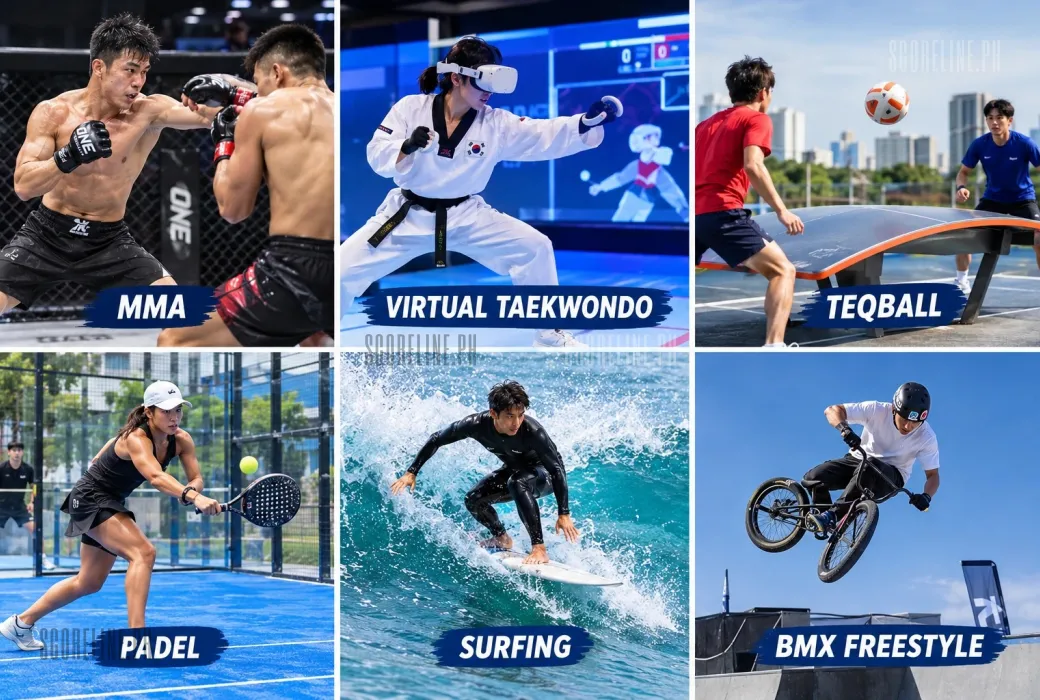
Mixed martial arts, virtual taekwondo, teqball, padel, surfing and BMX freestyle are among the new disciplines featured at Aichi-Nagoya, while sports such as chess, bridge, Go, xiangqi and dragon boat racing are no longer part of the programme.

The result is a Games that looks—and feels—different.

Perhaps the biggest addition is mixed martial arts, bringing full-contact combat into an Olympic-affiliated continental multi-sport event for the first time.

MMA featured six medal events divided between Modern and Traditional formats, testing athletes in striking, ground control, wrestling and submissions.

The competition held over just three days at the Nagoya City Inae Sports Centre, adding another challenge as fighters balance preparation, intensity and recovery.

Its inclusion is more than simply another medal opportunity.

It is a sign of MMA's growing recognition across Asia.

Then comes one of the most unconventional additions: virtual taekwondo.

Instead of athletes physically striking one another, competitors use VR headsets and motion sensors to control digital avatars in a virtual arena.

There are no weight divisions and no gender categories because there is no physical impact.

Sixteen athletes will compete in a single knockout bracket at Toyohashi Gymnasium.

The concept may look radically different from conventional taekwondo, but the athletes still have to react, move, attack and defend in real time.

It is perhaps the clearest example yet of the Asian Games experimenting with what sport can look like in a digital era.

Football gets a completely different twist with teqball.

Played on a curved table using a standard football, competitors can use their head, chest, legs and feet—but not their hands.

Players have three touches to return the ball, with the sport demanding a combination of football technique, balance, precision and quick reactions.

Its growing popularity across Asia has created another pathway for football-loving nations to compete for continental medals.

In other words, football doesn't need a massive stadium to become a medal sport. Sometimes, all it needs is a curved table.

Padel is another sport rapidly expanding across Asia and making its Asian Games debut at Aichi-Nagoya.

Played exclusively in doubles on an enclosed court surrounded by glass and mesh walls, padel keeps the ball in play in ways that traditional tennis does not.

The walls become part of the game. Instead of simply overpowering opponents, players must rely on reflexes, positioning, anticipation and tactical awareness.

Its rise across countries such as Japan, the UAE, Qatar and Kuwait shows that padel is no longer merely a niche club sport.

It is becoming a serious competitive discipline.

While most Asian Games sports take place inside stadiums, surfing takes the competition into the open ocean.

The surfing events will be staged at Pacific Long Beach on the Atsumi Peninsula, where athletes will have to deal with natural waves and changing conditions.

Judges assess speed, power, flow and the difficulty of manoeuvres. Unlike a controlled indoor venue, athletes cannot control the playing surface.

The ocean is part of the competition.

And with the event also carrying significance on the road toward Los Angeles 2028, every wave can potentially carry much greater importance than a single Asian Games medal.

Then there is BMX freestyle park, where speed takes a back seat to creativity and execution.

Riders have 60-second runs to showcase their biggest jumps, most difficult tricks and most creative lines across ramps and obstacles.

Judges reward amplitude, difficulty and variety. It is a sport where athletes aren't simply racing against opponents.

They are effectively competing against gravity—and against the limits of what their bikes can do.

Its inclusion places BMX freestyle alongside the growing family of action sports that have transformed the traditional image of major multi-sport competitions.

The contrast is striking. Some traditional mind and cultural sports—such as chess, bridge, Go and xiangqi—are out.

In their place are disciplines built around speed, technology, spectacle, creativity and youth culture.

That does not necessarily mean tradition is being abandoned.

Instead, Aichi-Nagoya 2026 appears to be testing how a continental sporting event can remain relevant to the next generation.

The question is no longer simply: What sports have always belonged at the Asian Games?

It is becoming what sports will define the future of Asian sport?

MMA fighters competing inside a cage. Taekwondo athletes battling digital avatars.

Football players mastering a curved table. Padel players using glass walls to extend rallies.

Surfers battling the Pacific. BMX riders flying above ramps.

These sports may look wildly different from one another.

But they share one thing: they are changing the way sport is played, watched and experienced.

And that may be the biggest story behind their arrival at Aichi-Nagoya.

The Asian Games are no longer simply preserving the sporting traditions of the past. They are also making room for the sports of the future.

The next generation isn't waiting for sport to stay traditional. They're changing the definition of it.

06.10.2026
Philippine Team

Aichi-Nagoya was a Statement. Now, the Philippines must Build on it

Four golds, 29 medals and the Philippines’ best Asian Games haul in 64 years have given the country something bigger than a celebration—a reason to rethink what Filipino sports can become.

The medals are home.

The athletes have returned from Japan carrying four golds, nine silvers and 16 bronzes, completing a 29-medal haul that PSC Chairman John Patrick C. Gregorio described as the Philippines’ best Asian Games performance in 64 years.

But perhaps the biggest takeaway from Aichi-Nagoya is not the number of medals.

Aichi-Nagoya gave Philippine sports a moment to celebrate. But it can also become something much bigger.

A reminder that Filipino athletes are not short on ability. What matters now is building an environment where that ability can consistently reach its potential.

The athletes have made their statement. Now the system has to make its own.

Because if the Philippines truly wants to become a multi-sport nation, the goal cannot simply be to celebrate champions when they come home.

It is the reminder of what Filipino athletes can accomplish when talent is matched with preparation, opportunity and the chance to compete on the biggest stage.

This should be more than a celebration. It should be a wake-up call.

Carlos Edriel Yulo once again showed the extraordinary ceiling of Filipino gymnastics, turning difficult routines into gold-medal performances.

EJ Obiena continued to proves that the Philippines can produce world-class athletes even in disciplines traditionally outside the country's sporting spotlight.

And they were not alone. Across the courts, fields, rings, pools and tracks of Aichi-Nagoya, Filipino athletes fought for every point, every second and every centimeter.

Some won medals. Others fell short of the podium.

But collectively, they delivered a message that should be impossible to ignore:

The Philippines has the talent. The Philippines has the heart. The Philippines has athletes capable of competing with Asia's best.

The danger after a successful campaign is believing the job is finished. It isn't.

The medals are coming home, but the athletes who won them will eventually move on. Behind them is another generation—young athletes training in schools, local gyms, community courts and provincial facilities—waiting for its opportunity.

And that is where Philippine sports faces its next challenge.

Can the country provide the facilities, coaching, grassroots programs, equipment, competition exposure and long-term support needed to turn promising youngsters into international champions?

Because developing athletes should not begin only when they are already winning medals.

The system has to find them before they become champions—and build them into champions.

The calendar is already moving. The SEA Games are next.

Then comes the SEA Games Youth Plus, where the country's emerging athletes will get another opportunity to prove themselves.

And beyond that sits the enormous stage of the Los Angeles 2028 Olympics.

The next Carlos Yulo could already be training somewhere in the Philippines.

The next EJ Obiena could already be clearing a bar. The next champion could already be dreaming.

The question is whether the country will give that athlete enough reason to keep dreaming—and enough support to turn that dream into reality.

The goal should be to create more of them. From Aichi-Nagoya to Los Angeles, the fire is burning. Now, let's build something that keeps it alive.

06.10.2026
Aichi-Nagoya Japan

Japan has built a reputation for precision, efficiency and world-class sporting events

WHEN THE GAMES BECAME THE STORY, AICHI-NAGOYA’S ORGANIZATIONAL NIGHTMARE

THE ATHLETES CAME TO MAKE HISTORY. INSTEAD, THE ORGANIZERS SOMETIMES BECAME THE HEADLINE.

But after the curtain fell on the 2026 Aichi-Nagoya Asian Games, it was the Games’ organizational problems—not just the medals and records—that dominated much of the conversation.

The continental showcase officially closed on October 4, ending two weeks of extraordinary athletic performances that included world and Asian records.

Yet alongside the sporting brilliance came a long list of logistical headaches: accommodation shortages, transport failures, airport delays, anthem mix-ups and complaints over cramped athlete housing.

For some officials, the problems were serious enough to warrant a failing grade.

“If I were to give them a grade, it would be an F,” Korean Sport and Olympic Committee president Ryu Seung-min said during the Games.

One of the most controversial decisions was the decision not to build a traditional Athletes' Village.

Instead, organizers relied on hotels, a cruise ship and temporary container accommodations to house thousands of participants.

The scale was enormous: roughly 17,000 athletes and officials took part, making the Asian Games larger in participant numbers than the upcoming Olympics.

The alternative housing system quickly became a source of complaints.

Some athletes assigned to the container units reported leaking water and beds that were too short, while others staying aboard the cruise ship raised concerns over accommodation and meals.

What was presented as a cost-conscious and environmentally minded approach instead became one of the defining controversies of the Games.

Then came transportation. Athletes reported delayed or missing shuttles, while some teams were taken to the wrong locations.

South Korea's football team arrived late for a match after its bus driver got lost. Its basketball team reportedly missed a scheduled shootaround because its shuttle did not arrive.

In another mix-up, a bus assigned to South Korea picked up Pakistan's team instead, while Pakistan's designated bus collected the South Koreans.

For elite athletes working around tightly scheduled training, recovery and competition windows, those aren't minor inconveniences.

Timing is part of performance. Perhaps the most striking mistake came before a men's hockey match involving South Korea.

Instead of South Korea's anthem, organizers played the North Korean national anthem.

The organizing committee apologized, while the Korean Sport and Olympic Committee lodged a formal complaint and demanded measures to prevent a repeat.

It was one of several protocol problems reported during the Games, including an issue with South Korea's flag during the men's football medal ceremony.

There was another uncomfortable sight: sparse crowds at some venues.

The Games struggled to generate consistently strong attendance, with reports of empty sections even as athletes delivered world-class performances.

The contrast was striking. On the field, track, pool and courts, records were falling.

In the stands, thousands of seats remained empty.

The story, however, is not entirely one-sided. The Olympic Council of Asia defended the Games as a success, pointing to strong viewership, increased revenue and a remarkable haul of 54 world records and 89 continental records. The event also avoided leaving behind a massive new permanent sports complex burden.

And the athletes themselves delivered spectacular moments.

Teenage stars emerged. Records fell. New sports made their Asian Games debut. Champions were crowned.

The sporting product survived.

The question is whether the organizational experience matched the standard expected from Japan. That may be the bigger legacy of Aichi-Nagoya.

Japan has previously hosted major global sporting events, including the Tokyo 2020 Olympics, but that edition was followed by controversies over costs and a bribery scandal. Public resistance also contributed to the shelving of Sapporo's bid for the 2030 Winter Olympics.

The Aichi-Nagoya experience now gives future Japanese hosting ambitions another issue to confront: trust.

Can athletes trust the transportation system? Can delegations trust their accommodations? Can teams trust that basic protocols will be handled correctly?

And can the country convince the international sporting community that it is ready to take on another mega-event?

Those questions will not be answered by one bad bus ride or one anthem mistake.

But when the problems keep piling up, they become more than isolated incidents.

The athletes came to compete. Japan came under a microscope.

And after Aichi-Nagoya, the next bid may have to prove that the country can once again make the organization of sport as impressive as the sport itself.

05.10.2026
Senator Bong Go

Senator Bong Go Sounds Alarm Over Sports Infrastructure in 2027 Budget Deliberations

What happens when world-class athletes are forced to train in facilities that are anything but world-class?

That question is at the heart of Senator Christopher “Bong” Go’s push for stronger government funding for Philippine sports infrastructure as the Senate tackles the proposed 2027 national budget.

The chairperson of the Senate Committee on Sports and Youth Development, called for adequate funding to upgrade and modernize training facilities, stressing that Filipino athletes need more than talent and determination to compete at the highest level.

The senator has repeatedly raised concerns over the condition of sports facilities, including the need to improve major training venues such as the Rizal Memorial Sports Complex and PhilSports Arena. In previous budget deliberations, he pointed to the importance of providing athletes with proper training environments, equipment, nutrition and other forms of support.

During the 2027 budget discussions,Senate Committee Chair on Sports and Youth Development Bong Go raised concerns over funding for sports infrastructure, including changes involving convergence funds previously lodged under the Department of Public Works and Highways (DPWH).

The discussion puts the Philippine Sports Commission (PSC) and other agencies at the center of the question of how sports facilities will be funded and developed moving forward.

For Sen. Go, the issue goes beyond buildings and playing surfaces. A champion needs somewhere to become a champion.

Training halls, gyms, equipment and athlete facilities form the foundation of preparation long before an athlete steps onto an international podium.

Sen. Bong Go has also pushed for bringing quality sports training closer to young athletes outside Metro Manila.

His advocacy includes expanding access to the National Academy of Sports (NAS) through regional campuses, particularly in the Visayas and Mindanao, so promising athletes would not have to relocate simply to access specialized sports education and training.

The proposal reflects a broader push to strengthen the grassroots pipeline and give athletes from the regions greater opportunities to develop their skills.

The Philippines has repeatedly shown that Filipino athletes can compete—and win—against the world's best.

But the next generation needs more than inspiration. They need facilities. Equipment. Training centers. Coaches. Support.

And as Congress works through the proposed 2027 spending plan, the debate over sports funding puts a fundamental question on the table: If the Philippines expects world-class performances, can its training facilities be allowed to fall behind?

For Go, the answer is clear: investment in sports infrastructure must be part of building the country's next generation of champions.

05.10.2026
POC President Abraham Tolentino

From the podium to the leadership table

The Philippines didn’t just leave Aichi-Nagoya with medals.

IT ALSO LEFT ITS MARK IN ASIAN SPORTS LEADERSHIP.

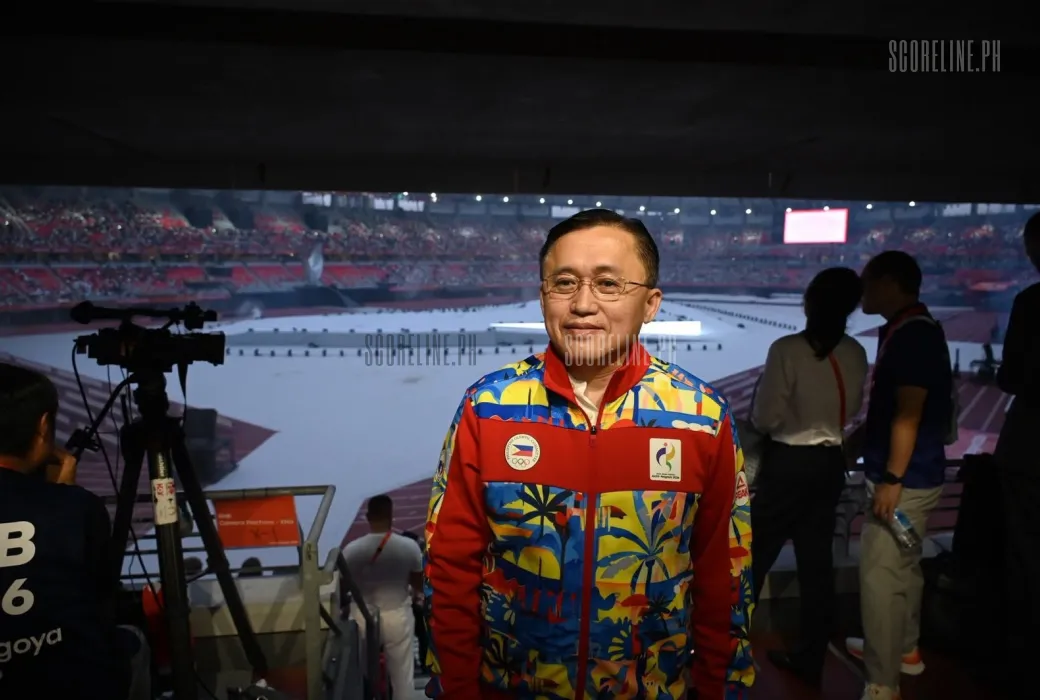
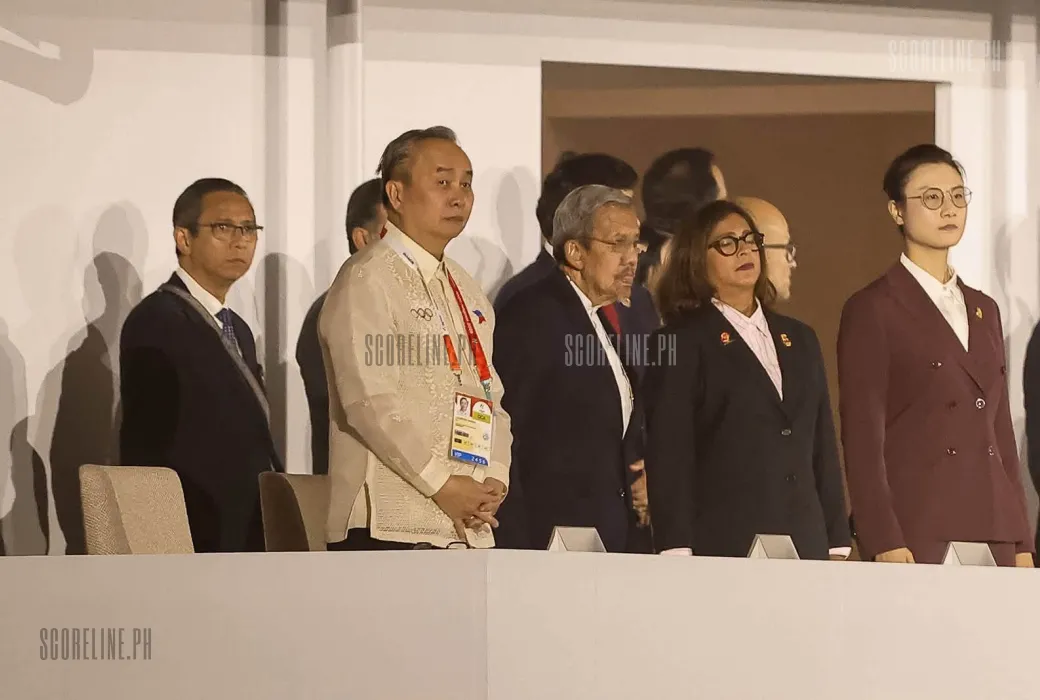
Philippine Olympic Committee President and Olympic Council of Asia Executive Board Member Abraham “Bambol” Tolentino attended the closing ceremony of the 20th Asian Games at the Nagoya City Mizuho Park Athletics Stadium on Sunday, October 4.

Seated alongside fellow OCA Executive Board Member HRH Prince Sufri Bolkiah of Brunei, Tolentino represented the Philippines as the continent’s biggest multi-sport event came to a close.

On the field, Team Pilipinas finished with 4 GOLD, 9 SILVER, AND 16 BRONZE MEDALS in Olympic disciplines.

But beyond the medal count, the closing ceremony also underscored something else:

THE PHILIPPINES HAS A SEAT AT THE TABLE OF ASIAN SPORTS GOVERNANCE.

Athletes fight for medals.

Leaders help shape the environment in which those athletes compete.

And as the Asian Games flame goes out in Nagoya, the work continues—not just for the next medal, but for the next generation of Filipino athletes.

THE GAMES MAY BE OVER.
THE MISSION ISN’T.

04.10.2026
Asian Games Closing

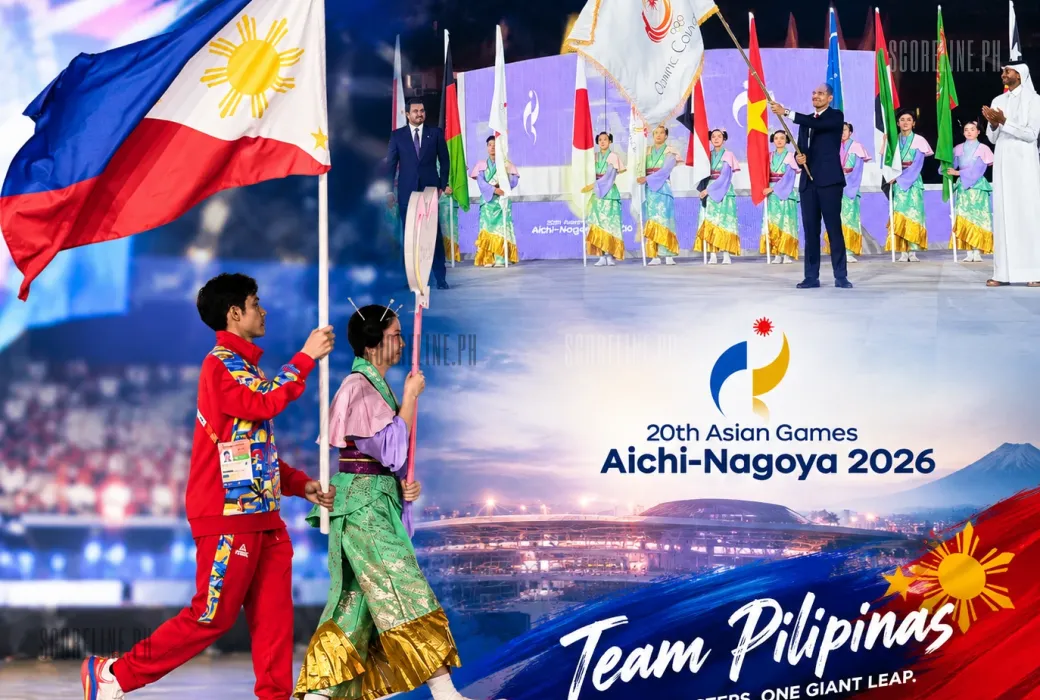
Small steps. One giant leap

THE MEDALS TELL ONE STORY. THE FIGHT BEHIND THEM TELLS ANOTHER.

29 Medal, A haul of hard-earned bronzes.

At the 20th Asian Games in Aichi-Nagoya, Team Pilipinas stood against Asia’s finest in a competition where 50 world records and 11 junior world records fell.

The bar was higher than ever. The competition was relentless. Yet Filipino athletes kept fighting, proving that the Philippine flag belongs on the biggest sporting stages.

From the track to the ring.
From the pool to the mats.
From the court to the field.

Every medal carried sacrifice. Every victory carried pride. And every athlete who wore the national colors carried the hopes of a nation.

NOT EVERY HERO CAME HOME WITH GOLD. NOT EVERY BATTLE ENDED IN VICTORY. BUT EVERY ATHLETE WHO GAVE EVERYTHING FOR THE FLAG DESERVES OUR RESPECT.

Behind these performances were coaches, families, sports officials, and supporters who helped make the journey possible.

Now, the Asian Games flame has gone out. But the fire of Philippine sports must burn brighter.

The SEA Games are next. AIMAG awaits. And beyond them lies the enormous challenge of LA 2028.

The mission is bigger than medals. It is about building stronger programs, giving athletes the support they deserve, and turning today's breakthroughs into tomorrow's Olympic dreams.

Because national pride should not end when the closing ceremony does. It should fuel the work that follows.

SMALL STEPS TODAY. ONE GIANT LEAP TOMORROW.

To every Filipino athlete who fought in Aichi-Nagoya: maraming salamat for carrying our flag with courage, heart, and pride.

You represented more than a country. You reminded us what Filipinos can achieve when given the chance to compete.

MABUHAY ANG ATLETANG PILIPINO! LABAN PILIPINAS!

04.10.2026
Brisbane Olympic

Brisbane 2032’s big reveal spoiled: Marketing win or planning blunder

AN OLYMPIC EMBLEM LEAKED THREE DAYS EARLY. THE ORGANIZERS CALLED IT A PUBLICITY OPPORTUNITY. BUT WAS IT REALLY PART OF THE PLAN?

Brisbane 2032 was supposed to have its big reveal on Monday. Instead, its Olympic and Paralympic emblem landed on the internet ahead of schedule—and forced organizers to explain what went wrong.

An explainer video intended to be released after a ceremonial unveiling briefly appeared on the Brisbane 2032 YouTube channel on Friday night, October 2. Screenshots quickly spread across social media, exposing the emblem before its planned official launch.

By Saturday, October 3, officials were holding a hastily arranged media conference to address the accidental leak.

Rather than treating the incident as a major setback, Queensland Olympic and Paralympic Minister Tim Mander and Brisbane 2032 chief marketing officer Brent Hill framed it as an unexpected opportunity to generate attention.

Hill said the publicity had been “incredible,” while acknowledging that organizers would have preferred the unveiling to proceed as scheduled.

That response raises a question: when a carefully planned Olympic reveal goes off-script, should viral attention be enough to call it a success?

The emblem features a pink cockatoo, an Australian bird, with its stylized colors resembling an Olympic and Paralympic flame. Its identity had been kept under wraps during a staged unveiling campaign across regional Queensland, where athletes and former Olympians—including swimming legend Ian Thorpe and cyclist Anna Meares—helped fuel speculation.

The guessing game was part of the buildup. Suggestions ranged from a crocodile’s tail to a mango, turning the emblem’s identity into a promotional mystery ahead of Monday’s event in Brisbane.

The early leak disrupted that carefully timed reveal. While the resulting online attention may have expanded the emblem’s reach, it also raises questions about the planning and digital controls behind a major international sporting event.

Still, the organizers insist the official unveiling will have more to offer. Hill said there is more to come on Monday, suggesting the event can still deliver beyond the images that surfaced online.

The real test is not how much attention a leaked emblem generates. It is whether Brisbane 2032 can turn that attention into a compelling identity for the Games—and deliver the organization expected of an Olympic host.

For now, the emblem is out. The planned reveal, however, is not over.

03.10.2026
2026 Asian Games Logo

The medals will be counted The records will be written The flame will go out

ONE LAST SHOW. 16 DAYS OF BATTLES. COUNTLESS STORIES TO REMEMBER.

But the stories of Aichi-Nagoya 2026? Those will live long after the closing ceremony.

As the 20th Asian Games prepare to close on Sunday, October 4, Japan is set to trade the intensity of competition for a night of music, celebration, and one final gathering of Asia’s finest athletes.

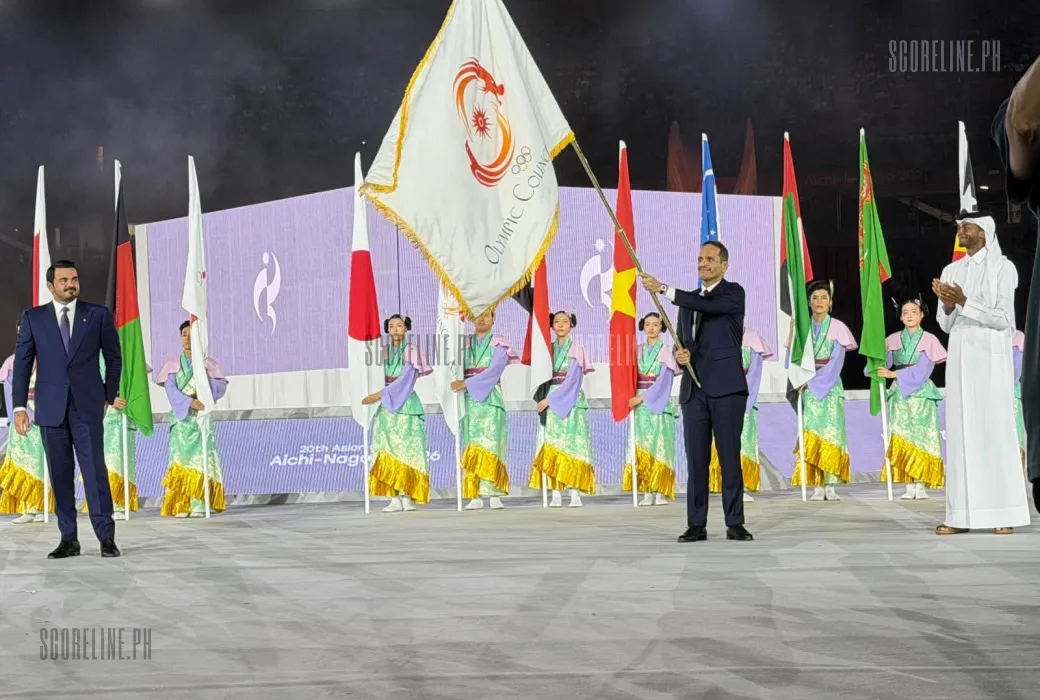
Performances from Japanese pop acts, the traditional parade of athletes, the extinguishing of the Games flame, and the handover of the Olympic Council of Asia flag to Doha, Qatar, will bring the 16-day sporting spectacle to its conclusion.

But for Filipino fans, the biggest show has already happened on the field of play. 🇵🇭

EJ Obiena soared to pole vault gold. Carlo Yulo delivered two gymnastics golds. Carlo Paalam fought his way to silver. Alex Eala secured another Asian Games tennis bronze.

And who could forget Jeus Gabriel Yape, whose virtual taekwondo gold added another historic moment to the Philippine campaign?

From Khylem Progella and Sofiah Pagara’s beach volleyball bronze to the medals won across combat sports, athletics, and other disciplines, Filipino athletes gave the country plenty of reasons to celebrate.

Not every campaign ended in triumph. Some fell short. Others came painfully close.

But sport has never been just about the podium. It is also about the fight, the setbacks, and the courage to represent the flag when the stakes are high.

Of course, the Games also leave questions about accommodation, transportation, and other organizational challenges. The celebration should not erase those concerns—or the lessons future hosts can learn from them.

We can celebrate the athletes while still demanding better sporting events. Both can be true.

Soon, the flame will be extinguished, and the spotlight will move to Doha, the next host of the Asian Games in 2031.

But the real legacy of Aichi-Nagoya will not be measured by one closing-night performance.

It will be measured by the records broken, the young athletes inspired, and the support these champions receive when they return home and begin preparing for their next battles.

THE GAMES MAY END. THE WORK OF BUILDING CHAMPIONS NEVER DOES.

03.10.2026
LA Olympics

The road to LA 2028 is already turning into a nationwide spectacle

50 STATES. ONE FLAME. ONE OLYMPIC DREAM 

Atlanta will make history as the first U.S. stop for the Olympic flame after it arrives from Greece, officially kicking off a torch relay unlike any the country has seen before. 🇬🇷➡️🇺🇸

And here's what makes it massive: the Olympic flame is set to travel through all 50 states.

From America's biggest cities to its smallest communities, the torch will bring the Olympic spirit directly to the people—turning the countdown to Los Angeles into a celebration far beyond the host city.

This isn't just about carrying a flame.

It's about carrying a symbol of sport, dreams, perseverance and unity across an entire nation.  

Atlanta gets the first chapter.

Los Angeles gets the grand finale.

But all 50 states get to be part of the story.

LA 2028 IS COMING—AND AMERICA IS GETTING READY TO CARRY THE FLAME.  


01.10.2026
PSC Chair Patrick Gregorio

Sometimes, a medal starts with a decision to invest.

“𝗧𝗢 𝗕𝗘 𝗧𝗛𝗘 𝗕𝗘𝗦𝗧, 𝗚𝗘𝗧 𝗧𝗛𝗘 𝗕𝗘𝗦𝗧.” 

For Philippine archery, that decision came when Philippine Sports Commission Chairman Patrick “Pato” Gregorio backed the hiring of two South Korean coaches with Olympic pedigree—Ryu Su Jeng and Hong Sung Chil.

The gamble paid off.

Less than 10 months after arriving in Manila, the Korean mentors helped reshape the national team’s training approach, with an emphasis on high-volume preparation, biomechanics, equipment tuning and pressure situations.

Then came Amaya Paz-Cojuangco.

At the 2026 Aichi-Nagoya Asian Games, the veteran archer broke through a 12-year Philippine archery medal drought—and came agonizingly close to gold.

Cojuangco dominated Iran’s Bita Asheghzadeh Oskouei, 146-135, in the quarterfinals before producing a stunning 142-141 victory over South Korea’s Park Jungyoon in the semifinals.

Suddenly, the Philippines had its first-ever Asian Games archery finalist.

In the gold-medal match, Cojuangco fought Indonesia’s Nurisa Dian Ashrifah arrow for arrow. The Indonesian eventually prevailed, 139-137, but the silver was already historic.

It surpassed Paul Marton Dela Cruz’s bronze in 2014 as the Philippines’ best-ever Asian Games finish in archery.

And behind the breakthrough was a philosophy Gregorio reportedly stood by: “If we want to be the best, get the best.”

When questions arose about the cost of bringing in elite foreign coaches, Gregorio recalled being told, “Chairman, how can we afford?”

His response: “That’s my problem. We will get corporate sponsors to share.”

That is the kind of gamble that changes a program.

No, the Philippines did not leave Japan with archery gold.

But it left with something potentially bigger: proof that investing in world-class knowledge can change what Filipino athletes believe is possible.

After 12 years without an Asian Games archery medal, Amaya Cojuangco has now put the Philippines back on the continental podium.

SILVER MEDAL. HISTORIC BREAKTHROUGH. AND PERHAPS THE START OF SOMETHING MUCH BIGGER.

01.10.2026
Pato Gregorio

Team Philippines is being challenged to aim higher - PSC Chair Gregorio

The message from the Philippine Sports Commission is clear: Team Philippines is not heading to Aichi-Nagoya just to compete—it is being challenged to aim higher.

With the 20th Asian Games and 5th Asian Para Games fast approaching, Filipino athletes and coaches received an added boost after PSC Chairman Patrick Gregorio announced an additional ₱6,000 allowance for every member of the delegation.

It may not be the biggest number attached to the campaign, but for athletes who have spent months training, traveling and sacrificing, every bit of support matters.

And Gregorio isn't stopping there.

The PSC chief revealed that should the Philippines surpass its four-gold-medal haul from the Hangzhou Asian Games, he will push for an additional reward for the entire delegation.

The Para athletes have an even bigger benchmark to chase: 10 gold medals, the number they won in Hangzhou.

Suddenly, Nagoya isn't simply about defending a medal count.

It's about beating it.

MORE THAN A NUMBER

Medal targets can sometimes feel like pressure.

Gregorio, however, framed the challenge differently.

His message to the delegation was that every athlete being sent to the Asian Games has the ability to win a medal—and potentially gold.

That belief could be just as valuable as any incentive.

For Filipino athletes, the road to the podium is rarely easy. Behind every medal are early mornings, long training sessions, injuries, financial sacrifices and countless moments when quitting would have been easier.

Now, they have another reminder that their efforts are being recognized.

FOUR GOLD? GO FOR MORE.

The Philippines returned from Hangzhou with four Asian Games gold medals.

It's a respectable haul.

But Gregorio wants the next chapter to be bigger.

Four is no longer the finish line.

The challenge is to surpass it.

For the Para delegation, the benchmark is 10 gold medals.

Those numbers are more than statistics. They represent previous victories—and a new standard for the athletes heading to Japan.

THE REAL PRIZE

The additional ₱6,000 allowance and possible rewards are welcome boosts, but the ultimate prize remains the same.

The podium.

The flag raised.

The national anthem playing.

The moment when years of sacrifice suddenly become worth it.

And perhaps most importantly, the realization that Filipino athletes belong among Asia's best.

Nagoya will eventually produce winners and losers. Some will return with medals. Others will return with lessons, heartbreak and motivation for another day.

But every athlete stepping onto the field of play will carry something bigger than a medal target.

They will carry the Philippines. 🇵🇭

Four golds?

Go beyond.

Ten Para golds?

Go beyond.

Because this time, the goal isn't simply to match what Team Philippines did before.

It's to prove that the next generation can do even more.

A new Asiad. A bigger challenge. A stronger Team Philippines.

And when the competition begins in Aichi-Nagoya, the message will be simple:

Don't just chase history. Make more of it.

10.09.2026
UAAP SEASON 89

UAAP clears the court for country as Season 89 makes room for national duty

The UAAP is making an important statement even before Season 89 officially gets underway: when the country calls, the league is willing to make room.

The University Athletic Association of the Philippines has scaled down its September men’s basketball schedule to just five game days, allowing several of its student-athletes to represent the Philippines in major international competitions.

With players set to suit up for Gilas Pilipinas squads in the 2026 Aichi-Nagoya Asian Games in Japan and the FIBA 3x3 Under-23 World Cup in Wuhan, China, the UAAP adjusted its calendar rather than force its young stars to choose between school and country.

It is a decision that puts a familiar school rivalry on pause—but places national pride front and center.

UAAP Season 89 men’s basketball tips off on September 13, with the defending champion De La Salle Green Archers facing the National University Bulldogs in the opening-day main event at the Smart Araneta Coliseum.

But unlike a typical September packed with collegiate basketball, the league will hold games on only five dates.

A schedule built around the flag

The UAAP will stage September games on:

September 13 — Smart Araneta Coliseum
September 16 — Mall of Asia Arena
September 19 — Smart Araneta Coliseum
September 26 — Mall of Asia Arena
September 30 — Mall of Asia Arena

The unusual scheduling reflects the number of UAAP student-athletes expected to be involved in national-team duties during the month.

For UAAP president Mark Molina of Far Eastern University, the decision reflects what collegiate sports should ultimately be about: developing athletes not only for their schools, but also for the country.

“We have always believed that the UAAP’s mission goes beyond the competition,” Molina said.

The league president stressed that the UAAP takes pride whenever its student-athletes receive the opportunity to represent the Philippines, adding that the organization is willing to adjust its calendar whenever necessary to allow them to serve the national team.

From school colors to Philippine colors

Several familiar UAAP names will temporarily trade their school jerseys for the national colors.

La Salle’s Luis Pablo and Doy Dungo, together with UST’s Koji Buenaflor, have been called up for the Philippine men’s 3x3 basketball team for the Asian Games, scheduled for September 21 to 25.

Meanwhile, Kacey Dela Rosa and other UAAP standouts are set to bolster the Philippine women’s 5-on-5 basketball team.

Their involvement underscores the growing role of the UAAP as a pipeline for Philippine basketball.

For these young players, the opportunity represents more than simply another tournament.

Playing for their respective schools means competing for championships, pride and campus bragging rights.

Playing for the Philippines means carrying the expectations of an entire nation.

La Salle begins its title defense

Before some of its players head off to national duty, however, the defending champions will first begin their UAAP title defense.

La Salle faces NU on September 13, immediately setting the tone for another highly anticipated season of collegiate basketball.

The Green Archers enter the season carrying the pressure that comes with being champions, while the rest of the league looks to knock them off their perch.

But the early portion of the season will unfold under an unusual circumstance.

Some of the league's biggest young talents will soon be pulled away from the UAAP hardwood to compete internationally.

And rather than viewing that as an inconvenience, the UAAP has chosen to embrace it.

A bigger stage for UAAP stars

The scheduling adjustment is also a reminder of the increasingly important relationship between collegiate basketball and the national team program.

UAAP players are no longer simply future prospects waiting for their chance.

Many are already being trusted with national-team responsibilities while still in college.

The experience of competing against international opponents can only add another layer to their development—and potentially make them better players when they eventually return to the UAAP floor.

For the league, that makes the temporary disruption worthwhile.

The UAAP can wait. The national team cannot.

The rivalries will still be there.

The championships will still be there.

But opportunities to represent the Philippines on the international stage do not come around every day.

And for the UAAP, the message is clear:

School pride matters. But when the Philippine flag is on the line, the flag comes first.

06.09.2026
2025 SEA Games logo

Cambodia withdraws from eight sports at Thailand SEA Games

Cambodia has withdrawn from eight sports in the upcoming Southeast Asian Games in Thailand due to security concerns amid ongoing border tensions, an Olympic official confirmed last November 27. 

The decision comes after intermittent military clashes between Cambodia and Thailand throughout the year, including a deadly July outbreak that left over 40 people dead. 

Despite a US-brokered truce, diplomatic strains remain.

The National Olympic Committee of Cambodia (NOCC) informed the Southeast Asian Games Federation that it would skip events such as football, petanque, wrestling, judo, and karate, citing “significant security concerns” for its athletes and officials.

NOCC secretary-general Vath Chamroeun emphasized that the move was strictly about safety, reducing the delegation from 333 to 150 athletes competing in 13 sports. 

The pullout is aimed at making monitoring easier amid heightened tensions over overlapping claims to ancient temples along the Cambodia-Thailand border.

03.12.2025
Philippine delegation to SEA Games

PH sends record 1,600-strong delegation to SEA Games in Thailand

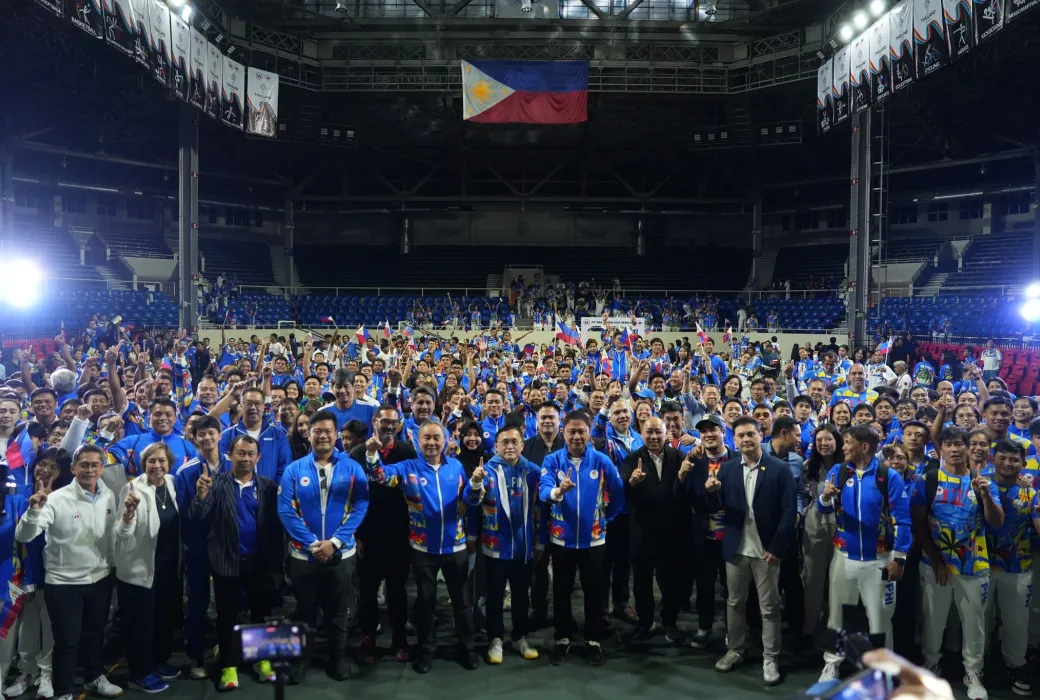
The Philippines will field its largest-ever delegation for the 2025 Southeast Asian Games in Thailand, sending 1,600 athletes, coaches, and officials to compete in 50 sports at the biennial meet during the 33rd 2025 send-off at Rizal Memorial Coliseum held last November 28.

Philippine Sports Commission Chairman Patrick “Pato” Gregorio said the decision to send a record-sized team was rooted in prioritizing exposure and athlete development over immediate results

“When you send a delegation, they learn. When you send a big delegation, they gain confidence and experience,” Gregorio said. “We want our athletes’ mindset and skills to toughen up so they can compete at the Asian Games and the Olympics.”

The 2025 SEA Games will feature 574 medal events, three demonstration sports—air sports, flying disc, and tug of war—and MMA as a value-added sport.

Gregorio emphasized that investing in athletes’ experience now lays the groundwork for future success. “We’re giving our athletes the exposure they need to compete better in the future,” he said.

The Philippines will target podium finishes in medal-rich sports including basketball, esports, boxing, weightlifting, jiu-jitsu, and athletics when the SEA Games open on December 9.

03.12.2025
Senator Bong Go

Sen. Bong Go inspires Athletes: ‘Carry the spirit of every Filipino’

In a heartfelt send-off, the senate committee on sports, Senator Bong Go, reminded the country’s national athletes of the immense pride and hope they bring as they head into international competitions.

“Always remember, you carry not just your name, but the spirit of every Filipino,” Go said. “When you win, the whole nation wins with you. No matter the result, you already carry the pride and admiration of the Filipino people.”

Reassuring the athletes of his unwavering support, the official added, “My office is always open for you. If you need anything—whether a solution or a problem—just come to my office.”

As the delegation prepared to embark on their journey, he encouraged them to fight with determination and honor the country. “Fight with all your heart. Bring home the bacon. The honor you bring to the country—you will carry it for the rest of your life. It is engraved in the history of the Philippines.”

He closed by urging the team to give their best, stay united, and make every Filipino proud: “Show the world how strong and united Filipinos can be.”

03.12.2025
General Trias City Sports Park

General Trias City LGU eyes vows world-class sports facilities for youth

General Trias City, which built the first track and field oval in Cavite province, acknowledged that the facility—now more than 20 years old—has become worn and outdated. Portions of the oval remain under development, prompting organizers to caution athletes about potential injury risks. For this year’s meet, the city prioritized football, archery, and the 100-meter sprint.

According to General Trias City Mayor Luis “Jon-Jon” Ferrer, with support from the provincial government, the city pledged to undertake a full modernization of its athletic facilities.

“Next year, we promise to make our track and field oval world-class for the youth,” said Ferrer, adding that plans are underway to build a competition-standard swimming pool so student-athletes will no longer need to rent outside venues.

Throughout the event, officials emphasized that all these efforts—including infrastructure upgrades and sports programming—are anchored on one priority: the youth.

“This is what we offer our young people,” the official declared. “Long live our youth. Long live education.”

With renewed confidence, upgraded facilities in the pipeline, and a motivated delegation, General Trias aims to make a resounding mark in its return to the regional sports stage.

The city officials and student-athletes of General Trias rallied behind the spirit of camaraderie and sportsmanship as they geared up for the upcoming regional meet, affirming their commitment to hard work, perseverance, and dedication.

“We believe that through sports, we demonstrate unity and sportsmanship,” said Ferrer during the opening program. “Every point, every score, every round is a product of hard work and determination.”

Mayor Ferrer added that the Division of General Trias is poised for a strong comeback at the regional meet, calling it “a sign from the Lord that we will rise again.”

The official reminded athletes that regardless of who emerges victorious in the division competition, all those representing General Trias at the regional level must honor their role by taking care of their uniforms, equipment, and gear—and by giving their absolute best. “No one gets hurt, no one gives up. This is our home sports park,” he stressed.

28.11.2025
Senator Bong Go

Sen. Bong Go pushes for regionalized National Academy of Sports

Senator Christopher “Bong” Go, Vice Chair of the Senate Finance Committee and sponsor of the proposed budget of the Philippine Sports Commission (PSC), renewed his call for the regionalization of the National Academy of Sports (NAS) during budget deliberations on last Monday, November 24.

Go stressed that keeping the NAS concentrated solely in Luzon—specifically in its main campus in New Clark City, Pampanga—limits grassroots development and sidelines promising young athletes from the Visayas and Mindanao.

“Nag-file rin po ako ng bill para ma-regionalize ang NAS,” Go said, referring to his recently filed measure aimed at decentralizing the academy in line with the intent of the law that created it.

Go noted that while NAS operations are fully funded—citing an additional ₱294 million in the committee report, including budget for a new dormitory—geographical accessibility remains a major barrier for student-athletes outside Luzon.

He emphasized that expansion does not require constructing brand-new facilities, pointing out that many local governments already have sports infrastructures capable of hosting NAS satellite campuses.

“Sana ay ma-regionalize ito… at malagyan rin po sa Visayas at Mindanao,” he said, adding that several LGUs in Mindanao have already expressed willingness to host equivalent NAS setups.

During the hearing, Senator Alan Peter Cayetano underscored the need for continuity in national sports planning and aligning programs with international hosting opportunities. Go agreed, stressing the importance of proactive planning.

A long-time advocate for athlete welfare, Go authored and co-sponsored Republic Act No. 11470, which established the NAS and introduced a dual-track system combining secondary education with specialized sports training. The academy provides full scholarships to student-athletes pursuing both academic and athletic excellence.

To widen access to this model, Go filed Senate Bill No. 171, or the National Academy of Sports Regional Expansion Act of 2025, which seeks to establish NAS campuses across the country—particularly in the Visayas and Mindanao. These regional campuses would uphold the academic and athletic standards of the main campus while ensuring equitable opportunities for rising sports talents nationwide.

27.11.2025
PSC Chair John Patrick Gregorio

PSC Holds Anti-Doping education seminar for PH athletes and coaches

The Philippine National Anti-Doping Organization (PHINADO) conducted an Anti-Doping Education Seminar for Filipino athletes set to compete in the upcoming 33rd Southeast Asian Games and the 13th Asian Youth Para Games.

The seminar aimed to equip national athletes with essential knowledge on clean sport practices, anti-doping rules, testing procedures, and the importance of upholding integrity in competition.

Present during the event were key sports leaders, including Philippine Sports Commission (PSC) Chairman John Patrick “Pato” Gregorio, Philippine Paralympic Committee (PPC) President Michael Barredo, PSC Commissioner Edward Hayco, and Olympian Akiko Thompson, all emphasizing the importance of education in maintaining a fair and drug-free sporting environment.

Philippine Sports Commission chair Patrick Gregorio stressed in his opening remarks the importance of this seminar as their guidance and preparation for the upcoming Olympic and Asian games before the year ends. 

Gregorio emphasized its strong commitment to fair play and integrity during an anti-doping education session held for national athletes on Friday.

“This session is more than just a requirement—it is part of our commitment to fair play, integrity, and excellence,” PSC chair Patrick Gregorio underscores the agency’s core values as Filipino athletes prepare to compete on the regional and international stage.

As the country gears up for major sporting events, PSC officials highlighted the importance of upholding clean sport principles, noting that compliance protects both the careers of athletes and the honor of the nation.

“This is not just about an athlete. It is about our nation’s integrity and our success,” Gregorio emphasized, calling the anti-doping seminar a crucial step in ensuring that Filipino athletes remain aligned with global standards set by the World Anti-Doping Agency (WADA) and PHINADO.

Officials reminded athletes that victories achieved through prohibited means hold no value.

“Don’t gamble. Don’t take a chance. Winning should be clean, fair, and come from the heart of every Filipino athlete,” Gregorio reiterated.

The seminar forms part of the PSC’s continuous effort to strengthen awareness and reinforce a culture of honesty and accountability in Philippine sports.

PHINADO’s initiative reinforces the country’s commitment to clean and honest sports, ensuring that every Filipino athlete represents the nation with pride, discipline, and integrity as they take on the international stage.

26.11.2025

Top News

Kenji Moral

Kenji Moral’s Fast Break to Rising Star in PH's Youth Basketball

2,158
Mario Barasi Jr.

Mario Barasi Jr.: Rising Big Man ready for the PBA stage

822
Michael Martinez

Michael Martinez: The Filipino Athlete Who Funded His Own Olympic Dream

390
Masters Pinoy Pilipinas Basketball squad with team Mongolia.

Masters Pinoy captures basketball gold at the World Masters Games

384
janine

Exclusive: Janine Nicandro, The Journey of a PBA Referee

361
Loren Brill

Loren Brill: Reigniting a basketball legacy born of champions

330
Guiness Nabung of Masters Pinoy Pilipinas Basketball team.

Guiness Nabung - Masters Pinoy Pilipinas Basketball Profile

297
Isaiah Africano poses for Scoreline.ph during the PBA 50th Rookie Draft

Isaiah Africano joins Guam National Team for FIBA WCA Qualifiers

296
Johann Chua & Carlo Biado

17 Filipino cue artists eye glory at World Pool Championship in Saudi Arabia

287
Gilas Pilipinas

Gilas Pilipinas begins Asian Games title defense with a new-look squad

283
Efren Reyes

Player Profile Series: “The Magician” Efren “Bata” Reyes

273
Andre Jamgerald Ugaddan

Andre Jamgerald Ugaddan – “Batang Mamaw” ng Reg. 4A

272
Kevin Quiambao

UAAP: UP fighting Maroons fall short to Green Archers, forced to Game 3

265
Dr. Obet Vital is the new Assistant Coach of the UP Fighting Maroons Women's Volleyball Team

Looking Ahead: Obet Vital's new era of growth and opportunity

257
Paul Reguera

Paul Reguera - Masters Pinoy Pilipinas Basketball Profile

234
Alvin "The Captain" Patrimonio - a player with a lion heart.

Player Profile Series: “The Captain” Alvin Patrimonio’s lion heart

233
Deanna Wong

Player Profile Series: Deanna Wong, The Court’s Quiet Leader

220
Ricky Ricafuente

Ricky Ricafuente - Masters Pinoy Pilipinas Basketball Profile

217
First ever PBA MVP William "Bogs" Adornado.

Player Profile: William "Bogs" Adornado - First PBA MVP

214
Oliver Agapito of Masters Pinoy Pilipinas Basketball team.

Oliver Agapito resharpens his basketball form with Masters Pinoy

211
Roger Yap of Masters Pinoy Pilipinas Basketball team.

Roger Yap - Masters Pinoy Pilipinas Basketball Profile

203
Captain Nica Celis of the UP Fighting Maroons Women's Volleyball Team

Nica Celis aims to helm Fighting Maroons' escape from bottom spot

194
Toshihiko Era

Japanese boxer scores a remarkable victory in Bangkok at age 50

185
Alberto "Abet" Guidaben - PBA 50 Greatest Players (2000)

Player Profile Series: Abet Guidaben – PBA Legend, 2 Slams

181
Aiza Maizo-Pontillas

Player Profile Series: The fierce journey of Aiza Maizo-Pontillas

177
Johann Chua

Player Profile Series: Johann Gonzales Chua - The "Bad Koi"

174
Cloanne Mondonedo

Player Profile Series: Clo Mondoñedo’s journey to setter glory

174
Sisi Rondina and Bernadeth Pons

Rondina, Pons claim first Challenge win at Beach Pro Tour Nuvali

172
Association of Boxing Alliances in the Philippines

13-strong boxers to lead PH Boxing Team in 2025 SEA Games

167
Kamille Cal

Player Profile Series: Kamille Cal brings precision to Akari

165
Sisi Rondina

Player Profile Series: Sisi Rondina, Volleyball’s Cherry Bomb

162
Alex Pagulayan

Player Profile Series: Billiards' "Lion Heart" Alex Pagulayan

160
"The Quick Brown Fox" - Ricardo Brown

Player Profile Series: Ricardo Brown – "The Quick Brown Fox"

160
Arena Fitness Dojo

From Grassroots to Global: Arena Fitness Dojo

148
Spike and Serve with Petro Gazz Angels & Volleybukids

Spike and Serve reaches out to Volleybukids in Morong, Bataan

148
PBA Commissioner Willie Marcial

PBA Season 50 eyes more overseas tours and foreign guest teams

147
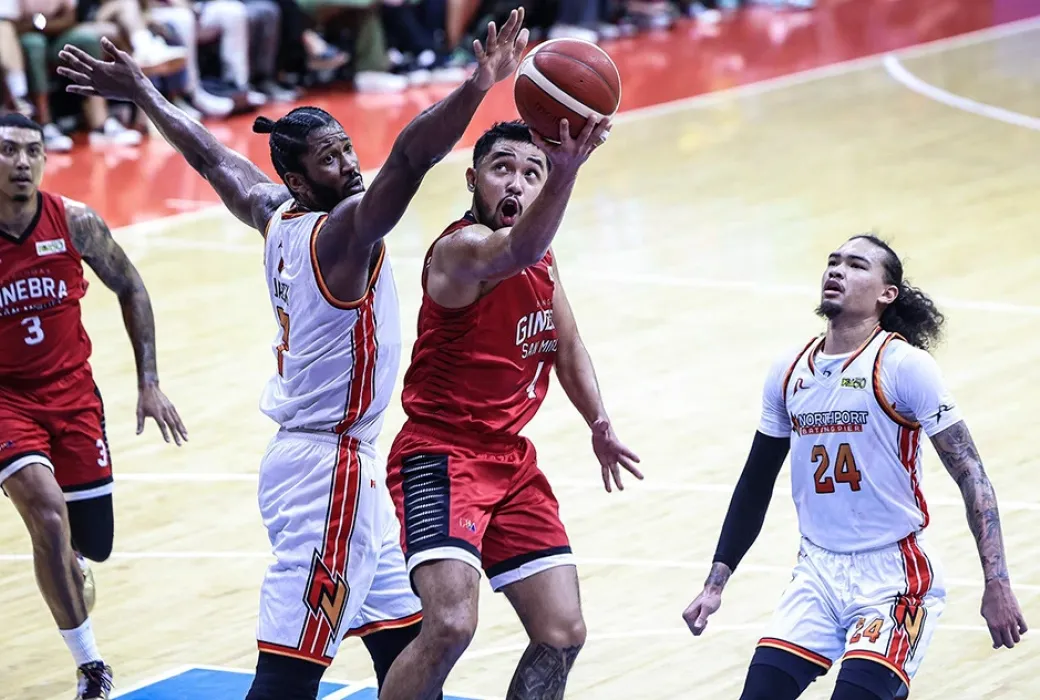
Ginebra's RJ Abarrientos tries to score against NorthPort's import Kadeem Jack.

Ginebra dominates NorthPort to get Game 1 of their Semis series

142
Ricky Ricafuente

Ricky Ricafuente brings his global experience to Masters Pinoy

141
Jelena Todorovic is the new Head Coach of Fortaleza Basquete Cearens.

Brazil’s NBB gets first female coach in Jelena Todorovic

137
Francisico Bustamante

Player Profile Series: The iconic Francisco "Django" Bustamante

136
General Trias City Sports Park

General Trias City LGU eyes vows world-class sports facilities for youth

136
Carlo Biado

Player Profile Series: Carlo Biado, the WPA World 9-Ball Champion

136